
China’s Taiwan Invasion Dream in Jeopardy? How Xi Jinping's Purge is Paralyzing the Chinese Military
President Xi Jinping’s anti-corruption purge within the People’s Liberation Army (PLA) is reshaping China’s military but at a significant cost.
- Defence News
- 5 min read

;'%3e%3cpath%20d='m8,15.99c4.41,0,7.99-3.58,7.99-7.99S12.41,0,8,0,0,3.59,0,8s3.58,7.99,7.99,7.99Z'%20style='stroke:%23fff;%20stroke-miterlimit:10;%20stroke-width:.02px;'/%3e%3cpath%20d='m3.08,3.37l3.82,5.11-3.84,4.15h.87l3.37-3.64,2.72,3.64h2.94l-4.04-5.39,3.58-3.87h-.86l-3.1,3.35-2.5-3.35h-2.94Zm1.27.64h1.35l5.97,7.99h-1.35l-5.97-7.99Z'%20style='fill:%23fff;'/%3e%3c/g%3e%3c/svg%3e)


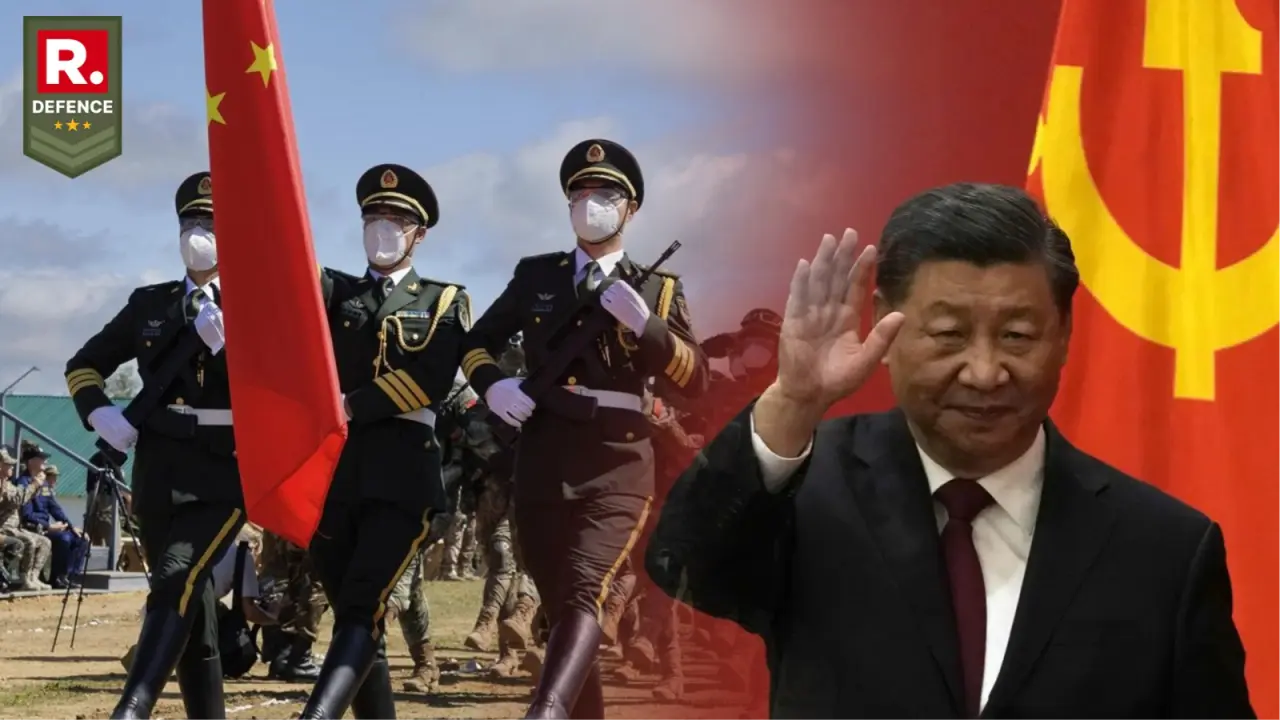
Beijing, China – President Xi Jinping’s sweeping anti-corruption campaign within the People’s Liberation Army (PLA) is reshaping China’s military landscape, but at a cost. While the purge aims to root out corruption and consolidate Xi’s control, it is simultaneously disrupting military readiness, morale, and operational effectiveness. The removal of key figures—some of whom were handpicked by Xi himself—has sparked concerns about the PLA’s stability, particularly in the context of major conflicts such as a potential Taiwan operation.
The anti-corruption drive, which has intensified over the past two years, has led to the expulsion and prosecution of dozens of high-ranking military officials. While Beijing insists the campaign is necessary to ensure the integrity of the armed forces, observers believe it is as much about eliminating political rivals as it is about tackling graft.
Purging the Military Elite: High-Profile Casualties of Xi’s Campaign
The scale of the crackdown has been unprecedented, with some of the most powerful figures in China’s military-industrial complex falling from grace.

Tan Ruisong (Expelled – February 24, 2025): The former chairman of the Aviation Industry Corporation of China (AVIC), one of China’s top defence contractors, was expelled from the Communist Party for accepting massive bribes and embezzling state funds. His ousting underscores the deep-seated corruption within China’s defence procurement sector, raising questions about the quality and reliability of China’s military hardware.
Advertisement
Admiral Miao Hua (Suspended – November 28, 2024): A high-ranking member of the Central Military Commission (CMC) and head of its Political Work Department, Miao was sidelined despite being a key Xi loyalist. His removal signals that even those within Xi’s inner circle are not safe from the purge.
Defense Ministers Wei Fenghe & Li Shangfu (Ousted – 2023): Two of China’s most recent defence ministers were abruptly removed and punished. Wei, who served from 2018 to 2023, and Li, who lasted only seven months in office, were both expelled from the Communist Party. Their downfall reflects Xi’s aggressive push to dismantle any potential power bases within the PLA.
Advertisement
The purge has reached such an extent that over a dozen senior military officials have been excluded from China’s most significant political event, the Two Sessions—a clear indicator of the widening scope of Xi’s crackdown.
Xi’s Grip on the PLA: Loyalty Over Competence?
At its core, Xi Jinping’s anti-corruption campaign is not just about tackling financial misdeeds; it is about enforcing absolute loyalty. Since taking power, Xi has sought to reshape the PLA into a force that is not only modern and technologically advanced but also unwaveringly obedient to the Chinese Communist Party (CCP) and, by extension, to him personally.
With the goal of creating a "world-class military" by 2049, Xi has repeatedly emphasized the need for a corruption-free, ideologically aligned armed force. However, the current purge suggests that factional power struggles within the PLA remain unresolved. Analysts argue that the rapid removal of high-ranking officials could weaken institutional stability, as Xi’s insistence on political loyalty may come at the expense of professional competence.
Impact on Military Readiness & Taiwan Strategy
While Xi’s military purge strengthens his political control, it is having an undeniable impact on China’s military preparedness. The PLA’s goal of achieving modernization by 2027—a key milestone in China’s military ambitions—now faces significant setbacks.
- Erosion of Morale & Cohesion: The purge has created an atmosphere of fear within the PLA, as officers at all levels worry about being the next target. This uncertainty can degrade trust within the ranks and affect decision-making.
- Disruption of Modernization Efforts: The removal of key defence industry officials, including AVIC’s Tan Ruisong, raises concerns about delays in critical military projects, from advanced fighter jets to naval expansion.
- Compromised Operational Capability: With experienced leaders being purged, strategic planning and operational effectiveness—especially in sensitive theatres like the Taiwan Strait—could be hampered.
- Internal Power Struggles: By targeting both allies and potential rivals, Xi risks fostering resentment within the PLA, which could lead to internal instability at a time when China is facing growing geopolitical challenges.
A Weakened PLA Less Likely to Initiate Major Conflicts?
One of the unintended consequences of Xi’s anti-corruption drive is that it may make China less likely to engage in major military conflicts—at least in the short term. While Xi has repeatedly vowed to "reunify Taiwan with the mainland", a weakened and demoralized PLA could struggle to execute such a complex operation.
Furthermore, with key military leaders being removed, China’s strategic decision-making may become more cautious, reducing the likelihood of large-scale military actions in the immediate future. However, this does not mean China is abandoning its long-term military ambitions—it simply means that the timeline for aggressive actions may be pushed further back.
China’s loss of experienced commanders, uncertainty within the ranks, and disruptions to key modernization programs all raise questions about its military readiness.
As Xi continues to eliminate potential challengers within the PLA, the world watches closely. While his campaign strengthens his hold on power, it also exposes vulnerabilities within China’s military establishment—vulnerabilities that could shape Beijing’s strategic calculations for years to come.