
Delayed USS Boise overhaul scheduled for 2024 to ensure US Navy’s optimal operational capability
The U.S. Navy is set to award a contract for the long-delayed overhaul of the USS Boise (SSN-764) in early 2024, following maintenance backlogs and delays.
- Defence News
- 4 min read

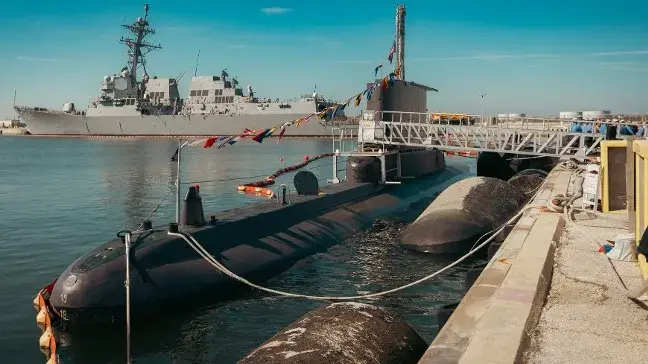
The U.S. Navy has announced plans to award a contract for the long-awaited overhaul of the USS Boise (SSN-764) in early calendar year 2024. This development comes after the attack submarine remained idle for several years due to maintenance backlogs and delays.
The extensive delay in overhauling the USS Boise can be attributed to a backlog at public shipyards, where other priorities, such as aircraft carriers and ballistic-missile submarines, took precedence. The result was a prolonged postponement of critical maintenance and refurbishment work on the attack submarine.
Turning to Private Yards for Timely Maintenance
To expedite the return of USS Boise to active service, the U.S. Navy made the decision to contract a private shipyard to perform the necessary maintenance overhaul. Despite the submarine's arrival at Newport News Shipbuilding in 2020, it has languished while awaiting its engineering overhaul for more than three years.
The Navy has been diligently working to reduce maintenance delays for its fleet of attack submarines. Since 2019, these delays have decreased by more than 30 percent, marking significant progress in addressing the submarine maintenance backlog. While these efforts have shown promise, the Navy is committed to further reducing maintenance delays, aiming for a target of 700 days by Fiscal Year 2026.
Advertisement
Enhancing Operational Availability for Attack Submarines
In addition to reducing maintenance delays, the Navy is actively working to increase material availability and improve the operational readiness of its attack submarines. Currently, the operational availability of these submarines stands at approximately 64 to 67 percent. The Navy is dedicated to enhancing this percentage, ensuring that its submarine fleet is consistently prepared for its critical missions.
The United States Navy operates a formidable fleet of submarines, each with a specific role and mission. These submarines are powered by nuclear reactors, which allows them to operate underwater for extended periods, providing a significant strategic advantage. The U.S. Navy's submarine force can be broadly categorized into three major types: ballistic missile submarines (SSBNs), attack submarines (SSNs), and cruise missile submarines (SSGNs).
Advertisement
Ballistic Missile Submarines (SSBNs)
- Strategic Nuclear Deterrence: Ballistic missile submarines, often referred to as "boomers," serve a critical role in the United States' nuclear triad. Their primary mission is to carry submarine-launched ballistic missiles (SLBMs) armed with nuclear warheads.
- Second-Strike Capability: SSBNs are known for their second-strike capability, providing a credible and survivable nuclear deterrent. This means that even if the U.S. mainland were to come under a nuclear attack, these submarines could retaliate with a devastating nuclear response from the safety of the sea.
- Continuous At-Sea Deterrence (CASD): At least one SSBN is typically on patrol at all times, maintaining continuous at-sea deterrence to ensure the security of the United States and its allies.
2. Attack Submarines (SSNs):
- Multi-Mission Capability: Attack submarines, or SSNs, are versatile vessels designed for a range of tactical missions. These include anti-submarine warfare (ASW), anti-surface warfare (ASuW), intelligence, surveillance, and reconnaissance (ISR), and strike warfare.
- Stealth and Agility: SSNs are known for their stealth and agility, making them effective at tracking and, if necessary, engaging enemy submarines and surface ships.
- Global Presence: These submarines can operate in various environments, from shallow coastal waters to deep oceans, providing a global presence and flexibility to respond to evolving threats.
3. Cruise Missile Submarines (SSGNs):
- Cruise Missile Arsenal: SSGNs are former ballistic missile submarines that have been converted to carry and launch Tomahawk land-attack cruise missiles (TLAMs).
- Precision Strikes: With their large payload of TLAMs, SSGNs can conduct precision strikes against a wide range of targets, including enemy ships, coastal targets, and facilities deep within enemy territory.
- Flexible Missions: SSGNs can perform many of the same missions as SSNs but with a focus on their ability to carry and launch larger quantities of cruise missiles, providing a flexible and lethal response capability.
In summary, the United States Navy's submarine force plays a pivotal role in national defense and strategic deterrence. Ballistic missile submarines ensure the credibility of the U.S. nuclear deterrent, attack submarines offer a multi-mission capability for various operational scenarios, and cruise missile submarines provide a flexible and potent strike capability. Together, these submarines contribute to the security and strategic interests of the United States and its allies on a global scale.