
How ISPR Expanded Hybrid Warfare Strategy, Suppressing Democracy in Pakistan While Fueling Jihad in Kashmir
Pakistan’s Inter-Services Public Relations (ISPR) has undergone a major expansion, aligning with the country’s hybrid warfare strategy.
- Defence News
- 5 min read

;'%3e%3cpath%20d='m8,15.99c4.41,0,7.99-3.58,7.99-7.99S12.41,0,8,0,0,3.59,0,8s3.58,7.99,7.99,7.99Z'%20style='stroke:%23fff;%20stroke-miterlimit:10;%20stroke-width:.02px;'/%3e%3cpath%20d='m3.08,3.37l3.82,5.11-3.84,4.15h.87l3.37-3.64,2.72,3.64h2.94l-4.04-5.39,3.58-3.87h-.86l-3.1,3.35-2.5-3.35h-2.94Zm1.27.64h1.35l5.97,7.99h-1.35l-5.97-7.99Z'%20style='fill:%23fff;'/%3e%3c/g%3e%3c/svg%3e)


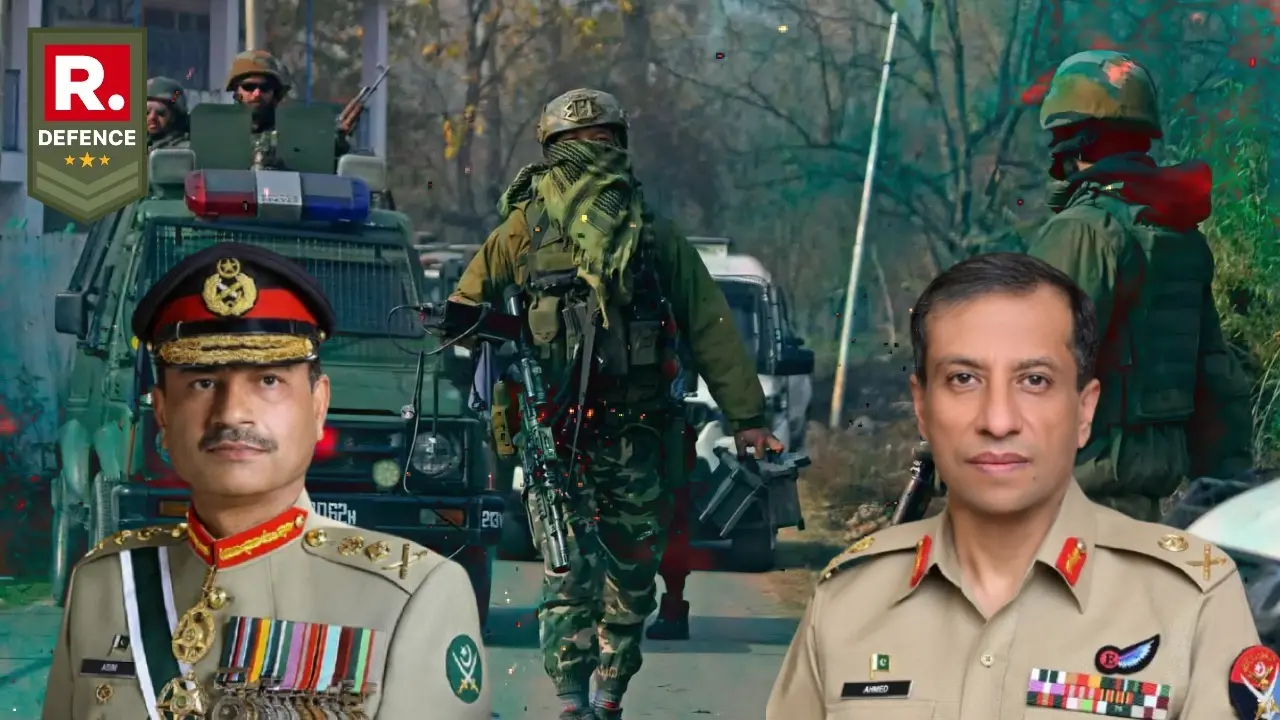
Islamabad, Pakistan - The recent expansion of Pakistan’s Inter-Services Public Relations (ISPR) has marked a dangerous shift in the country’s hybrid warfare strategy. Now headed by a Lieutenant General, ISPR operates with two Major Generals, each overseeing distinct but complementary domains—Information Operations (Info Ops) and Psychological Operations (Psy Ops). This structural expansion signals Pakistan’s deepening reliance on information warfare, disinformation campaigns, and propaganda-driven narratives to influence both domestic and international audiences.
A key example of this new ISPR strategy was visible on February 5, 2025—Kashmir Solidarity Day—where state-backed anti-India propaganda, radicalization efforts, and terror mobilization were amplified using coordinated information warfare tactics. While Pakistan presents Kashmir Solidarity Day as a show of moral and political support, in reality, it has become a strategic tool for ISPR-driven narrative warfare, aimed at shaping global perceptions and fueling extremism.
ISPR’s New Structure: A Machine for Propaganda and Psychological Warfare
The restructuring of ISPR aligns with Pakistan’s long-term hybrid warfare objectives against India. The division of command into Info Ops and Psy Ops signifies a refined approach to influencing enemy states, internal populations, and the international community.

1. Information Operations (Info Ops):
Advertisement
- Aims to manipulate and control the information environment through:
- Cyber warfare (hacking, spreading fake news).
- Electronic warfare (disrupting communications).
- Disinformation campaigns to create global narratives against India.
2. Psychological Operations (Psy Ops):
- Focuses on manipulating emotions, beliefs, and perceptions through:
- Targeted propaganda and messaging (media narratives, speeches, religious mobilization).
- Social media manipulation (bot armies, troll farms).
- Jihadi glorification and radicalization to facilitate terror recruitment.
This distinction allows ISPR to run multi-layered operations simultaneously, influencing domestic politics, regional conflicts, and international diplomatic stances while ensuring deniability.
Advertisement
Kashmir Solidarity Day 2025: A Case Study in ISPR’s New Warfare Model
The February 5 observance of Kashmir Solidarity Day exemplifies how ISPR’s enhanced capabilities are being weaponized against India. The day, originally introduced in 1990 by Nawaz Sharif, has transformed into a platform for radicalization, terrorist glorification, and jihadist mobilization.
This year’s events were heavily influenced by ISPR-driven Info Ops and Psy Ops, aiming to radicalize Pakistani youth through extremist speeches, propagate a global disinformation campaign on Kashmir, and facilitate terrorist recruitment and cross-border infiltration.
Key ISPR-Backed Propaganda Events on February 5
General Syed Asim Munir (Pakistan’s Army Chief): Addressing a gathering in Muzaffarabad, PoK, he reiterated Pakistan’s claim over Kashmir, stating:
“Kashmir and Pakistan share an inseparable bond.”
This statement was widely circulated by ISPR-run social media handles, fake news networks, and pro-Pakistani influencers.
Talha Saeed (Son of 26/11 mastermind Hafiz Saeed): Delivered a speech in Lahore, where he pledged:
“We will liberate Kashmir at any cost.”
The event, orchestrated by ISPR’s Psy Ops team, saw widespread social media coverage, glorifying jihad against India.
Rizwan Hanif (Senior LeT Leader): In Muzaffarabad, he warned:
“The abrogation of Article 370 was a grave mistake; Kashmir will be taken back with force.”
His speech was broadcast by ISPR-backed TV channels and digital outlets, pushing the narrative of “armed resistance.”
PoK Prime Minister Anwar ul Haq: Publicly called for the "revival of jihadist culture" to drive Indian forces out of Kashmir.
These statements, strategically amplified by ISPR’s hybrid warfare units, ensured the Kashmir narrative reached global audiences while fueling domestic anti-India sentiment.
ISPR’s Role in Political Interference and Domestic Control
ISPR’s expansion is not just a threat to India but also a tool of domestic suppression within Pakistan. The military’s media arm actively interferes in Pakistan’s political landscape, censors opposition voices, and manipulates democratic processes. In November 2022, Former Pakistan Army Chief Qamar Javed Bajwa admitted that the military had interfered in politics for decades. During the 2024-2025 elections in Pakistan, Pakistan Tehreek-e-Insaf (PTI) was denied its election symbol. Imran Khan and multiple PTI leaders were jailed or forced into exile.
Media houses were censored, and journalists were threatened for covering PTI’s suppression. ISPR’s social media units launched campaigns to discredit opposition voices, using misinformation about Imran Khan’s leadership. The ISPR manipulated election narratives favouring the military-backed establishment. Furthermore, censorship was imposed on independent news outlets reporting on electoral fraud.
This authoritarian control of the information space highlights ISPR’s dual role—suppressing democracy within Pakistan while running anti-India propaganda campaigns internationally.
Pakistan’s Cross-Border Terror Strategy: LoC Infiltrations
As ISPR mobilized narratives, Pakistan-backed terrorists attempted multiple infiltrations along the LoC, using the cover of Kashmir Solidarity Day propaganda.
Key Cross-Border Terror Incidents (Feb 2025)
- February 1: Two infiltrators neutralized in Khari Karmara, Poonch; one escaped back into PoK.
- February 4-5 (Night): Infiltration attempt foiled in Krishna Ghati, Poonch.
- February 8: Terrorists fired upon an Indian Army patrol in Keri sector, Rajouri.
- February 10: A sniper fire from across the LoC injured an Indian soldier in Kalal, Nowshera.
- February 11: An IED blast in Akhnoor killed two Indian soldiers.
- February 12 & 14: Cross-border firing in Krishna Ghati and Akhnoor sectors.
This escalation reflects ISPR’s dual strategy—using propaganda to incite radicalization while providing operational cover for terrorists.
Future Threats: Pakistan’s Intensified Hybrid Warfare Strategy
With ISPR’s expanded capabilities, India must anticipate increased disinformation campaigns targeting Indian policies and military actions. The valley shall also expect heightened terrorist infiltration as spring approaches, aided by improved logistical support from ISPR-backed handlers. Key intelligence reports indicate that upto 80-100 foreign terrorists are stationed at launch pads along the LoC, preparing for summer attacks. Weapons stockpiles in PoK and Khyber Pakhtunkhwa have increased, signalling an upcoming offensive.
The expansion of ISPR has solidified Pakistan’s hybrid warfare model, integrating information warfare, disinformation, and terrorist mobilization. The events of Kashmir Solidarity Day 2025 highlight how ISPR operates as a propaganda machine, a political tool, and a terrorism enabler.