
Under U.S. Pressure, Mexico Sends Army to Border to Stop Migrants, Crack Down on Deadly Fentanyl Trade
In response to U.S. pressure and tariff threats, Mexico has deployed 10,000 troops to its northern border, with patrols now active in Ciudad Juárez, Tijuana.
- Defence News
- 4 min read

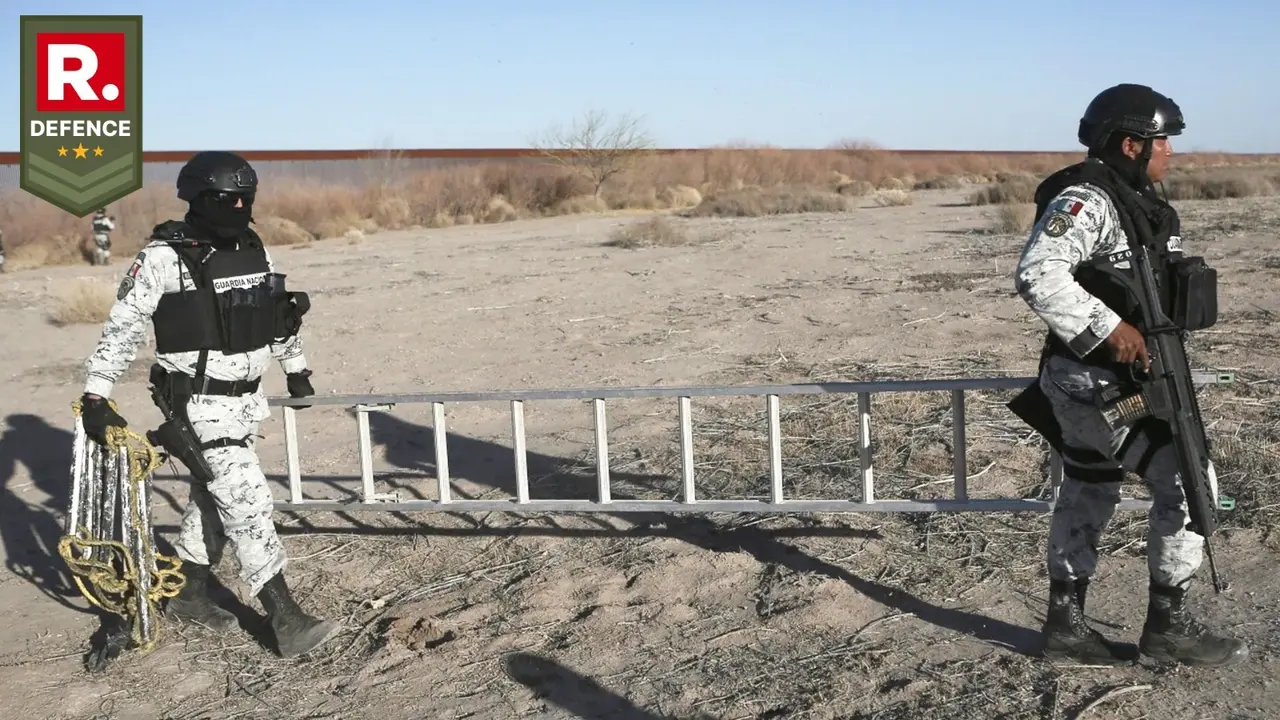
Ciudad Juárez, Mexico – A convoy of Mexican National Guard and Army trucks rolled along the border separating Ciudad Juárez from El Paso, Texas, on Wednesday, marking the first wave of 10,000 troops deployed to Mexico’s northern frontier. This large-scale mobilization follows President Donald Trump’s latest tariff threats, which were temporarily halted in exchange for Mexico’s promise to crack down on fentanyl smuggling and illegal border crossings.
Masked and heavily armed National Guard soldiers were seen patrolling the border barrier on the outskirts of Ciudad Juárez, combing through the desert brush in search of makeshift ladders and ropes used by migrants to scale the fence. Patrols were also reported in other key border areas, including Tijuana, Mexico’s busiest border city.
Trump’s Pressure Triggers Military Response
The deployment comes after a tense week of diplomatic negotiations. Trump had warned that if Mexico failed to take immediate action to curb illegal migration and fentanyl smuggling, he would impose heavy tariffs on Mexican exports. However, following high-level talks, Mexican President Claudia Sheinbaum agreed to strengthen border security with a massive military presence.
In return, the United States pledged to increase efforts to curb gun trafficking into Mexico, a major factor fueling cartel violence. This reciprocal agreement marks one of the first major foreign policy tests for Sheinbaum, who recently took office amid concerns over her ability to handle Trump’s aggressive diplomacy.
Advertisement
Permanent Surveillance at Key Border Points
With Mexico now under pressure to deliver on its promise, the first wave of troops arrived in key border cities on Tuesday, landing in government aircraft before being deployed to strategic locations. National Guard troops in Ciudad Juárez confirmed that their orders were clear: monitor the border 24/7 and intercept smuggling operations, with a particular focus on fentanyl trafficking.

“There will be permanent surveillance on the border,” said José Luis Santos Iza, a National Guard leader overseeing deployments in Ciudad Juárez. “This operation is primarily to prevent drug trafficking from Mexico to the United States, mainly fentanyl.”
Advertisement
The deployment is expected to significantly increase border security. Ciudad Juárez alone will receive at least 1,650 troops, making it the second-largest recipient of reinforcements after Tijuana, where 1,949 troops will be stationed.
U.S. Welcomes Mexico’s Crackdown, But Skepticism Remains
During a visit to Latin America, U.S. Secretary of State Marco Rubio welcomed Mexico’s swift response, thanking the Sheinbaum administration for sending additional troops. However, many in the U.S. remain sceptical about Mexico’s ability to curb fentanyl trafficking, which has been a major driver of the opioid crisis that continues to claim thousands of American lives each year.
Trump, who has declared a border emergency despite declining migration levels and fentanyl overdoses, remains firm in his stance that Mexico must do more. His administration is expected to closely monitor the effectiveness of Mexico’s military operations in the coming weeks.
Sheinbaum’s Diplomatic Maneuvering Under Scrutiny
For President Claudia Sheinbaum, this agreement is being seen as an early diplomatic test. Many doubted whether she could handle Trump as effectively as her predecessor, Andrés Manuel López Obrador, who navigated U.S.-Mexico relations through tough negotiations. However, her swift response to Trump’s tariff threat has earned her both praise and criticism.
While the troop deployment may temporarily ease tensions, questions remain about the long-term effectiveness of militarizing Mexico’s border. Critics argue that without addressing the root causes of cartel violence and fentanyl production, border crackdowns will only provide a temporary band-aid solution.
What’s Next?
With the deployment now in full swing, all eyes are on whether Mexico’s National Guard can deliver results that satisfy Trump and prevent further escalation. If the crackdown fails to make a significant impact, Trump has made it clear that tariffs are still on the table—a move that could severely impact Mexico’s economy and strain bilateral relations.
For now, the border is under tighter scrutiny than ever, as Mexico tries to prove that it can keep the U.S. happy while maintaining control over its own security challenges. Whether this strategy succeeds or backfires remains to be seen.