
Updated 13 February 2024 at 15:33 IST
US Completes Design Review of XA103 Prototype Engine for its 6th Generation Fighter Jet
NGAD is a sixth-generation platform set to replace the US’s existing fifth-generation F-22 Raptor by the end of the decade.
- Defence News
- 3 min read

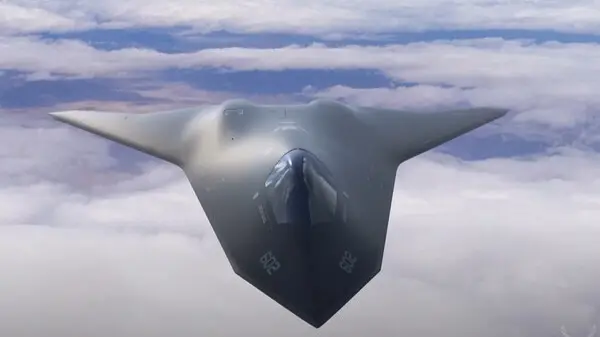
Washington: Pratt & Whitney, an American aerospace company specialising in manufacturing gas turbine engines, has completed the design review for its Next-Generation Adaptive Propulsion prototype, known as XA103. This prototype is part of the Next Generation Air Dominance program (NGAD). As per available information, the NGAD is part of the next-generation fighter program, and the US plans to increase its capabilities in the air superiority domain with NGAD for the U.S. Air Force.
Ground testing for the XA103 engine is expected to begin in the later part of this decade.
Jill Albertelli, President of Pratt & Whitney Military Engines business, spoke about the importance of digital transformation in the NGAD program, stating, “We are embracing digital transformation with NGAP and changing the customer experience through the entire development process in order to rapidly and efficiently deliver these advanced adaptive engines.” Albertelli emphasised the critical role of advanced technology in maintaining air superiority and underlined Pratt & Whitney’s investments in research, development, and advanced manufacturing.
Adaptive Engine Transition Program and Advancements for Air Dominance

The NGAD program, according to available information, for XA103 focused on developing novel technologies to increase survivability, fuel efficiency, and power and thermal management for future air dominance platforms. These advancements, as per the company’s official statement, aim to achieve the required range, weapon and sensor capabilities, and persistence in challenging operational environments.
Advertisement
Pratt & Whitney further mentioned that insights from the US Air Force’s ‘Adaptive’ Engine Transition Program are helping in the development of the technologies and architectures of the NGAD program. The company said its adoption of digital design and agile methodology is to reduce lead times and increase efficiency in delivering more capabilities than what existing propulsion modules in fighter jets have, as RTX surmises, is more capable than any other engines currently in any fighter jets.
US’ Transitional Plans for 6th Gen Jets
As stated earlier, NGAD is a sixth-generation platform set to replace the US’s existing fifth-generation F-22 Raptor by the end of the decade. Unlike the F-22, NGAD comprises both manned and unmanned modules, including the Collaborative Combat Aircraft (CCA), previously known as Loyal Wingmen.
Advertisement
The US Air Force plans to award contracts for the NGAD design this year and has identified four key technologies: propulsion, unmanned systems, materials, and sensors. Pratt & Whitney, along with other companies like Lockheed Martin, Boeing, Northrop Grumman, and General Electric, has received a significant contract under the Next Generation Adaptive Propulsion program (NGAP) for propulsion technology development.
Published By : Swapnanil Chatterjee
Published On: 13 February 2024 at 15:33 IST