
1971: When India 'pounded' Pakistan & shot down Its F-86 Sabre with indigenous HF-24 Marut
During the 1971 Indo-Pakistani War, Squadron Leader Krishan Kumar Bakshi showcased exceptional valor leading the HF-24 Marut to down a Pakistani F-86 Sabre.
- Defence News
- 3 min read

;'%3e%3cpath%20d='m8,15.99c4.41,0,7.99-3.58,7.99-7.99S12.41,0,8,0,0,3.59,0,8s3.58,7.99,7.99,7.99Z'%20style='stroke:%23fff;%20stroke-miterlimit:10;%20stroke-width:.02px;'/%3e%3cpath%20d='m3.08,3.37l3.82,5.11-3.84,4.15h.87l3.37-3.64,2.72,3.64h2.94l-4.04-5.39,3.58-3.87h-.86l-3.1,3.35-2.5-3.35h-2.94Zm1.27.64h1.35l5.97,7.99h-1.35l-5.97-7.99Z'%20style='fill:%23fff;'/%3e%3c/g%3e%3c/svg%3e)


December 7, 1971, marked a pivotal moment for the Indian Air Force (IAF). On this day, the IAF pounded the airfields used by the Pakistani Air Force in 22 counter-air missions. Oil tankers were also attacked by IAF’s Hawker aircraft in Attock.
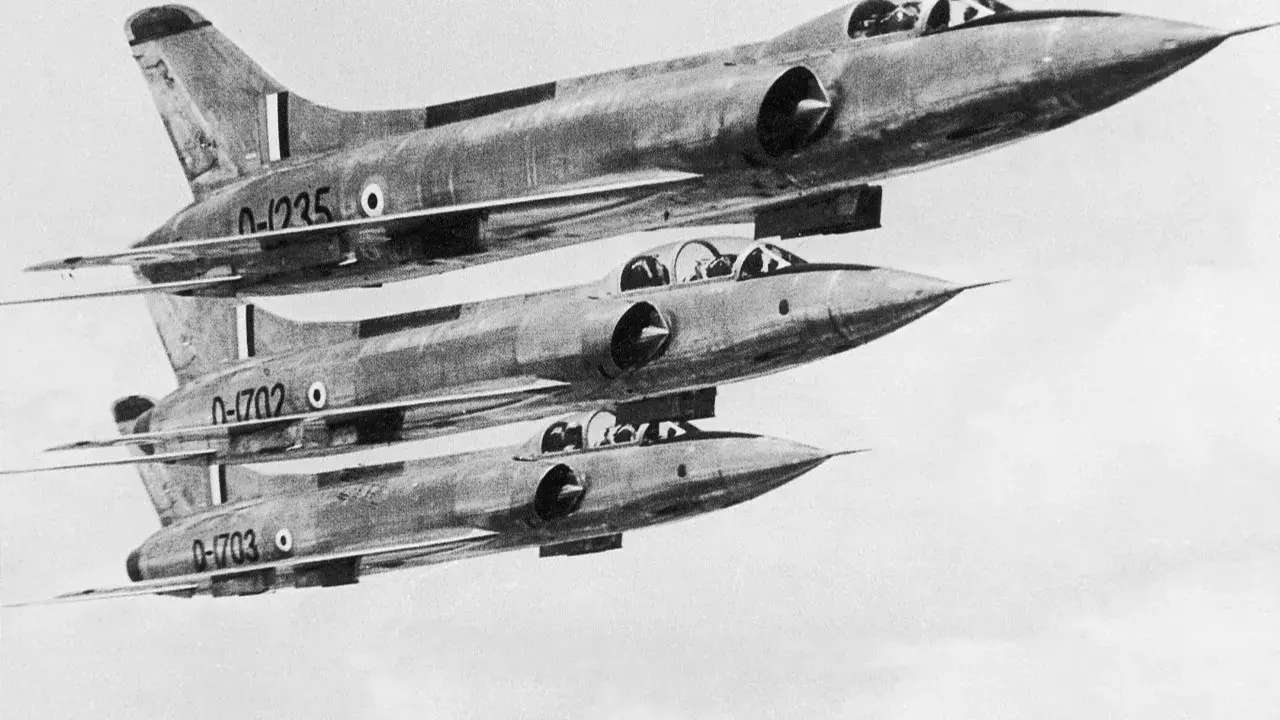
However, today, 60 years ago, was a red-letter day for Hindustan Aeronautics Limited (HAL) HF-24 Marut, India's first indigenous fighter aircraft, as it etched its name in glory by achieving an extraordinary feat—bringing down a Pakistani F-86 Sabre in the Rajasthan sector during the Indo-Pakistani War.
When India’s Indigenous Marut outgunned Pakistan’s American Sabres
Then Squadron Leader Krishan Kumar Bakshi, commanding the HF-24 Marut from the 220 Squadron, showcased valour during an aerial clash against a PAF F-86 Sabre. In a daring mission over the Naya Chor and Dhoran area on December 6, 1971, Bakshi's squadron encountered four enemy Sabre aircraft. Outnumbered, he led the engagement.

Displaying skill and courage, Bakshi navigated his aircraft through the intense dogfight, ultimately downing one Sabre despite the odds stacked against him. His precision and strategic manoeuvring in the face of adversity turned the tide of the aerial tussle, neutralising a significant adversary threat—the Pakistani Sabre.
Advertisement
Bakshi spearheaded numerous offensive air strike missions, inflicting substantial damage on enemy ground defenses, vehicles, and troops despite heavy ground fire. Ultimately, his bravery and strategic acumen against an enemy with a slight technological edge in the 1971 operations earned him the Vir Chakra. Alongside Bakshi, two other Marut pilots were also awarded the Vir Chakra for the valour they displayed during the war.
Marut's Journey
The HF-24 Marut's journey was one of determination, facing numerous challenges from its inception. Led by Dr Kurt Tank and his team, the aircraft encountered setbacks and technical complexities during its maiden flight, setting the stage for a voyage fraught with triumphs and tribulations.
Advertisement
During the 1971 conflict, Marut squadrons played a pivotal role, engaging in low-level attack missions despite facing heavy ground fire. On multiple occasions, Maruts managed to return to base even after sustaining engine damage or losing control systems due to ground fire. The aircraft's survivability in hostile territory became a testament to its design and the pilots' skill.
Marut in Longewala
In the decisive Battle of Longewala, Maruts and Hawker Hunter aircraft provided crucial close support, significantly impeding Pakistani ground forces by destroying a substantial number of deployed tanks. Throughout a two-week period of the war, these aircraft flew over 300 combat sorties, showcasing their mettle in the face of adversity.
Tejas carrying forward Marut's legacy
However, despite its commendable performance in combat, the HF-24 Marut faced phased retirement by 1982, with authorities citing operational viability concerns. Nonetheless, supporters like Air Commodore Jasjit Singh highlighted the aircraft's exceptional performance during the 1971 war and its superior safety record compared to other IAF aircraft. According to available records, the IAF did not lose even a single Marut during aerial fights; however, three were lost in ground fire.
The retirement of the HF-24 Marut marked the end of an era, but its legacy persists in India’s LCA program. As Marut passed the metaphoric baton to Tejas, India's new indigenous fighter aircraft development exemplifies India’s spirit of AtmaNirbharta.