
Indian Army Renames Eastern Command HQ’s Fort Williams as Vijay Durg amid Decolonization Efforts
In a historic move to break free from its colonial past, the Indian Army has renamed Fort William to Vijay Durg, while St. George’s Gate is now Shivaji Gate.
- Defence News
- 4 min read

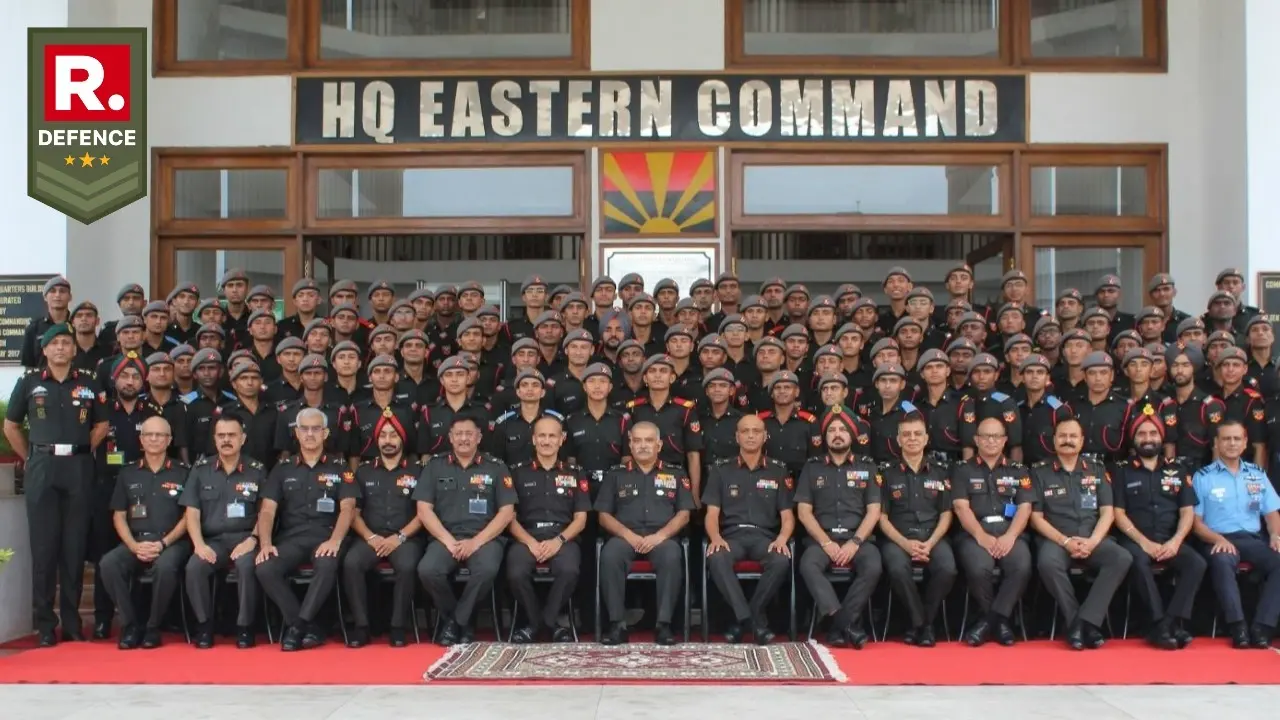
Kolkata, India - In a decisive step toward shedding its colonial past, Fort William, the headquarters of the Indian Army’s Eastern Command, has been renamed Vijay Durg, while St George’s Gate has been rechristened Shivaji Gate. The move, finalized in December 2024, marks a significant shift in India's approach to its military heritage—one that prioritizes indigenous legacies over colonial relics.
The 18th-century British-built fortress, named after King William III has long stood as a symbol of colonial military dominance. But today, it serves as a key operational base for India's Eastern Command, housing over 10,000 personnel. By renaming it Vijay Durg, inspired by the historic Maratha naval fort, the Indian Army is making a statement: India’s military history is far older and richer than the colonial era, and it is time to recognize that.
Breaking Free from Colonial Ghosts
The Indian military has, for decades, operated under structures, traditions, and even mindsets inherited from British rule. While the Indian Army, Navy, and Air Force have built their own distinct identities, vestiges of colonial influence—right from military terminology to regimental traditions—have lingered.
Renaming Fort William is not just about changing signboards; it is about reclaiming military history that predates the British Raj. The Indian subcontinent has been home to some of the greatest military strategists and empire builders—Chhatrapati Shivaji, Maharana Pratap, Tipu Sultan, and the Mauryas to name a few. Yet, for years, the armed forces have continued to function within a framework imposed by colonial rulers.
Advertisement

With its vast coastline, India was never merely a land-based power. The Marathas, Cholas, and other dynasties had formidable naval forces long before the British arrived. Vijay Durg, the fort that now lends its name to Fort William, was a stronghold of the Maratha Navy, which once posed a serious challenge to European maritime ambitions. By renaming the fort, the Indian military is reinforcing its own maritime history, independent of British narratives.
Shedding the Last Remnants of British Influence
Since independence, India has gradually moved toward military decolonization. The renaming of Rajpath to Kartavya Path, changing military ceremonies to reflect indigenous traditions, and restructuring of regiments are all part of this larger process.
Advertisement
For years, the Indian military’s institutional memory remained tethered to British-era wars and battle honours, often overshadowing the valour of Indian warriors. With this move, the Army signals that it is done merely preserving colonial leftovers and is actively asserting its own legacy.
Why This Matters for Today’s Armed Forces
The Indian military of today is a force to be reckoned with—one that no longer needs the validation of colonial history. Instead of celebrating battles where Indian soldiers fought under British command, India is now honouring wars fought for its own sovereignty, such as the 1971 Indo-Pak War, Kargil, and the Liberation of Goa.
The renaming also has a psychological impact. Military institutions shape the mindset of officers and soldiers. A name like Vijay Durg evokes victory, resilience, and India’s own martial history. In contrast, Fort William was a colonial-era reminder of foreign rule. Why should an independent military base still carry the name of an empire that once subjugated it?
This renaming is just another step in India’s larger movement toward decolonization. Several military institutions and landmarks have undergone similar changes:
- The Indian Navy has replaced colonial-era ensigns with one inspired by Chhatrapati Shivaji Maharaj.
- The Parade at the Republic Day celebrations has been redesigned to showcase India’s own military heritage, moving away from British traditions.
- Statues of colonial figures are making way for those of Indian warriors and national heroes.
The Road Ahead: A Military That Stands on Its Own Legacy
Fort William—now Vijay Durg—will continue to be one of India’s most important military bases, but its name will now inspire generations of Indian soldiers with their own history, rather than that of their colonizers. The renaming of Shivaji Gate further strengthens this transformation, paying homage to one of India’s greatest military minds and a pioneer of indigenous warfare tactics.
The process of decolonization is not about erasing history; it is about reclaiming it. And in this, the Indian military is finally ensuring that its identity is rooted in India’s own strength, rather than a borrowed past.