
MiG-21, The Iron Eagle That Ruled the Indian Air Force for 60 Years, Takes The Final Flight
From the 1965 War to Balakot, the aircraft shaped India’s air power for over 60 years, proving its mettle in combat, reconnaissance and training.
- Defence News
- 2 min read

;'%3e%3cpath%20d='m8,15.99c4.41,0,7.99-3.58,7.99-7.99S12.41,0,8,0,0,3.59,0,8s3.58,7.99,7.99,7.99Z'%20style='stroke:%23fff;%20stroke-miterlimit:10;%20stroke-width:.02px;'/%3e%3cpath%20d='m3.08,3.37l3.82,5.11-3.84,4.15h.87l3.37-3.64,2.72,3.64h2.94l-4.04-5.39,3.58-3.87h-.86l-3.1,3.35-2.5-3.35h-2.94Zm1.27.64h1.35l5.97,7.99h-1.35l-5.97-7.99Z'%20style='fill:%23fff;'/%3e%3c/g%3e%3c/svg%3e)


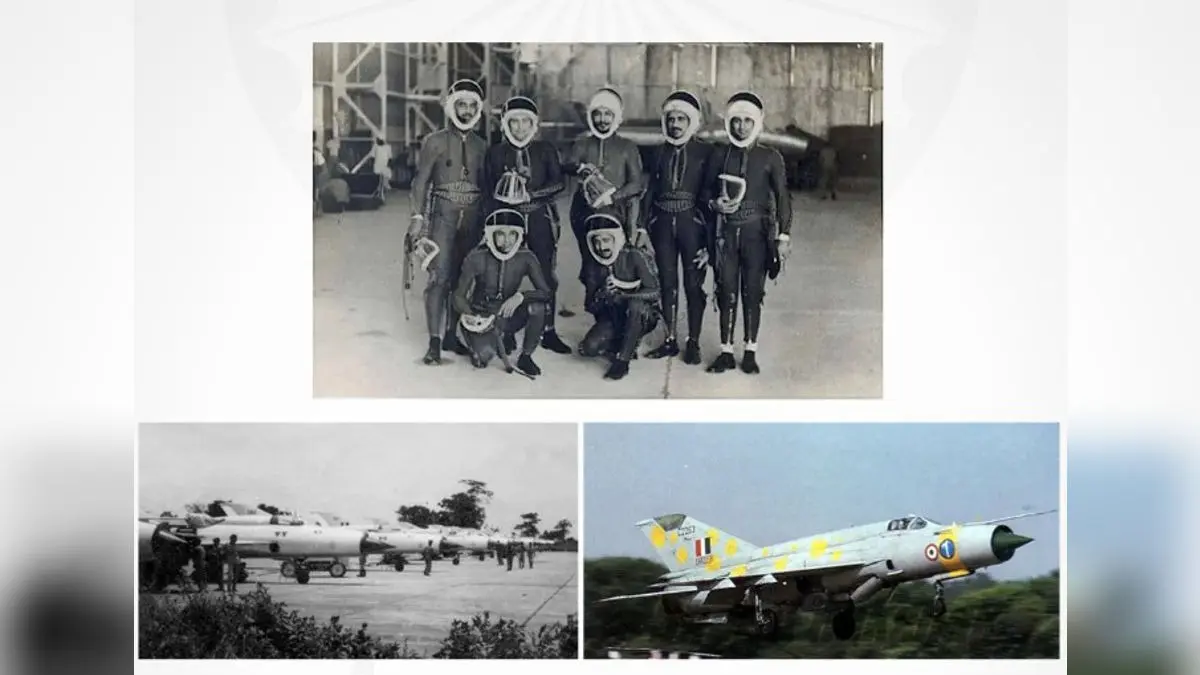
New Delhi: The Indian Air Force (IAF) is officially retiring its iconic MiG-21 fighter jets, marking the end of a remarkable six-decade-long chapter in India’s aviation history. While the retirement ceremony is being held at Air Force Station, Chandigarh, the focus remains on the aircraft’s unparalleled contributions to India’s defence.
Inducted in 1963, the MiG-21 became the backbone of India’s fighter fleet, playing pivotal roles in the 1965 and 1971 India-Pakistan wars, the Kargil conflict of 1999, and precision strikes like Balakot in 2019. Its supersonic speed, agility and versatility made it a formidable asset despite being one of the simplest and most cost-effective aircraft in the IAF inventory.

Over the decades, the MiG-21 underwent several upgrades, including the Bison variant, which enhanced its radar, weapon systems and avionics, allowing it to remain operational even as newer generation jets entered service. At its peak, the IAF operated around 800–1,000 MiG-21s, serving as both frontline fighters and training platforms for generations of Indian pilots.
Advertisement
Apart from combat, the MiG-21 was crucial for reconnaissance missions, air defence patrols and tactical exercises, giving India a credible deterrence capability. Its adaptability and endurance earned it the affectionate, albeit ironic, nickname “Flying Coffin”, reflecting both the risks of flying older jets and the bravery of the pilots who mastered them.
The final squadron, No. 23 “Panthers”, will be decommissioned during the farewell ceremony to be attended by Defence Minister Rajnath Singh, Air Chief Marshal AP Singh, Chief of Defence Staff General Anil Chauhan, and other senior officers. Squadron Leader Priya Sharma will pilot the last MiG-21 flight, symbolising both the aircraft’s legacy and the growing role of women in the IAF.
Advertisement
The MiG-21’s retirement paves the way for modern, indigenous aircraft like the Tejas, but its contribution to India’s air dominance, operational readiness, and defence strategy will remain unmatched. For many pilots and defence experts, the MiG-21 is more than an aircraft. It is a symbol of resilience, courage and innovation in Indian military aviation.
Digital Timeline
1963: Inducted into IAF
1965–1971: Wars and early combat missions
1980s–1990s: Bison upgrades, extended service
1999: Kargil operations
2019: Balakot strikes
2025: Retirement, marking the end of an era