
AI and ML can bring improvement in efficiency of businesses: RBI Guv Das
The RBI governor said that a smooth and orderly green transition is necessary to avoid disruptions to economic activity and loss of growth potential.
- Economy News
- 2 min read

;'%3e%3cpath%20d='m8,15.99c4.41,0,7.99-3.58,7.99-7.99S12.41,0,8,0,0,3.59,0,8s3.58,7.99,7.99,7.99Z'%20style='stroke:%23fff;%20stroke-miterlimit:10;%20stroke-width:.02px;'/%3e%3cpath%20d='m3.08,3.37l3.82,5.11-3.84,4.15h.87l3.37-3.64,2.72,3.64h2.94l-4.04-5.39,3.58-3.87h-.86l-3.1,3.35-2.5-3.35h-2.94Zm1.27.64h1.35l5.97,7.99h-1.35l-5.97-7.99Z'%20style='fill:%23fff;'/%3e%3c/g%3e%3c/svg%3e)


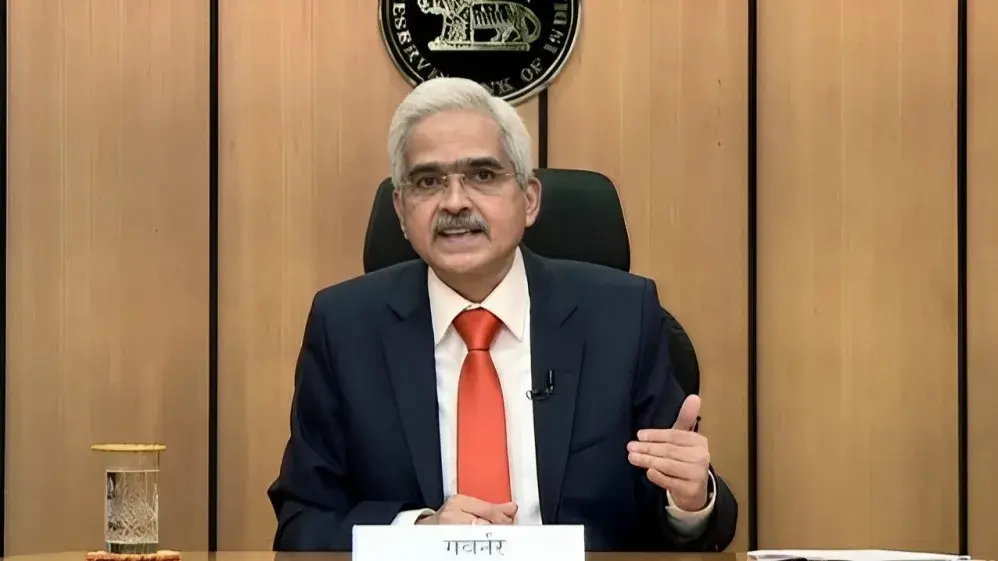
Das on reforms: Artificial intelligence (AI) and machine learning (ML) can bring about significant improvements in efficiency and productivity of businesses, the RBI Governor Shaktikanta Das said while addressing the 59th SEACEN Governors' Conference in Mumbai on Thursday.
“Necessary safeguards, however, need to be put in place to prevent the misuse of technology. In particular, global financial market regulators need to be vigilant about the possible misuse of AI and ML in perpetrating financial fraudulence,” Das added.
He also emphasized that there is a need to chalk out an effective strategy for global cooperation and coordination to deal with multiple challenges afflicting the global economy. According to him, Multilateralism must be re-energized.
Das also underscored the importance of agreements on a “critical minerals corridor” and a “food corridor” for safeguarding food security. Such arrangements have to be fair and equitable.
Advertisement
According to him, there is a need to develop cooperation in areas of common interest and urgent needs such as climate change where no country can devise strategies on its own.
On Green Energy
Advertisement
The RBI governor said that a smooth and orderly green transition is necessary to avoid disruptions to economic activity and loss of growth potential.
“While the investment needs for smooth 10 green transitions are large, the actual financial flows to green projects are highly skewed and are, by and large, concentrated in advanced economies,” Das said.
Das also highlighted that there is a need to enhance green capital flows to EMEs. At the same time, we have to be mindful of the potential financial stability implications of the green transition.
He also mentioned that improving infrastructure remains key to long-term growth. “While investment in hard infrastructure (roads, ports, airports, electricity, water) is important, there has to be equal emphasis on creating soft infrastructure (education, health, legal, financial, institutional),” Das said.
He also highlighted that India’s experience has shown how Digital Public Infrastructure (DPI) can be utilised for advancing financial inclusion and productivity gains through cost reductions.
“Our sustained engagement in the India Stack and the Unified Payments Interface (UPI), especially during the pandemic and thereafter, has given us the confidence that digital public infrastructure can become a critical part of global public good when scaled up beyond national boundaries,” Das said.