
Housing and education support, HRA revision: What common taxpayer expects from Budget 2024
One of the primary expectations is an increase in the standard deduction limit, offering relief in taxable income for salaried individuals.
- Economy News
- 3 min read

;'%3e%3cpath%20d='m8,15.99c4.41,0,7.99-3.58,7.99-7.99S12.41,0,8,0,0,3.59,0,8s3.58,7.99,7.99,7.99Z'%20style='stroke:%23fff;%20stroke-miterlimit:10;%20stroke-width:.02px;'/%3e%3cpath%20d='m3.08,3.37l3.82,5.11-3.84,4.15h.87l3.37-3.64,2.72,3.64h2.94l-4.04-5.39,3.58-3.87h-.86l-3.1,3.35-2.5-3.35h-2.94Zm1.27.64h1.35l5.97,7.99h-1.35l-5.97-7.99Z'%20style='fill:%23fff;'/%3e%3c/g%3e%3c/svg%3e)


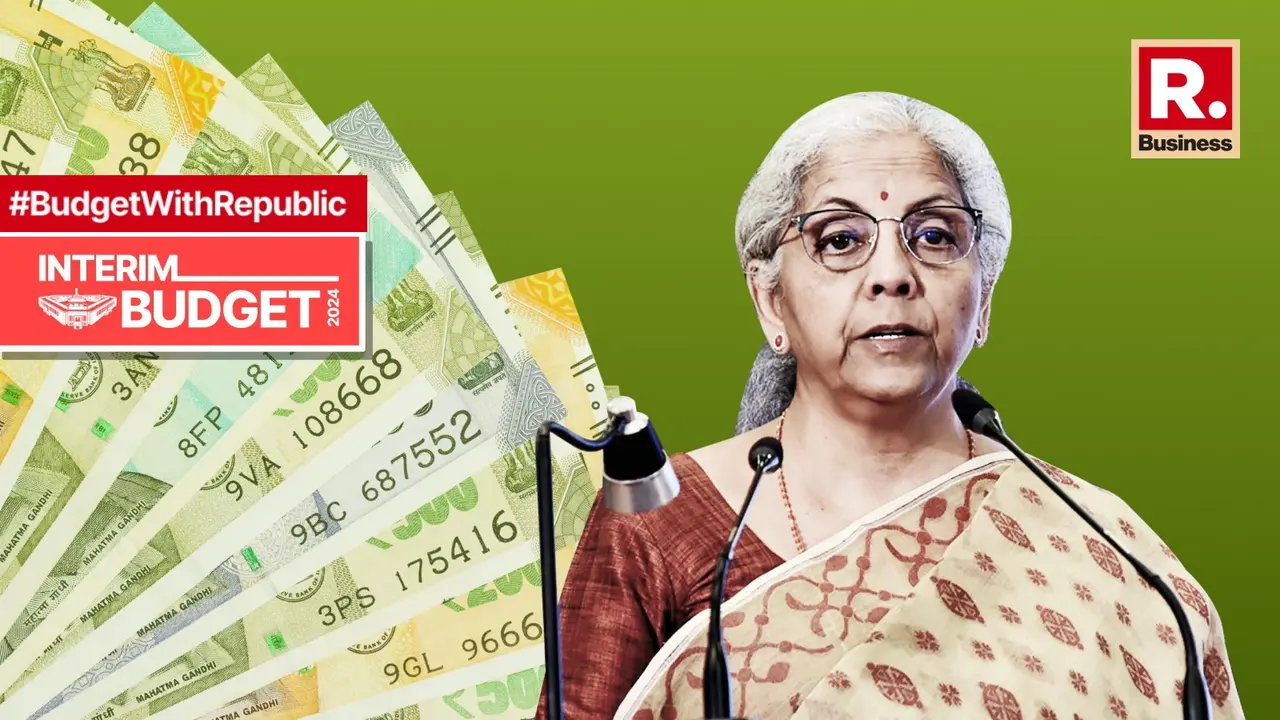
Interim Budget 2024: As the nation eagerly awaits the unveiling of the Interim Budget 2024 on February 1, expectations are high, particularly among the middle class. The budget is poised to bring several changes that could significantly impact the financial landscape for the common taxpayer.
Easiloan CEO Pramod Kathuria said, “Despite its interim nature, the budget has generated significant anticipation and speculation, particularly among the middle class, regarding potential announcements. We anticipate no major announcement and government will maintain the status quo with key emphasis on job creation through infrastructure spending in the budget.”
"There is a likelihood of enhanced allocations for various welfare schemes targeting farmers, women, and other demographics," said Pramod Kathuria, Founder and CEO of Easiloan.
Here are 10 things that the middle class will be looking out for in the budget.
Advertisement
1. Higher standard deduction and 80C limit
One of the primary expectations is an increase in the standard deduction limit, offering relief in taxable income for salaried individuals. According to Kunal Varma, CEO and Co-founder at Freo, there might also be a rise in the Section 80C limit, encouraging additional savings and investments in the face of inflation.
2. Adjusted basic exemption limit and health insurance deductions
The anticipation includes changes in the basic exemption limit to ease the burden of increasing real tax rates. Health insurance-related tax deductions are also expected to be enhanced, benefiting individuals and senior citizens, says Varma.
Advertisement
3. Revisions in deductions for loans and savings
Expectations include revisions in limits for education loans, housing loans, donations, and interest on savings. The aim is to enhance tax-free allowances, potentially increasing take-home salaries for the middle class.
4. Rethinking metro city classification for HRA calculations
The current classification for House Rent Allowance (HRA) tax calculations may be reconsidered. Currently, only Delhi, Mumbai, Kolkata, and Chennai are considered metro cities, and this outdated classification may see a reevaluation.
5. Boosting Indian Tourism and focus on economic growth
An expectation to bolster Indian tourism and a continued focus on economic growth while maintaining fiscal discipline are also on the list. The hope is to see initiatives that drive job creation, indirectly benefiting the middle class.
6. Support for housing, education, and skill development
Potential incentives or relief in housing loans or real estate investments, allocations for education and skill development, and investments in infrastructure projects for job creation are part of the broader expectations.
7. Fintech transformations for the middle class
Kamaljeet Rastogi, CEO of Manipal Business Solutions, highlights the transformative financial landscape driven by the fintech sector. This includes enhanced digital banking services, innovative payment solutions, personalised financial management apps, expansion of affordable credit options, robust cybersecurity measures, and advancements in blockchain technology.
8. Rural infrastructure development
Anticipations include a focus on rural infrastructure, serving as a catalyst for further financial inclusion and uplifting the economic prospects of the rural population.
9. Positive developments for the middle class
Sarvjeet Virk, Co-founder and MD of Finvasia, reflects on the positive changes introduced in the 2023 Union Budget. Looking ahead, the middle class remains optimistic, expecting more positive developments such as increased tax rebates and a higher exemption limit.
10. Addressing rising living costs and inflation
Given the substantial rise in the cost of living and inflation, the middle class hopes for a raise in the Section 80C limit and enhancement of the Section 80D limit, crucial in the post-pandemic world, according to Virk.
As the government prepares to present the Interim Budget, the expectations reflect the middle class's desire for a more favourable financial environment, aligning with the nation's economic growth and fiscal objectives.