
CBSE Delays Class 12 Re-Evaluation Portal Till June 1 Amid OSM Row, Students To Challenge Answers Question-Wise
CBSE has postponed the launch of the Class 12 verification and re-evaluation portal to June 1, 2026, citing the need for a glitch-free process. Students will be able to raise question-wise objections under the new OSM-based review system.
- Education News
- 5 min read

;'%3e%3cpath%20d='m8,15.99c4.41,0,7.99-3.58,7.99-7.99S12.41,0,8,0,0,3.59,0,8s3.58,7.99,7.99,7.99Z'%20style='stroke:%23fff;%20stroke-miterlimit:10;%20stroke-width:.02px;'/%3e%3cpath%20d='m3.08,3.37l3.82,5.11-3.84,4.15h.87l3.37-3.64,2.72,3.64h2.94l-4.04-5.39,3.58-3.87h-.86l-3.1,3.35-2.5-3.35h-2.94Zm1.27.64h1.35l5.97,7.99h-1.35l-5.97-7.99Z'%20style='fill:%23fff;'/%3e%3c/g%3e%3c/svg%3e)


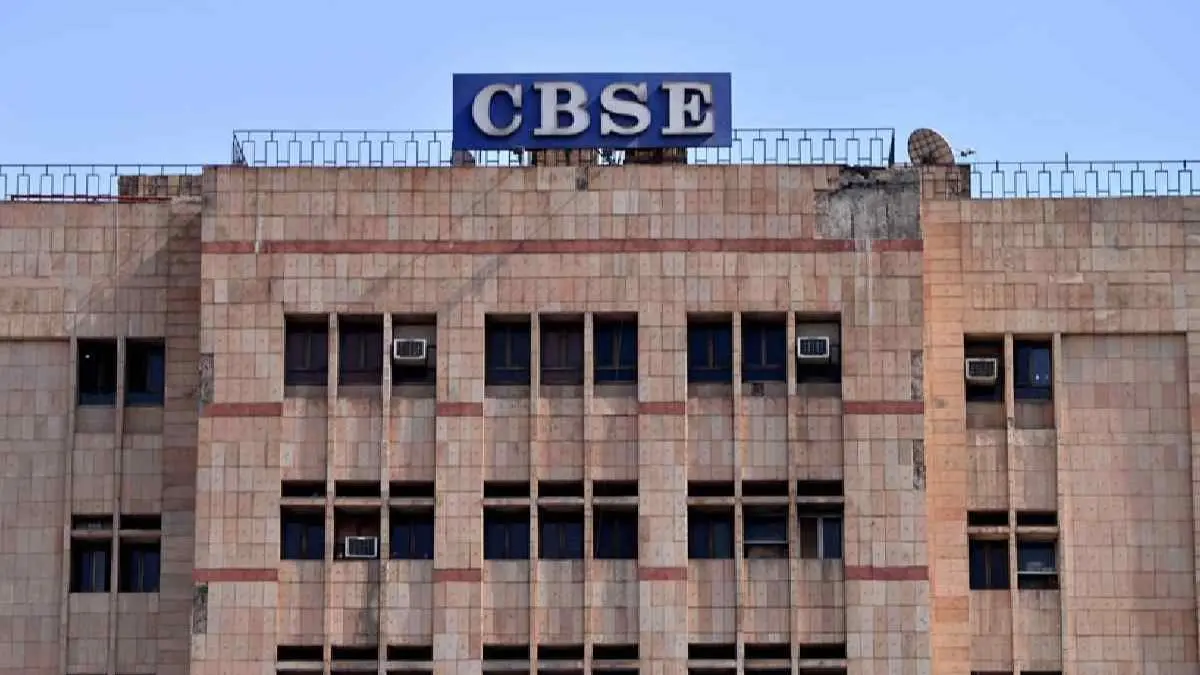
New Delhi: The Central Board of Secondary Education (CBSE) has postponed the launch of its portal for verifying and re-evaluating Class 12 answer sheets. The gateway, which was originally scheduled to go live on May 29, will now open on June 1, 2026. The board confirmed the decision in a statement posted on X on Friday, claiming that the delay was required to keep the process clear and free of technical problems for students applying through the Post-Result Activities portal.
“To ensure a transparent and glitch-free process for verification and re-evaluation of answer books of students who intend to submit their applications on the Post-Result Activities portal, it has been decided that the designated portal will now be operational from 1st June 2026. This is to ensure the highest standards and protocols of evaluation,” CBSE said.
Students who have doubts or need clarification have been advised to contact the CBSE Tele-Counselling Helpline at 1800 11 8004 or email resultcbse2026@cbseshiksha.in.
Who can apply and how will the process work?
The verification and re-evaluation capability will only be available to students who have submitted an application for and received scanned copies of their evaluated answer books.
Advertisement
According to Education Ministry sources, the reopening of the portal on June 1 will be the next step in the post-result review process under CBSE's On-Screen Marking (OSM) system. According to officials, students who have gotten scanned copies of their answer sheets will now be able to lodge question-by-question objections if they believe marks were not awarded correctly.
“The portal will reopen for the objections round. Students can challenge specific questions where they are not satisfied with the marks awarded. These questions will then be evaluated again and any change in marks, if warranted, will be notified subsequently,” an Education Ministry official said.Officials underlined that students will not request a comprehensive examination of the answer script. Instead, students will have to highlight individual questions where they believe there are differences.
Advertisement
During the procedure, candidates can request re-evaluation and object to question-specific marking. Once objections are raised, the indicated responses will be reviewed by subject matter experts using the OSM system. If a discrepancy is discovered, the marks will be amended and the updated score will be notified to the student.
CBSE has also requested students to thoroughly review the official marking scheme for the relevant subject, which is published on the board's website with the question paper, before raising objections. Students are expected to compare their responses to the specified marking system and explicitly identify situations when marks may not have been granted despite replies matching or substantially similar to the official scheme.
The board also recommended candidates to present details in a transparent and understandable manner so that their requests can be thoroughly reviewed. CBSE norms compel candidates to pay ₹500 per answer book for mark verification, and ₹100 per question for re-evaluation.
Revised process introduced after concerns over OSM evaluation
The revised review mechanism comes in response to concerns raised by several students and teachers following this year's Class 12 results, which were completely evaluated using the expanded On-Screen Marking system.
Following criticism and objections about the evaluation process, the Ministry of Education and CBSE previously announced significant reductions in post-result prices. Authorities also informed students that payments would be returned if their grades improved following assessment.
Education Ministry Secretary Sanjay Kumar had said the decision was aimed at ensuring that “no child feels, for any reason whatsoever, that they have received lower marks than they deserve.”
Under the revised fee structure announced earlier this month:
- The fee for obtaining scanned copies of evaluated answer sheets was reduced from ₹700 to ₹100 per subject
- Verification charges were cut from ₹500 to ₹100
- Re-evaluation fees were reduced from ₹100 to ₹25 per question
The ministry had also promised full refunds in cases where students receive increased marks after review.
Unlike the previous approach, which required students to first apply for verification and then wait for copies of answer books, the new OSM-based mechanism allows students to receive scanned copies of their evaluated scripts. They can then compare them to the official marking scheme, detect discrepancies, and submit question-specific concerns for expert evaluation.
Debate over falling pass percentage and OSM system
The adjustments come amid rising concern about the impact of the OSM system, which saw the overall Class 12 pass percentage decrease dramatically this year. CBSE earned a pass percentage of 85.20 percent in 2026, compared to 88.39 percent in 2025, the greatest drop in the prior seven years.
The fall in results led some students and teachers to question whether the newly developed digital evaluation system had affected marking standards.
However, CBSE and Education Ministry officials have defended the procedure, claiming that answer scripts were thoroughly verified by professional teachers and that no artificial intelligence was used in the evaluation process. According to CBSE Chairperson Rahul Singh, almost 77,000 teachers took part in the evaluation procedure after receiving extensive training.
Officials claim that the OSM system promotes transparency by digitizing answer books, decreasing calculating errors through automated summing, and allowing answer scripts to be examined across areas. Despite the controversy surrounding this year's results, the board has stated that the digital evaluation technique would most certainly continue in future exams.
CBSE is likely to keep the verification and re-evaluation portal online for at least two days after pupils receive a final scanned copy of a graded answer book.