
CBSE Introduces New Rules Allowing Affiliated Schools to Set Up Branch Schools for Primary Education
CBSE-affiliated schools are now eligible to set up these Branch Schools. Check details here.
- Education News
- 3 min read

;'%3e%3cpath%20d='m8,15.99c4.41,0,7.99-3.58,7.99-7.99S12.41,0,8,0,0,3.59,0,8s3.58,7.99,7.99,7.99Z'%20style='stroke:%23fff;%20stroke-miterlimit:10;%20stroke-width:.02px;'/%3e%3cpath%20d='m3.08,3.37l3.82,5.11-3.84,4.15h.87l3.37-3.64,2.72,3.64h2.94l-4.04-5.39,3.58-3.87h-.86l-3.1,3.35-2.5-3.35h-2.94Zm1.27.64h1.35l5.97,7.99h-1.35l-5.97-7.99Z'%20style='fill:%23fff;'/%3e%3c/g%3e%3c/svg%3e)


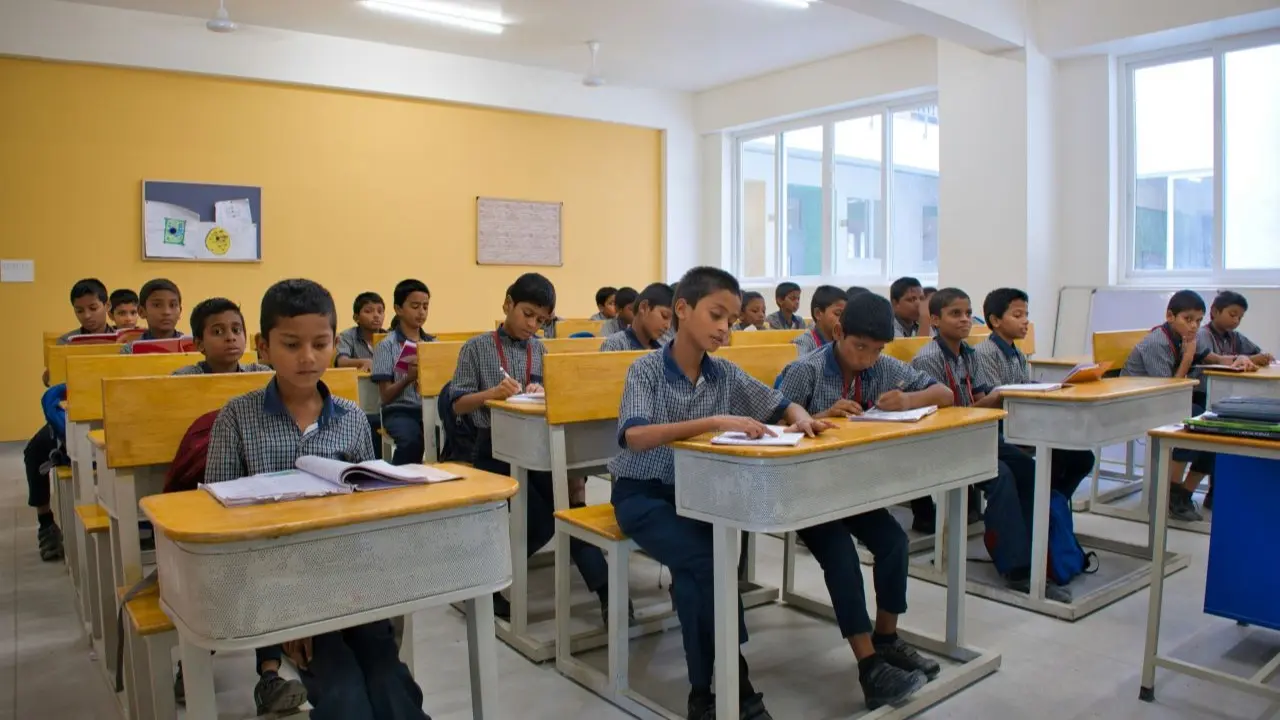
The Central Board of Secondary Education (CBSE) has introduced new rules that allow schools already affiliated with CBSE to establish "Branch Schools" for primary education, ranging from Bal Vatika to Class 5. Under the newly updated Affiliation Bye-Laws (Branch School) - 2025, CBSE-affiliated schools are now eligible to set up these Branch Schools.
These Branch Schools will operate from Bal-Vatika (pre-primary) to Class V. They will have their own infrastructure, teaching staff, and support personnel, but will still be managed by the same society, trust, or Section-8 company that runs the Main School. This new structure allows for greater flexibility while maintaining consistent management.
As per the official notice, “The Affiliation Bye-Laws (Branch School) - 2025 have been formally approved by the Governing Body, the highest decision-making authority of CBSE, and the Controlling Authority of CBSE, based on recommendations made by the Affiliation Committee during its meetings on November 29, 2024, and December 26, 2024.”
Advertisement
Applications to set up Branch Schools will be accepted from the academic session 2026-27 through the SARAS 6.0 Portal. The notification also clarifies that the affiliation and extension period for both the Main School and the Branch School will be the same.
Advertisement
Norms Foe Branch Schools:
- A Branch School must be located within the same city's municipal limits as the Main School. While the Main School will continue to serve students from Class VI to XII, the Branch School will focus on early education, from Bal-Vatika I, II, and III to Class V.
- Both the Main and Branch Schools will follow the same administrative and academic practices but must keep separate essential documents, such as Recognition, UDISE+, Land Certificate, Fire Safety Certificate, Building Safety Certificate, and Water and Sanitation Certificate.
- The No Objection Certificate (NOC) from the Main School will also apply to the Branch School.
- Admissions to the Branch School will be managed by the Main School, ensuring that students can smoothly transition from the Branch School to Class VI in the Main School without being treated as new admissions.
- The Main and Branch Schools will have separate principals or headmasters, along with distinct teaching and support staff. However, salary payments and financial records will be handled by the Main School.
- A Special Educator must be appointed for the Branch School, following the qualifications set by the Rehabilitation Council of India. Additionally, a separate Counsellor and Wellness Teacher with relevant credentials in psychology, child development, or career guidance must also be appointed.
Infrastructure Requirements for Branch School:
The guidelines state that a Branch School must have a minimum contiguous land area of 1,200 square metres. Schools with land areas of 1,600 square metres or more will be allowed to add extra sections, in line with the specifications outlined in Appendix V of the Affiliation Bye-Laws-2018. These new guidelines represent an important step towards expanding access to primary education, while ensuring that quality standards are maintained under CBSE's regulatory framework.