
World Radio Day 2025: 'Unlocking the Airwaves' Key Facts About Radio You Should Know
Radio is recognised as one of the most widely consumed mediums worldwide. Here are some key facts about radio, and all you need to know about World Radio Day.
- Education News
- 3 min read

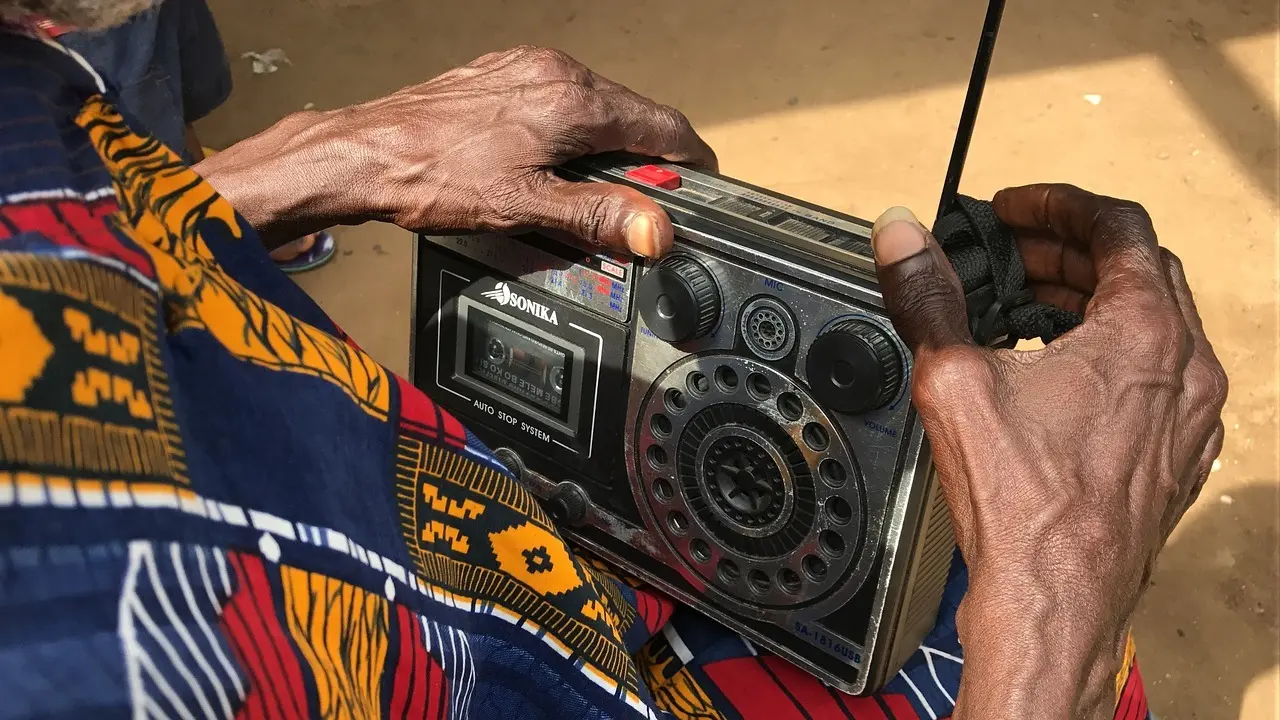
World Radio Day is observed on February 13 each year to celebrate radio as a vital medium for entertainment, information, and communication. The radio came into existence commercially in the early 1920s. Radio stations came into existence almost three decades later and the radio and broadcasting system became a common commodity around the world by the 1950s.
Nearly six decades later, in 2011, UNESCO Member States designated February 13 as World Radio Day. It was adopted by the United Nations General Assembly in 2013 as an international event.
Radio is recognised as one of the most widely consumed mediums worldwide. According to the UN, radio has the power to "influence how a society perceives diversity, serve as a platform for all voices to speak up, and ensure they are heard and represented."
Have You Ever Wondered How Radio Works?
Radio works by transmitting and receiving radio waves, which are a type of electromagnetic radiation. The electricity flowing into the transmitter antenna makes electrons vibrate up and down it which produces radio waves.
Advertisement
Radio waves have a frequency, which is the number of waves that pass a given point each second. AM radio uses kiloHertz (kHz) to measure frequency, while FM radio uses megaHertz (MHz).
Radio in India
Radio broadcasting commenced in India during the early 1920s, with the first programme aired by the Radio Club of Bombay in 1923. The Indian Broadcast Company (IBC) was inaugurated in Bombay by Lord Irwin, the Viceroy of India, during the same period.
Advertisement
- All India Radio (AIR), established in 1956, stands as one of the largest radio networks globally.
- FM broadcasting began on July 23, 1977, in Chennai.
- Until 1993, AIR held a monopoly on radio broadcasting in India.
- Radio City Bangalore became the first private FM radio station, launching on July 3, 2001.
- In India, private FM stations are prohibited from broadcasting news.
Who Invented Radio?
It is generally believed that the first radio transmission was made by Guglielmo Marconi in 1895. However, Jagadish Chandra Bose was the first to demonstrate the scientific principles behind capturing radio waves, while Marconi invented the radio transmitter in the 1890s.
In November 1895, Bose conducted a public demonstration at Town Hall in Calcutta, where he transmitted an electromagnetic wave over a distance of 75 feet. This wave passed through walls to ring a bell remotely and ignite gunpowder. Bose made pioneering contributions to radio and microwave optics, alongside significant advancements in plant science. He is often referred to as the father of wireless telecommunication.
On the other hand, Guglielmo Marconi, an Italian born on April 25, 1874, is credited with inventing the radio. He achieved breakthroughs in long-distance radio transmission and was honoured with the Nobel Prize in Physics in 1909, shared with Karl Ferdinand Braun, for their pioneering work in wireless telegraphy.