
Remembering William Friedkin: The Exorcist director whose legacy goes beyond the film
William Friedkin, who won the best director Oscar for The French Connection, died Monday in Los Angeles. Here's a deep dive into his nebulous career.
- Entertainment News
- 4 min read

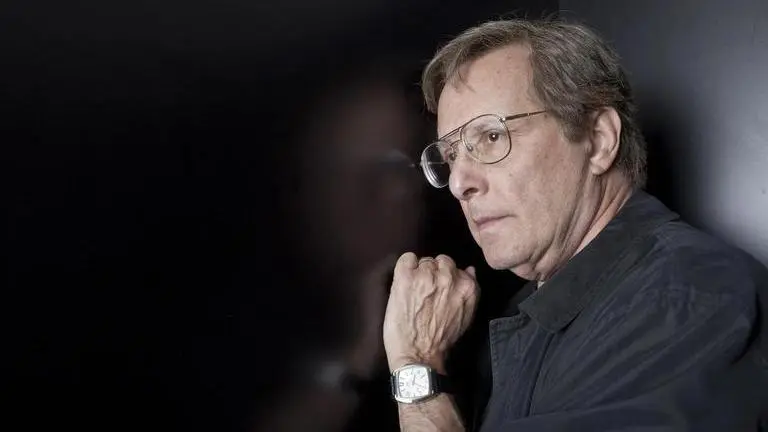
Hollywood director William Friedkin passed away on Monday. He was 87. The director is best known for The Exorcist, released in 1973. The feature has some of the most unhinged, raw, and grotesque performances, which stand unrivalled even now. However, a deeper look into Friedkin’s filmography reveals that the horror genre was not the main part of his repertoire, but crime and thriller dramas were.
3 things you need to know:
- William Friedkin received critical acclaim when he was only in his 30s.
- The director received an Oscar for his 1971 film The French Connection.
- He was even approached to produce Star Wars, but couldn’t see potential in it at the time.
The filmmaker’s humble beginnings
William made his directorial debut in 1967 with Good Times, which was a musical-comedy western. The film parodied several genres such as spy-thrillers, westerns, popular mysteries and even the classic Tarzan movies. The film was less than successful at the box office and suffered critical panning as well.

(Director William Friedkin poses with his Golden Lion Lifetime Achievement award at the 70th edition of the Venice Film Festival in Venice, Italy | Image: AP)
Advertisement
His follow-up, The Birthday Party, was his first venture into neo-noir drama. After it received good reviews, he shifted around comedy and drama flicks with The Night They Raided Minsky’s (1968) and The Boys in the Band (1970).
William Friedkin’s first success was an action-thriller
It was with The French Connection that Friedkin found true success. A New York City-based action-thriller featuring Gene Hackman as a cop trying to take down a mafioso behind a heroin drug trade, the 1971 feature scored eight Academy Award nominations. It won the Oscars for Best Picture, Film Editing, Screenplay, Best Actor, and Best Director, with the then-32-year-old being hailed as the frontrunner of new-generation filmmakers by critics.
Advertisement

(William Friedkin, Gene Hackman, and Philip D'Antoni posing with their Oscars for The French Conneciton alongside actress Jane Fonda | Image: AP)
Friedkin quickly pivoted from the genre as well, only to return to it years later with films such as Sorcerer (1977), and the Al Pacino starrer Cruising (1981). The Exorcist (1973), ironically, is touted as his most defiant film, which means it was completely unlike anything he’d done before. While The Exorcist featured a lot of stellar performances, Friedkin is said to have cultivated a lot of extreme conditions on set to keep the actors naturally unhinged. He actually fired blank shots behind some of the actors' heads, which he later said in an interview with The Quietus was a common practice by filmmakers at the time.
An uphill battle to reach the peak again
The Exorcist created history by becoming the first horror film to get an Oscar nomination in the Best Picture category. Of the ten nominations, the supernatural horror offering won in the Best Adapted Screenplay and Best Sound categories. After the prolific run, Friedkin recalled in his 2012 memoir that he embodied “arrogance, insecurity and ambition that spur me on as they hold me back.” However, he went on to have an incredible body of work and worked on To Live and Die in L.A. (1985) Rules of Engagement (2002) and a TV remake of the 1957 film 12 Angry Men in 1997.

(William Friedkin at a photoshoot in Venice, Italy | Image: AP)
Friedkin also made a return to horror with films such as The Guardian (1990), which failed to capture the success he once saw with The Exorcist. His final film, which is a legal drama The Caine Mutiny Court-Martial, is an adaptation of a play of the same name. It is scheduled to premiere at the 80th Venice International Film Festival in September 2023.