
Zack Snyder's Justice League: What makes Snyder's epic different from the 2017 film?
Zack Snyder's Justice League is now available for streaming all over the world. Read on to find out how does it differ from the version made by Joss Whedon.
- Entertainment News
- 5 min read

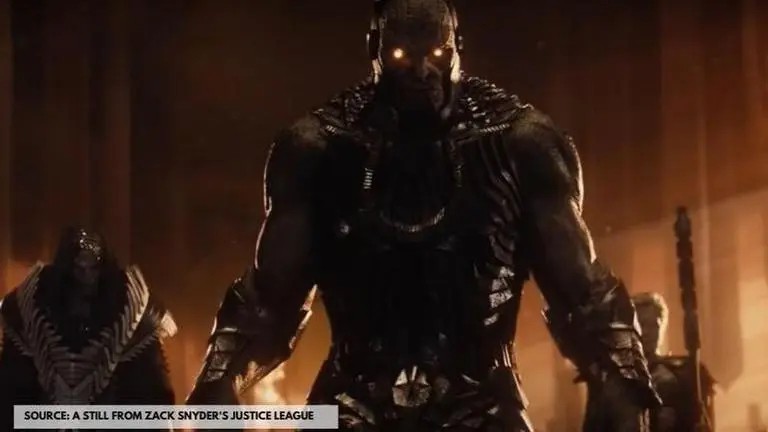
Zack Snyder's Justice League has finally made it to streamers all across the globe after a four-year-long campaign on the part of fans, actors, and Snyder's fellow industry mates. The feature presentation, much unlike its 2017 version, has been hailed critically as well as commercially. Several people have pointed out various points of difference between the Snyder Cut and Whedon Cut in terms of its storylines, character arcs, and the way the two films portray and show how much the director respects women, amongst others.
This article will essentially list down the points that make Joss Whedon’s Justice League, which is known as the Justice League, different from Zack Snyder's fully-realised version of the film featuring his choice of DC characters. Scroll down to see what separates Justice League from Zack Snyder's Justice League.
Difference between Snyder cut and Whedon Cut:
1) Character arcs:
One of the several things that made Joss Whedon’s Justice League vastly different from Snyder's Magnum Opus that recently saw the light of day was the way in which the two films brought to light the motivations that each and every single character harbours within oneself. In addition to the same, Whedon, who became infamous for providing negligible to non-existent character arcs in his Justice League, did not back the final battle with reasoning and logic. For example, Whedon's version famously did not provide a backstory for Ray Fisher's Cyborg and did not justify why was Steppenwolf wreaking havoc on earth.
Snyder's version, on the other hand, revealed that it was a matter of getting into the good graces of Ray Porter's Darkseid by conquering planet earth for him. Cyborg, on the other hand, had the motivation of avenging the death of his father, which was fuelled by the trauma of the loss of his mother, in addition to the need for saving the world from becoming a planet inhabited by Parademons, while Darkseid is portrayed as a plain conqueror who just wants all of the multiverses for himself. These backstories made Snyder's characters rootable as well as the kinds with whom the audience members can empathize.
Advertisement
2) The treatment of women:
Joss Whedon's Justice League famously got flack for a particular scene that shows Ezra Miller's Barry Allen falling right on top of Gal Gadot's Diana Prince/Wonder Woman, burning the former's face in the latter's chest. In addition to the same, several Whedon haters and fans pointed out that the rear ends of the female characters were displayed extensively in the Whedon cut. This was deemed as something that was done in a bad taste and out of a place of disrespect for women. Some even said that such a move was downright misogynistic. Snyder's version, much like every other film that is a part of Snyder's filmography, treats the female characters with respect and highlights the role of mothers and women.
3) Quality of VFX:
A scene in the final trailer of Justice League, which sees Ray Porter's Uxas/Darkseid reaching out for the soil of the Earth when he came to conquer it for the first time, several millennia ago, has been pointed out by many as Snyder's way of saying that they can create photo-realistic computer-generated antagonists. Joss Whedon's Justice League, amongst the various thing that it was panned for, also attracted criticism for sub-par computer graphics and making its one and only antagonist, Ciarán Hinds' Steppenwolf, seemingly child-friendly, which proved to be counter-productive, since Hinds' conqueror of the worlds wasn't evoking as much fear as the studio hoped for during the film's release in '17. Snyder's Steppenwolf, on the other hand, has been hailed for actually looking like an other-worldly being, much like his Darkseid, who bears several similarities to his comic book counterpart while maintaining a sense of realism about him.
Advertisement
4) Brand and timing of humour:
Several viewers have also pointed out that much like Whedon's decision of shooting the women of his version of the film from derogatory angles, the jokes that he incorporated in the film were also in bad taste and had sub-optimal timing. In fact, many of the jokes/gags that made it to the 2017 version were actually penned down by Snyder and his team and do make it to his version of the film, but as far the 2017 movie is concerned, many of the jokes were recontextualised and some were removed, which caused it to score low on the humour quotient. "Crass" was amongst several words that were used for the humour that was witnessed by the viewers of the 2017 film, something that Snyder reportedly still hasn't seen yet. The brand of humour that the viewers of Zack Snyder's Justice League got to witness, on the other hand, was termed as "tasteful", "classy" and "contextually apt", amongst others.
5) Depth of Story
The 2017 version of Justice League left a lot of movie fanatics in a state of disbelief that an intellectually and emotionally shallow film like 2017's Justice League came out of a director who made the first Avengers film and its sequel, namely Avengers: Age Of Ultron. As fate would have it, the film was also panned for taking a major departure in terms of the depth that its comic book counterparts had. The Depth would come to be restored and even enhanced by Snyder himself four years later, which is one of the reasons why the film became a redemption story for several people that were involved with the project.