
'Spider Apocalypse': Cobwebs blanket Australian landscape after floods
Victoria in Australia saw thick blankets of cobwebs after it was hit by heavy rains and flooding, due to which some coined this as a “spider apocalypse.”
- Entertainment News
- 2 min read

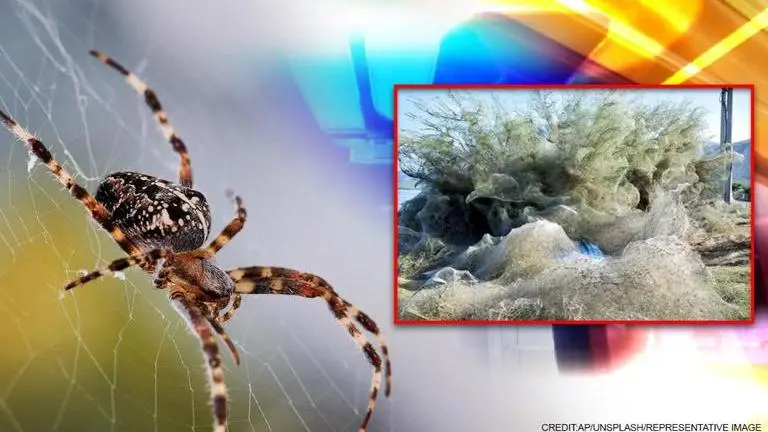
Australia’s Victoria witnessed thick blankets of cobwebs after it was hit by heavy rains and flooding, due to which some coined this phenomenon as a “spider apocalypse.” Some images from Gippsland of Victoria have been clicked which show cobwebs covering large areas like a sheet. As per experts, the veils are created by a survival tactic known as "ballooning", where spiders throw out silk to climb to higher ground.
How about this photos of spider webs after the floods. Photo taken at Longford, near Sale in Victoria, Australia. pic.twitter.com/iaQamK7JML
— Dr Peter (@omeara_p) June 15, 2021
Last week, Victoria was hit by heavy rains, flooding, and high winds, which led to thousands of people evacuating. There are still many who remain without power in the state as authorities repair transformers and clear roads. As per a report by The Age, millions of spiders have evacuated their waterlogged nests to take refuge in trees and plants, blanketing the small Gippsland town of Longford in a dense veil of silken webbing after the flooding. The East Gippsland town was one of the hardest-hit areas.
Australia's Victoria Sees Wild Winds, Floods
On June 9, wild weather in southeast Australia toppled trees, trapping people in cars and houses and cutting power to more than 200,000 homes as many braced for flooding. The extraordinary weather system that hit the state of Victoria and its capital Melbourne last Wednesday night brought wind gusts of up to 119 kilometers (74 miles) per hour and up to 20 centimeters (8 inches) of rain, meteorologist Kevin Parkin said. Australia's second-most populous state had not been lashed by such a severe wind and rain event since 2008, officials said. Several major roads had been closed by floodwater, a landslide, and fallen trees. Collapsed power lines also posed dangers and left more than 200,000 homes across Victoria without electricity. Emergency services received more than 5,000 calls for help and 3,500 of those related to trees falling on houses and trapping people.