
Good news: Mumbai's Dharavi reports single-digit COVID-19 cases after 2 months
Asia's largest slum Dharavi, after two months of reporting a spike in cases on Tuesday, confined at single digits, with only nine fresh cases.
- India News
- 3 min read

;'%3e%3cpath%20d='m8,15.99c4.41,0,7.99-3.58,7.99-7.99S12.41,0,8,0,0,3.59,0,8s3.58,7.99,7.99,7.99Z'%20style='stroke:%23fff;%20stroke-miterlimit:10;%20stroke-width:.02px;'/%3e%3cpath%20d='m3.08,3.37l3.82,5.11-3.84,4.15h.87l3.37-3.64,2.72,3.64h2.94l-4.04-5.39,3.58-3.87h-.86l-3.1,3.35-2.5-3.35h-2.94Zm1.27.64h1.35l5.97,7.99h-1.35l-5.97-7.99Z'%20style='fill:%23fff;'/%3e%3c/g%3e%3c/svg%3e)


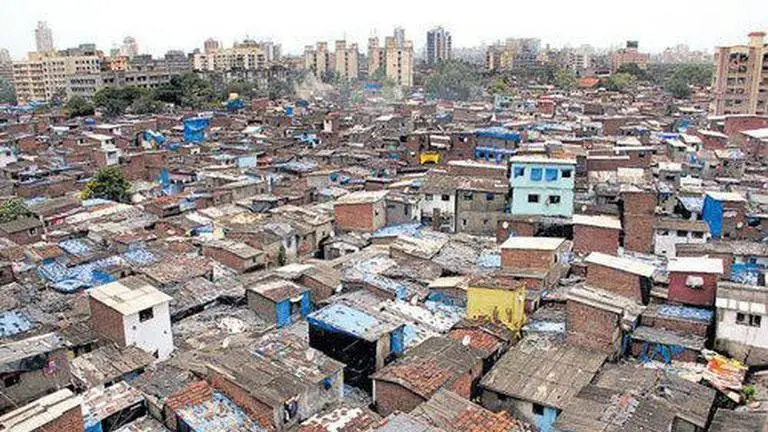
In positive news amid the grim COVID-19 situation in the country, Asia's largest slum Dharavi, after two months of reporting a spike in cases on Tuesday confined at single digits, with only nine fresh cases reported in the day. The slum, situated in the heart of Mumbai, has over six lakh people living in close proximity, which makes social distancing, a prerequisite for curtailing the spread of the virus, an impossible task. However, with the BMC's 'Mumbai Model' in place, the slum has been successful in flattening the COVID curve.
In the first wave, the highest single-day spike in COVID-19 cases in the slum was recorded on May 3, 2020, with 94 cases, and thereafter in the second wave, the number was breached on April, 8 with 99 cases. However, with the 'Mumbai Model' in place, after two months of reporting a spike in cases, the slum on Tuesday reported a sharp decline, with only 9 fresh cases reported in the day. At present, there are 727 active cases there.
It is also pertinent to mention that over 5,561 patients have recovered from the infection in Dharavi since the outbreak of the pandemic in March 2020.
'Mumbai's COVID Model'
The 'Mumbai Model' chalked out by the BMC, keeping in view the challenges faced in the first wave, is an amalgamation of exactly the policies needed to put up a strong fight against COVID in the second wave, and waves awaiting thereafter. As per BMC, "The Mumbai Model is a mix of decentralization, augmenting infrastructure and keeping a close watch on the loopholes in order to plug them."
Advertisement
As part of the model, the Municipal Corporation decentralized the disaster control room into 24 COVID response war rooms, one for each of the city's administrative wards, which were functional with their own dedicated helpline numbers. A group of doctors, medical interns, school teachers, and social workers have been operating these, round-the-clock in eight-hour shifts, and address the issues of the people at large, starting from bed allotment to oxygen supply.
On Monday, NITI Aayog CEO also hailed the model. In a tweet, he wrote, "Centralized bed allotment, anticipating oxygen storage facilities, common allotment of beds even in Private hospitals, dashboards for monitoring, war rooms for patient follow up. Inspirational Mumbai model of COVID Management. Congrats BMC Commissioner Chahal & his Great team".
Advertisement
Centralized bed allotment, anticipating oxygen storage facilities, common allotment of beds even in pvt hospitals, dashboards for monitoring , war rooms for patient follow up. Inspirational Mumbai model of Covid Mngmnt . Congrats @mybmc Commissioner Chahal & his Gr8 team. pic.twitter.com/WHE8P62137
— Amitabh Kant (@amitabhk87) May 9, 2021
It is pertinent to mention here that COVID cases in Mumbai have significantly gone down. From over 10,000 cases being reported every day in the whole of April, the number has come down to below 2000 cases being reported daily in the past couple of days.
(Credit-PTI)