
Delhi government extends cashless surgery scheme for black fungus patients
As per the Delhi government, patients who desire to receive benefits of the scheme need to mandatorily be citizens of Delhi.
- India News
- 3 min read

;'%3e%3cpath%20d='m8,15.99c4.41,0,7.99-3.58,7.99-7.99S12.41,0,8,0,0,3.59,0,8s3.58,7.99,7.99,7.99Z'%20style='stroke:%23fff;%20stroke-miterlimit:10;%20stroke-width:.02px;'/%3e%3cpath%20d='m3.08,3.37l3.82,5.11-3.84,4.15h.87l3.37-3.64,2.72,3.64h2.94l-4.04-5.39,3.58-3.87h-.86l-3.1,3.35-2.5-3.35h-2.94Zm1.27.64h1.35l5.97,7.99h-1.35l-5.97-7.99Z'%20style='fill:%23fff;'/%3e%3c/g%3e%3c/svg%3e)


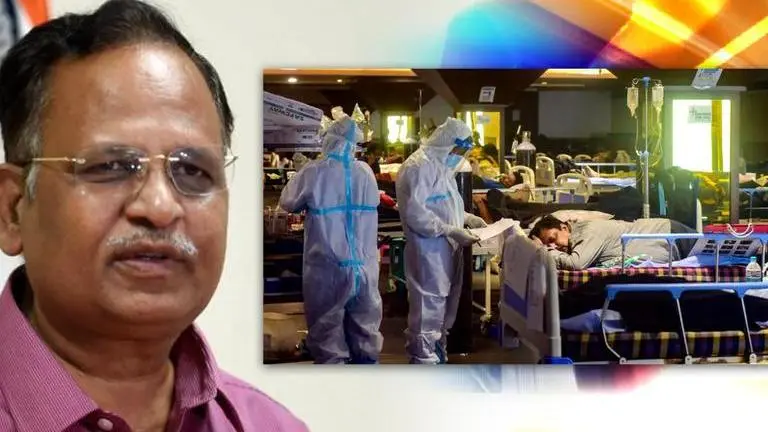
In a significant development, the Delhi Health Minister, Satyendra Jain on Wednesday extended the cashless surgery scheme under the 'Delhi Arogya Kosh' for the treatment of patients suffering from Black Fungus or Mucormycosis.
"If waiting period is more than 7 days, patients be referred to private hospitals"
The government has also allowed its hospitals to refer patients of black fungus to enlisted private hospitals for surgeries if the waiting period is more than seven days. The Delhi government on March 27 had declared Black Fungus an epidemic, in view of its rising cases in the national capital.
The health minister took to Twitter while making the announcement regarding the free-of-cost surgeries.
Delhi Govt has extended its cashless surgery scheme of Delhi Arogya Kosh for the treatment of Mucormycosis.
— Satyendar Jain (@SatyendarJain) July 28, 2021
Residents of Delhi undergoing treatment of Mucormycosis in Delhi Govt hospital can be referred to empanelled private hospital under this cashless scheme for the treatment. pic.twitter.com/qu9ppELmxw
Scheme applicable only for Delhi citizens
As per the Delhi government, patients who desire to receive benefits of the scheme need to mandatorily be a citizen of Delhi.
Advertisement
According to the official data by the government, there were a total of 952 active cases of Black Fungus in Delhi as of July 6. The data also showed that till July 6, Delhi had recorded over 1,650 cases of Black Fungus.
There is "limited capacity for performing surgeries pertaining to Mucormycosis in Delhi government hospitals", reads the official memorandum shared by the Delhi Health Minister. Under Delhi Arogya Kosh, the city government provides financial assistance to the extent of ₹ 5 lakh to the needy eligible patients for treatment of any illness in government hospitals.
Advertisement
Until July 15, Mucormycosis also known as 'black fungus' has claimed 4,245 lives in India, Union Health Minister Mansukh Mandaviya had informed the Rajya Sabha on July 22.
What is Black fungus?
Mucormycosis is a fungal infection that mainly affects people who are on medication for other health problems that reduce their ability to fight environmental pathogens. While it is very rare, it can lead to loss of the upper jaw and sometimes even the eye. Sinuses of such individuals get affected after fungal spores are inhaled from the air. Warning signs include pain and redness around the eyes and/or nose, fever, headache, coughing, shortness of breath, bloody vomit and altered mental status. According to the government's advisory, the black fungus infection should be suspected when there is sinusitis, one-sided facial pain, numbness or swelling, toothache, blurred or double vision with pain, chest pain, etc.
This infection has been witnessed in cases of uncontrolled diabetes mellitus, immunosuppression by steroids, prolonged ICU stay, and co-morbidities. Some of the tips for prevention include using masks at dusty construction sites, maintaining personal hygiene including through scrub bath, using steroids and antibiotics judiciously, controlling hyperglycemia and monitoring blood glucose levels post-COVID-19 discharge. It is imperative that people should not lose crucial time to initiate treatment for Mucormycosis, the Centre has advised.