
Aligarh: An outright Mughal creation or the base of Dor Rajputs?
Aligarh is believed to be founded during the Mughal era, the city traces its roots to 300 AD and is suggested to be a Rajput establishment
- India News
- 4 min read

;'%3e%3cpath%20d='m8,15.99c4.41,0,7.99-3.58,7.99-7.99S12.41,0,8,0,0,3.59,0,8s3.58,7.99,7.99,7.99Z'%20style='stroke:%23fff;%20stroke-miterlimit:10;%20stroke-width:.02px;'/%3e%3cpath%20d='m3.08,3.37l3.82,5.11-3.84,4.15h.87l3.37-3.64,2.72,3.64h2.94l-4.04-5.39,3.58-3.87h-.86l-3.1,3.35-2.5-3.35h-2.94Zm1.27.64h1.35l5.97,7.99h-1.35l-5.97-7.99Z'%20style='fill:%23fff;'/%3e%3c/g%3e%3c/svg%3e)


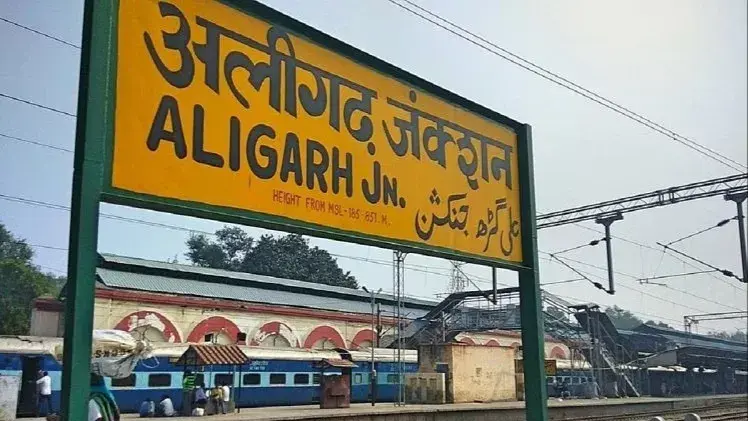
Another major city in Uttar Pradesh, Aligarh, is awaiting a name change. While the city is believed to have been founded during the Mughal era, the city traces its roots to 300 AD and is suggested to be a Rajput establishment. Dor tribe of Rajput clan held the city for centuries and Hindu and Buddhist remains found in the city till date stand in deposition to the same.
The Aligarh Municipal Corporation passed a resolution seeking a change in the city's name to 'Harigarh'. The resolution was presented by Mayor Prashant Singhal in a meeting on Monday and gained unanimous support from all the councillors. The proposal has been officially forwarded to the Uttar Pradesh Government, and there is optimism from Aligarh's Mayor that it will receive prompt approval by Chief Minister Yogi Adityanath’s office.
Since he came to power, CM Adityanath Yogi indicated that his Government will keep up with its spree of renaming places across the State. Earlier, the Yogi Adityanth Government had already changed the name of Faizabad district to Ayodhya, Allahabad to Prayagraj and rechristened Mughalsarai Junction as Pandit Deendayal Upadhyay Junction.
An attempt at restoration by Kalyan Singh
A similar attempt to trace the roots of the city was made by Bharatiya Janata Party leader Kalyan Singh during his tenure as the Chief Minister of the state. In 1992, former Chief Minister Kalyan Singh worked in that direction but could not succeed as there was a Congress Government at the Centre.
Advertisement
In 2015, the Vishwa Hindu Parishad also pushed for recognition of the fact that Aligarh's original name was 'Harigarh'.
Kol: Founded by Dor Rajputs
Before the 18th century, the city of Aligarh was known as Kol or Koil. While the origin of the name is a bit uncertain, historians believe that it could refer to a tribe or caste, or the name of a sage or demon. Further, studies have revealed that the district was once fairly covered by forests, thickets and groves.
Advertisement
The city was named Kol by Balarama, who slew here the great Asura (demon) Kol and with the assistance of the Ahirs subdued this part of the Doab, suggested Edwin T. Atkinson, an Irish lawyer employed in the Indian Civil Services.
In another account, Atkinson points out a ‘legend’ that Kol was founded by the Dor tribe of Rajputs in 372 AD. This is confirmed by the existence of the Dor fortress situated in the centre of the city, which is now in ruins. Before the devastating invasions began, Kol was held by the Dor Rajputs and in the time of Mahmud of Ghazni the chief of the Dors was Hardatta of Baran.
Invasions begin
Mughals were not the first invaders interested in Kol. Towards the end of 1100 AD, Qutub-ud-din Aibak marched towards Kol and appointed Hisam-ud-din Ulbak as the first Muslim governor of Kol. The city was then known as ‘one of the most celebrated fortresses of Hind’.
Ibn Battuta, belonging to the Yuan dynasty of China, stated that the city was disturbed due to attacks by Hindus in 1341 AD. He described the city as “a fine town surrounded by mango groves” and suggested that the city had acquired the name of Sabzabad or the green country from these groves.
During Mughal emperor Akbar's reign, Koil became a Sirkar and was visited by both Akbar and Jahangir. Jahangir mentions the forest of Kol, stating that he hunted wolves there.
During the Lodi dynasty, the son of Umar Muhammad was governor of Kol and had built a fort in the city. He named the city after him- Muhammadgarh in 1525. Later, Sabit Khan rebuilt the old fort and named the city Sabitgarh.
Battle of Ghasera and Hindu rulers fighting for their heritage
Kol was ruled by Bargujar King Rao Bahadur Singh, as the Singh ruled it from AD 1184 after the marriage of Raja of Kol Ajit Singh’s daughter to Raja Pratap Singh Bargujar. In early 1753, the Bargujar Chief rose against the destruction of Hindu temples.
Jat ruler Surajmal in 1753, with patronage from Jai Singh of Jaipur and the Muslim army occupied the fort of Koil, the Bargujar Raja Bahadur Singh continued the battle from another fort under them and died fighting in what is known as the “Battle of Ghasera”. It was re-named Ramgarh and finally, when a Shia commander, Najaf Khan, captured Kol, he gave it its present name of Aligarh. Aligarh Fort (also called Aligarh Qila), as it stands today, was built by French engineers under the control of French officers Benoît de Boigne and Perron.