
Updated 26 May 2022 at 12:02 IST
As Modi government turns 8, a look at key socio-economic reforms introduced by the Centre
As the Modi government in India completes 8 yrs in power on May 25, BJP is organising public gatherings to educate poor and weaker sections about govt schemes.
- India News
- 3 min read

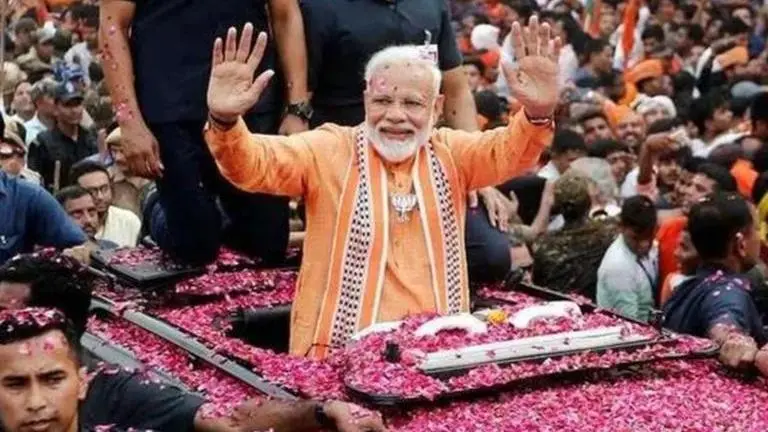
As the Narendra Modi regime in India completes eight years in power on May 25, these years of governance have been self-reflective in every aspect pertaining to the development of the country. Since May 25, 2014, PM Modi's government has incorporated systematic reforms for the welfare of the people of the country and at the same time, the development of the country eyeing the future.
Key social reforms during 8 years of PM Modi regime
The journey of reforms started by the Modi Government began with the launch of the revolutionary Swachh Bharat Abhiyan in 2014, a nationwide campaign to eliminate open defecation and improve solid waste management. In a bid to safeguard Muslim women from the hardships of "Triple Talaq," the Modi government criminalised the practice in July 2019, when the then Union Minister Arun Jaitley hailed the Supreme Court’s verdict making the practice unconstitutional.
With a focus on reforms to uplift women of the country, the PM Modi government has recently sought to raise the minimum age of marriage for women to 21.
Digital India to propel India's prospects on the technological front
Apart from the aforementioned social reforms, the Modi regime strived to bolster India's prospects on the digital front and bring its citizens from all walks of life under an umbrella where they will avail of equal access to technology, through the "Digital India" campaign. Launched in 2015, the Digital India initiative aims to increase internet access across the country. The initiative has now been coupled with the Gati Shakti infrastructure plan. The Gati Shakti infrastructure plan envisages integrating the development of infrastructural works in the country to a never-achieved level by combing the cooperation of all the concerned departments of the government.
Advertisement
Jan Dhan Yojana, PM Awaas Yojana & Har Ghar Nal Se Jal Yojana
The Modi Government launched the Jan Dhan Yojana, a reform seeking the financial inclusion of the people in the country and as of December 2021, over 44.23 crore Jan Dhan accounts hold Rs 1.50 lakh crore in the country. The PM Awaas Yojana program, which was launched to provide affordable housing to the people of the country, has seen the completion of over 6 million houses as of now.
In 2019, the Modi government launched Har Ghar Nal Se Jal Yojana to provide potable tap water to every house in the country by 2024 including 192 million rural households.
Advertisement
Be the implementation of AADHAR or enabling the all-around growth for India making it the third-largest hub for Unicorns (startups with a net value of $1 billion) or leading India to the number one spot in digital payments. The government has pushed India to realise its potential. From the abrogation of 370 to the tightening of the UAPA (Unlawful Activities Prevention Act), the Modi Government has put the nation first. Numerous measures taken for Corporate India saw BSE rallying record highs.
To celebrate its 8-years in government, the BJP is organising public gatherings to educate poor and weaker sections of the country about the government schemes and services for them.
Published By : Ajay Sharma
Published On: 26 May 2022 at 12:00 IST