
Bengaluru woman complaints of headaches, after inspection doctors found a living botfly larva
Neelima's ordeal began with excruciating pain and a peculiar crawling sensation on her scalp, prompting her to seek medical attention.
- India News
- 2 min read

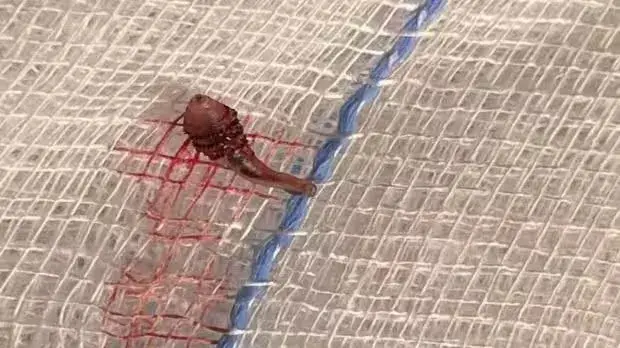
In a bizarre and rare medical case, a 26-year-old wildlife conservationist, Neelima (name changed), working with an NGO in Bengaluru, recently underwent surgery to remove a live botfly larva infesting her scalp.
Neelima's ordeal began with excruciating pain and a peculiar crawling sensation on her scalp, prompting her to seek medical attention. After enduring a week of discomfort, she consulted doctors at Trilife Hospital in Bengaluru, where the shocking discovery of a live botfly larva was made.
Rare case says doctor
Dr. Raghavendra Kaladagi, Consultant Plastic Surgeon at Trilife Hospital, highlighted the uniqueness of the case, stating, “This is a rare case. In India, botfly infestations are not commonly seen and could easily be misdiagnosed due to their symptom resemblance to common skin conditions, like furuncles.”
The surgical procedure, conducted under local anesthesia, involved a meticulous incision in the scalp to extract the live larva. Fortunately, the surgery was successful, and Neelima experienced no complications post-operation.
Advertisement
Dr. Kaladagi explained that Neelima presented with swelling and intense pain in a specific area of the scalp. The swelling was progressively increasing, accompanied by a crawling sensation. Following a thorough examination and consideration of Neelima's travel history, doctors diagnosed her with myiasis—an infection caused by a fly larva—and recommended immediate surgical intervention.
This case underscores the importance of early detection and removal of botfly larvae. Failure to do so can result in severe tissue destruction, with the potential development of adult botflies. Dr. Kaladagi urged medical professionals to maintain a high index of suspicion, especially when dealing with patients who have recently traveled to regions like South America, where botflies are more prevalent.
Advertisement
Dr. Neema Sandra Dias, Consultant Dermatologist at Trilife Hospital, emphasized the need for preventive measures for those traveling to botfly-prone regions. This includes wearing caps or hats, clothing covering the entire body, and using insect repellents when visiting areas like the Amazon rainforests or engaging in ecotourism in Central and South America.