
Updated 17 August 2023 at 20:08 IST
Chandrayaan-3 enters final leg of Moon landing process - what are the risk factors?
Chandrayaan-3 has entered the last leg of the moon-landing process. Here are the risks involved.
- India News
- 4 min read

ISRO on Thursday announced that the Chandrayaan-3 spacecraft's Lander Module comprising the lander (Vikram) successfully separated from the Propulsion Module that was propelling it all these days in space, marking a milestone in India's third lunar mission. The Vikram Lander and the rover (Pragyan) are now ready to be lowered into an orbit that takes it closer to the Moon’s surface. The soft landing on the Lunar south pole is scheduled on August 23.
"Thanks for the ride, mate! said the Lander Module (LM). LM is successfully separated from the Propulsion Module (PM). LM is set to descend to a slightly lower orbit upon a deboosting planned for tomorrow around 1600 Hrs., IST," ISRO said in a post on X (formerly Twitter).
After Thursday's separation, the lander is expected to undergo a “deboost” (the process of slowing down) to place it in an orbit, where the Perilune (the orbit’s closest point to the Moon) is 30 kilometres and Apolune (farthest point from the Moon) is 100 km, from where the soft landing on the south polar region of the Moon will be attempted, ISRO sources told PTI.
Meanwhile, the Propulsion Module will continue its journey in the current orbit for months/years, the country's space agency said.
Advertisement
On the momentous occasion of the Lander Module successfully separating from the Propulsion Module, Republic spoke to Prerna Chandra, Programing Engineer at Nehru Planetarium, to understand what the separation of the Propulsion Module from the Vikram lander means. Here are some excerpts:
If we talk about Chandrayaan-3, the major components are Propulsion, Vikram lander and Rover. The main function of the Propulsion is to carry the Lander Module from the launch vehicle into the orbit of the Moon. Today, the successful separation of the Lander from the Propulsion Module took place. On August 23, the soft landing of Lander will take place on the Moon at around 5.47 pm, as per ISRO. So, now the Lander will come in a very close orbit of the Moon and try to rectify the place where they have to land. Everything will be rectified before the landing happens for the Lander to have a safe landing. After Vikram Lander successfully lands on the Moon, the next step is for the Rover to come out of the Lander and do the mapping of the moon.
Advertisement
Risk factors in the landing of Vikram Lander
The risk partly is because of the surface of the Moon which is unpredictable but we have full-proof planning to successfully carry out the landing mission. However, unpredictable seismic activities that take place on the lunar surface, technological failure and any last-minute glitches or faults, are major concerns since during Chandrayaan-2, we missed our chance seconds before landing on the lunar surface. But, ISRO has assured about strong technology and types of equipment which can deal with all challenges.
On August 23, we are hopeful of a successful soft landing on the lunar surface after which the Rover will perform its work. Ahead of Vikram Lander's landing on the lunar surface, all aspects such as monitoring of the seismic activities and verification of the landing place etc, will be taken care of. After the soft landing of the Vikram Lander takes place successfully, the Rover will operate for one lunar day, which is approximately 14 Earth days. Thereafter, we will start getting images from the Moon. The Rover will stop working after 14 Earth days.
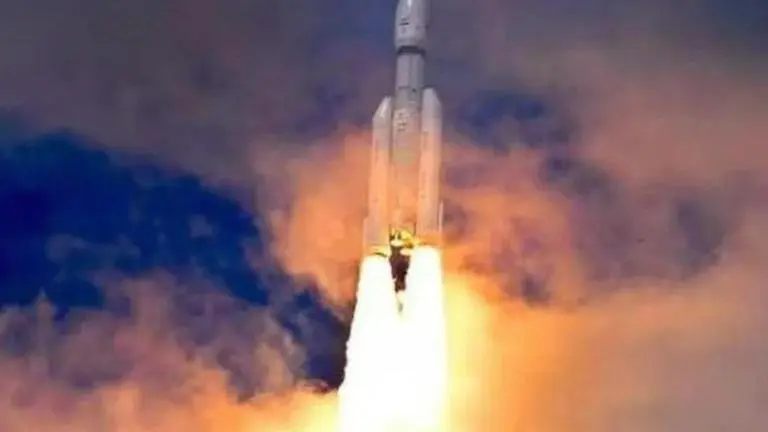
Post its launch on July 14, Chandrayaan-3 entered into the lunar orbit on August 5, following which orbit reduction manoeuvres were carried out on the satellite on August 6, 9, 14 and 16, ahead of the separation of both its modules today, in the runup to the landing on August 23.
Published By : Harsha Chandwani
Published On: 17 August 2023 at 20:08 IST