
Emergency 48th anniv: Findings of the Shah Commission report into the excesses committed
PM Modi commemorated the people who resisted the event and said that the dark days of democracy were totally opposite to the Indian Constitution.
- India News
- 4 min read

;'%3e%3cpath%20d='m8,15.99c4.41,0,7.99-3.58,7.99-7.99S12.41,0,8,0,0,3.59,0,8s3.58,7.99,7.99,7.99Z'%20style='stroke:%23fff;%20stroke-miterlimit:10;%20stroke-width:.02px;'/%3e%3cpath%20d='m3.08,3.37l3.82,5.11-3.84,4.15h.87l3.37-3.64,2.72,3.64h2.94l-4.04-5.39,3.58-3.87h-.86l-3.1,3.35-2.5-3.35h-2.94Zm1.27.64h1.35l5.97,7.99h-1.35l-5.97-7.99Z'%20style='fill:%23fff;'/%3e%3c/g%3e%3c/svg%3e)


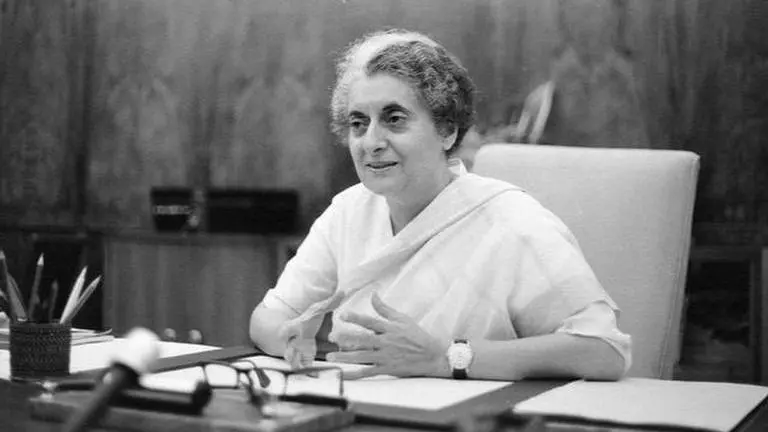
On the 48th anniversary of one of the most darkest chapters of Indian democracy - The imposition of the National Emergency by the then Prime Minister Indira Gandhi on June 25, 1975, PM Modi commemorated the people who resisted the event and said that the dark days of democracy were totally opposite to the values the Indian Constitution celebrates.
It’s important to recall that at the stroke of midnight on June 25, 1975, Indira Gandhi announced emergency and the then President Fakhruddin Ali Ahmed under Article 352 of the Constitution issued the order because of prevailing ‘internal disturbance’. The movement launched by 71-year-old freedom fighter Jayprakash Narayan against the then incumbent government was cited as one of the reasons behind the drastic decision. The other reasons include a petition filed in the Allahabad HC by Raj Narain, the candidate who lost to Indira Gandhi in the elections. He alleged Indira Gandhi used more money than was permissible and also alleged she employed corrupt practices during the polls. On June 12, 1975, the court order went against then Prime Minister Gandhi and her election to the parliament was ruled as null and void.
Shah commission report
The emergency declared by Indira Gandhi lasted for about two years - June 25, 1975 to March 21 1977. The order issued by the President gave sweeping powers to the prime minister to take decisions with regard to the elections even to the extent they can be suspended. The PM also had complete rights over taking decisions on curtailment of Civil liberties. During the torturous emergency period, the media was completely blacked out, leaders from across the political spectrum were arrested, thousands of people were tortured in jails and thousands even ‘disapperared’.
In the ensuing polls, Congress party was voted out of power, and was thereby replaced by a coalition Janata party government under the leadership of Morarji Desai. An inquiry commission was set up by the incumbent government to investigate the excesses committed during the emergency. The commission was headed by Justice J.C. Shah, a former chief Justice of India.
Advertisement
The government abused its power and engaged in arresting people under the pretext of preventive detention. People were arrested merely on the grounds that they may commit an offence. Striking out the judgement of several High Courts, the Supreme Court in April 1976 ruled maintaining the constitutional validity of such detentions during emergency.
The Shah Commission estimated that nearly 1,11,000 people were arrested under preventive detention laws. Torture in police custody and custodial deaths also occurred during Emergency. The excesses committed by Sanjay Gandhi, Indira Gandhi's younger son, became controversial. He took complete control over the government machinery and interfered in the functioning of the government. The commission also found he had a role in the demolitions and forced sterilisation in Delhi.
Advertisement
Misuse of Media
There is a considerable body of evidence to show that the translators of DAVP and the AIR were utilised for the translation of the Congress Party’s election manifesto.
Harassment of Kishore Kumar, Playback singer, by I&B Ministry
All songs of Kishore Kumar were banned from AIR and Doordarshan. All films in which Kishore Kumar was acting were to be listed out for further action. The decision was approved by Vidya Charan Shukla, the I&B Minister, which amounted to gross misuse of authority. The commission noted that it was clear that it had decided to teach Kishore Kumar a lesson because of his alleged misbehaviour with the Ministry officials.
Arrests and Detentions
A total of approximately 1,11,000 were arrested/detained during the 21 months of the Emergency. On average 176 people were being arrested/detained on a daily basis. The highest number of people were jailed in Uttar Pradesh (31,737) followed by Maharashtra (15,272), Madhya Pradesh (8,141) Kerala (7,924), and West Bengal (7,539)
Krishan Chand, then Lt. Governor of Delhi stated that detentions under MISA were made on the night of June 25, 1975, in pursuance of the decision taken by Indira Gandhi in the meeting held at her residence early in the evening on June 25, 1975.
Implementation of family planning/forced sterilisation programme
According to the Commission, the target set for sterilisation by the Indira Gandhi government was 24,85,000 for 1975-76, however, 26,24,755 people were sterilised. In the subsequent year 1976-77, the target was initially set for 42,55,000, which was again overshot to a staggering number - 81,32,209.