
Karnataka's tiger claw pendant crackdown: Here's what the law says about punishment, penalty
The Wildlife Protection Act of 1972 establishes a comprehensive legal framework for safeguarding, conserving, and effectively managing India's wildlife
- India News
- 3 min read

;'%3e%3cpath%20d='m8,15.99c4.41,0,7.99-3.58,7.99-7.99S12.41,0,8,0,0,3.59,0,8s3.58,7.99,7.99,7.99Z'%20style='stroke:%23fff;%20stroke-miterlimit:10;%20stroke-width:.02px;'/%3e%3cpath%20d='m3.08,3.37l3.82,5.11-3.84,4.15h.87l3.37-3.64,2.72,3.64h2.94l-4.04-5.39,3.58-3.87h-.86l-3.1,3.35-2.5-3.35h-2.94Zm1.27.64h1.35l5.97,7.99h-1.35l-5.97-7.99Z'%20style='fill:%23fff;'/%3e%3c/g%3e%3c/svg%3e)


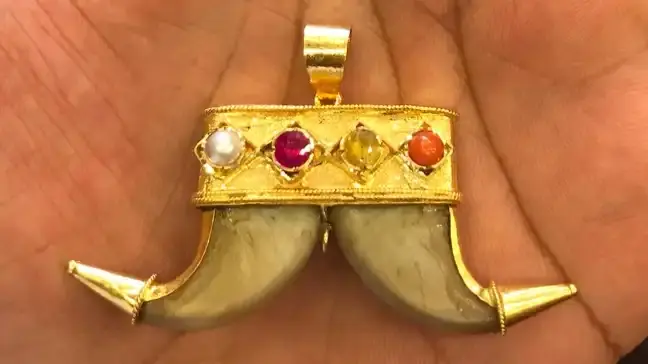
In a recent development, a complaint has been filed against the eminent actor and sitting Rajya Sabha Member of Parliament, Jaggesh, for allegedly sporting a tiger claw pendant. This action comes as part of a broader crackdown on top actors and politicians who have been seen wearing real tiger claw pendants, which is in violation of wildlife protection laws.
Sources indicate that photos of other prominent figures, including former Chief Minister HD Kumaraswamy's son Nikhil Kumaraswamy, Kannada actor Darshan, producer Rockline Venkatesh, and more, are also under scrutiny in connection with the use of tiger claw pendants.
The complaint has sparked the attention of forest officials, who are reported to be swiftly responding to Republic Kannada's newsbreak. They are expected to visit the residence of the sitting Member of Parliament in Bengaluru at any moment.
What does the law say?
The possession of tiger claws and their use in jewellery has been prohibited for several decades due to the need to protect and conserve the endangered tiger population. In India, the possession and wearing of tiger claws or any other part of a tiger's body are prohibited under the Wildlife Protection Act, 1972. The Act was enacted to protect and conserve wildlife, including endangered species like tigers. Offenders found guilty of possessing and wearing such pendants face severe legal consequences, including imprisonment ranging from three to seven years or a penalty or both.
Advertisement
Notably, the recent development comes after the arrest of Varthur Santosh, a former Bigg Boss contestant, by the forest department. Santosh was taken into custody for wearing a real tiger claw pendant, an act that has been banned under wildlife protection laws since 1972. Notably, the desire for tiger claws in Karnataka remains strong, as numerous individuals continue to hold the belief that wearing rings or pendants made from them can bring good health, prosperity, and luck. In recent times, there has been a rise in the confiscation of tiger claws in and around tiger reserves. However, forest authorities assert that this increase is primarily due to enhanced conservation efforts.
It is pertinent to mention that the Wildlife Protection Act of 1972 has established a comprehensive legal framework for safeguarding, conserving, and effectively managing India's wildlife and its respective ecosystems. This critical legislation is primarily geared towards the preservation and protection of diverse wildlife, encompassing both flora and fauna. The act classifies wildlife species into distinct schedules, each corresponding to varying degrees of protection for different species. Remarkably, tigers, a prominent and endangered species, enjoy the highest level of protection as they are specifically listed in Schedule I. The act provides for stringent penalties, including imprisonment and fines, for violation of its provisions.