
Gyanvapi Mosque row explained: Here's why survey next to Kashi temple was ordered
In recent days, there has been a protest over the survey of several deities located in the Kashi Vishwanath temple premises and the Gyanvapi Masjid complex.
- India News
- 3 min read

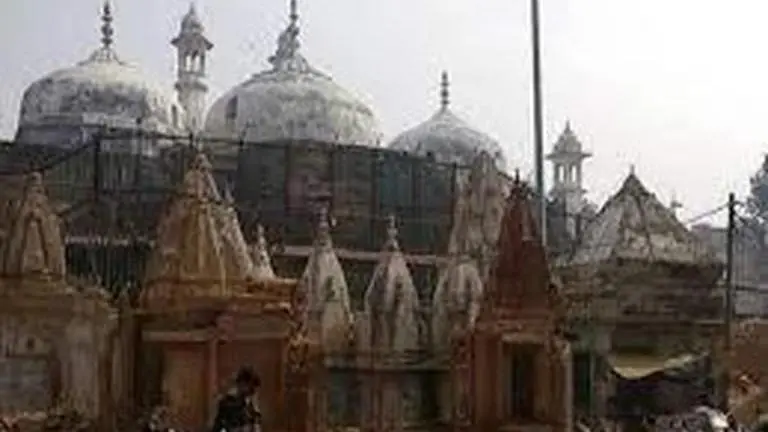
Much like the Ayodhya dispute, Varanasi's Kashi Vishwanath temple and the adjacent Gyanvapi mosque — built by Mughal emperor Aurangzeb — have been a subject of long-standing conflict between two communities. The shrines, sharing the same complex has been causing dispute between the two sides, with a group of Hindus claiming rights over the entire piece of land, while some Muslims denying the same.
In recent days, there has been a protest over the survey of several deities, including Shringar Gauri, located in the Kashi Vishwanath temple premises and the Gyanvapi Masjid complex. On Friday, a court-appointed official and a team of lawyers conducted an inspection at the mosque in connection with a plea seeking access to a Hindu temple behind it. The survey and videography at the mosque also continued on Saturday amid protests.
Why was the survey ordered at Gyanvapi complex?
The survey exercise is being done on the court's earlier order on a plea by Delhi-based women seeking permission to perform daily worship of Hindu deities, whose idols are located on the outer wall of the Gyanvapi mosque. Currently, devotees are allowed to worship Shringar Gauri only on the fourth day of Chaitra Navratra.
The plea dated 18 April 2021 contended that an image of Goddess Shringar Gauri existed at the spot since time immemorial and urged the court to ascertain the same.
Advertisement
The petitioners representing the Kashi Vishwanath Temple seeks declaration that the mosque stands on land belonging to Hindus whereas the Anjuman Intezamia Masjid, which manages the Gyanvapi mosque has opposed the petition.
The mosque management committee on Sunday moved a Varanasi district court against the survey and sought the appointment of a different court commissioner, other than the present one, Ajay Kumar Mishra. After hearing the plea on Sunday, Varanasi's Civil Judge (Senior Division) Ravi Kumar Diwakar reserved his order for May 9.
Advertisement
Similar case involving Kashi Vishwanath-Gyanvapi dispute
After the Supreme Court's 2019 verdict in the Ayodhya Ram Janmabhoomi case, there was a renewed clamour from certain outfits to retrieve the entire Kashi Vishwanath Temple-Gyanvapi Temple premises.
Advocate Vijay Shankar Rastogi filed a petition in a Varansi court contending that the entire premises belonged to the temple alone. Asserting that the original Kashi Vishwanath Temple was built over 2000 years ago, he claimed that the Gyanvapi Mosque was constructed after the temple was demolished by Mughal emperor Aurangzeb in 1669.
However, in September last year, the Allahabad High Court stayed an Uttar Pradesh court's order directing an archaeological survey at the Kashi Vishwanath Temple-Gyanvapi Mosque premises in Varanasi.