
ISRO INSAT-3DS Updates Live: ISRO’s GSLV-F14 Successfully Places INSAT-3DS Satellite in Orbit
In a push for India's meteorological services, ISRO launched the INSAT-3DS for better meteorological observations.
- India News
- 3 min read

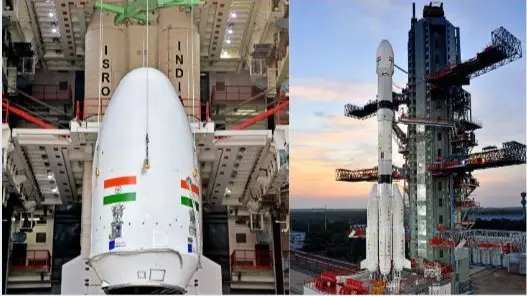
INSAT-3DS Launch: The Indian Space Research Organisation (ISRO) has launched India’s latest weather satellite INSAT-3DS on Saturday, February 17. INSAT-3DS will enhance meteorological observations and help in better weather forecasting and disaster warning. ISRO launch the weather satellite INSAT-3DS aboard GSLV F14 at 5.35 pm from the Satish Dhawan Space Centre at Sriharikota, Andhra Pradesh.
After the successful launch, the ISRO informed that the space vehicle successfully placed the satellite into the intended Geosynchronous Transfer Orbit (GTO).
The INSAT-3DS satellite is a follow-on mission of a third generation meteorological satellite to be placed in geostationary orbit, and it is fully funded by the Ministry of Earth Sciences (MoES).
ISRO’s ‘Naughty Boy’ Launches INSAT-3DS
The weather satellite was launched by the GSLV F14 on Saturday. In its 16th mission, the GSLV aims to deploy the satellite into Geosynchronous Transfer Orbit (GTO). Subsequent orbit-raising manoeuvres will ensure that the satellite is positioned in a geostationary orbit, the space agency said.
Advertisement

GSLV can be used to launch a variety of spacecraft capable of performing earth resource surveys, communications, navigation, and any other proprietary missions. But the GSLV F14 is called the ‘naughty boy’ of the Indian Space programme as it does not hold a very good track record.
GSLV F14 holds a failure rate of 14 per cent. It has carried out 14 space missions till date, among which six have encountered some kind of problems.
Advertisement
How Will INSAT-3DS Benefit India?
The new weather satellite, INSAT-3DS, is designed to make enhanced meteorological observations and monitor land and ocean surfaces for weather forecasting and disaster warning. The latest launch will enhance the strength of the INSAT club.
Many departments of the MoES such as the India Meteorology Department (IMD), National Centre for Medium-Range Weather Forecasting (NCMRWF), Indian Institute of Tropical Meteorology (IITM), National Institute of Ocean Technology (NIOT), and Indian National Center for Ocean Information Services (INCOIS) and other agencies and institutes will be using the INSAT-3DS satellite data to provide improved weather forecasts and meteorological services.
ISRO Chief Somnath Offers Prayers in Andhra Pradesh
Earlier, ahead of the launch of new meterological satellite, INSAT-3DS, the chief of Indian Space Research Organisation (ISRO) S Somnath offered prayers at Sri Chengalamma Temple in Sullurpet of Andhra Pradesh.
“INSAT- 3DS launch is at 5.35 pm today. This satellite is meant for our weather-climate studies,” said S Somnath while talking to reporters at Sullurpet after offering prayers at Sri Chengalamma Temple.
ISRO Skips 'Unlucky 13' Numbers ‘Naughty Boy’ GSLV F-14
The Indian Space Research Organisation (ISRO) has once again avoided using the number '13' in naming its latest Geosynchronous Satellite Launch Vehicle (GSLV) rocket. Ahead of the launch on Saturday with the weather satellite INSAT-3DS, this GSLV rocket has been named 'GSLV-F14', skipping 'GSLV-F13'. This numbering pattern mirrors ISRO's previous practice with its Polar Satellite Launch Vehicle (PSLV).
According to media reports, ISRO's decision to skip '13' follows a tradition of avoiding the number, which is considered ‘unlucky’ by many. Similarly, NASA, the American space agency, has refrained from using '13' in its mission designations since the Apollo-13 mission failure.
During a recent event for the NASA-ISRO Synthetic Aperture Radar (NISAR) satellite, ISRO officials adhered to traditional customs, including breaking coconuts in front of the launch vehicles for good luck. Such practices are not uncommon in space agencies, with Russian cosmonauts having their own rituals, like urinating on a bus wheel before launch.
(Keep Following For LIVE UPDATES)