
Local Pollutants Major Contributors to Delhi's Air Quality Decline
As the stubble burning decreases, local pollutant remains the primary source to the deterioration of Delhi's air quality, reports said.
- India News
- 2 min read

;'%3e%3cpath%20d='m8,15.99c4.41,0,7.99-3.58,7.99-7.99S12.41,0,8,0,0,3.59,0,8s3.58,7.99,7.99,7.99Z'%20style='stroke:%23fff;%20stroke-miterlimit:10;%20stroke-width:.02px;'/%3e%3cpath%20d='m3.08,3.37l3.82,5.11-3.84,4.15h.87l3.37-3.64,2.72,3.64h2.94l-4.04-5.39,3.58-3.87h-.86l-3.1,3.35-2.5-3.35h-2.94Zm1.27.64h1.35l5.97,7.99h-1.35l-5.97-7.99Z'%20style='fill:%23fff;'/%3e%3c/g%3e%3c/svg%3e)


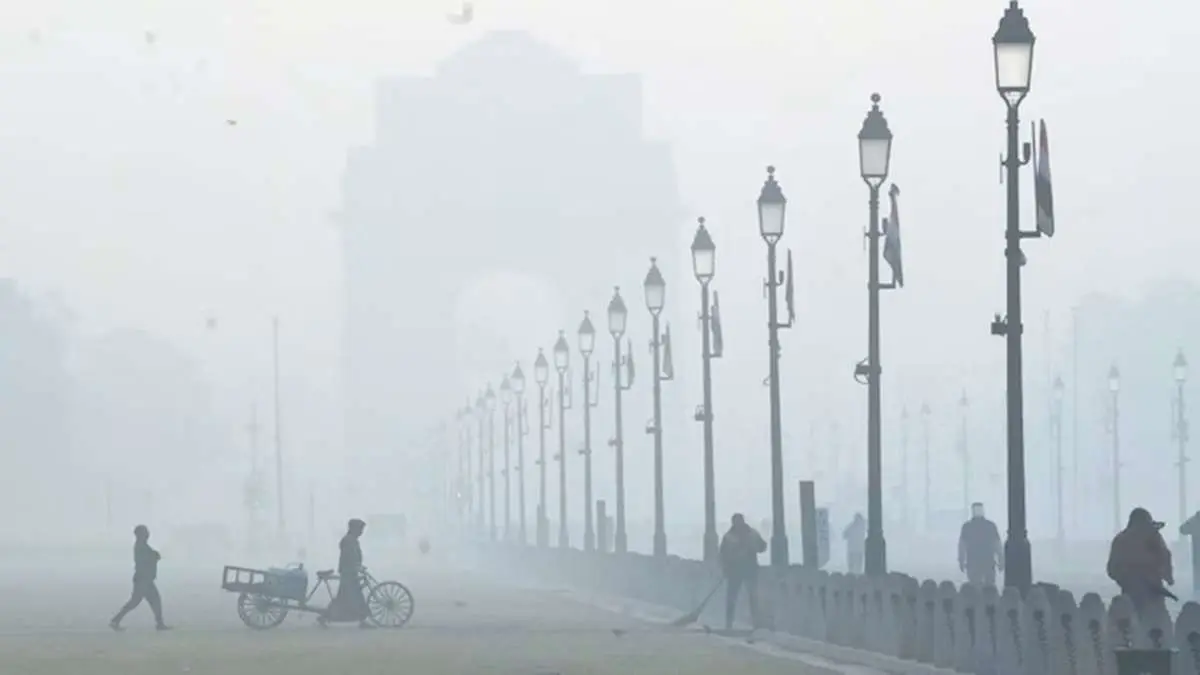
New Delhi: As the stubble burning decreases, local pollutant remains the primary source to the deterioration of Delhi's air quality, reports said. accounting for 95% of PM2.5 levels, according to a latest analysis.
An analysis by the Centre for Science and Environment (CSE) reveals that Delhi's air quality has worsened from "poor" to "very poor." It highlights that local pollution sources, especially vehicle emissions, are the mainly responsible this decline.
The CSE's assessment before Diwali and winter indicates that stubble burning contribute only about 4.44% to Delhi's PM2.5 levels, while over 95% comes from local pollution sources.
Notably, the transport sector is responsible for more than half of the pollution, followed by residential burning (13%), industrial emissions (11%) and construction activities (7%), according to the analysis.
Advertisement
"This year, the air quality has worsened even though the contribution of farm fires has remained significantly lower than previous years," said Anumita Roychowdhury, executive director of research and advocacy at the CSE.
"The city can no longer deflect blame onto farm fires. We must urgently address local pollution sources," she added.
Advertisement
The analysis, covering PM2.5 levels from September 15 to October 28, indicates a concerning trend -- the PM2.5 levels reached 213 µg/m³ on October 23, coinciding with a temporary spike in farm-fire contributions.
However, the overall increase in the PM2.5 levels in October shows a 13-per cent rise compared to the same period last year, with a record number of "very poor" air quality days.
The CSE's study also identified a significant rise in traffic congestion across major roads in Delhi, exacerbating the pollution levels.
The average speed reduction during peak hours on weekdays was reported at 40.8 per event, leading to higher nitrogen dioxide (NO2) levels. The analysis revealed that congestion on the weekend before Diwali resulted in particularly elevated NO2 levels, peaking at 75 µg/m³ in the evening.
According to the report, 11 days of "very poor" air quality were recorded in October -- an increase from previous years -- while "good" air quality days drastically dropped from 11 in 2022 to just two this year.
As Delhi faces this pressing environmental crisis, experts assert that significant and immediate action is required to combat local pollution.
"Effective measures must be implemented to tackle emissions from vehicles, industry and other local sources," Roychowdhury said.
(With inputs from PTI)