
Mangal Pandey: Remembering first revolutionary and martyr of Indian Mutiny of 1857
Remembering the rebellious Indian, Mangal Pandey, who held his head high against British rule to mark the inception of the freedom struggle.
- India News
- 2 min read

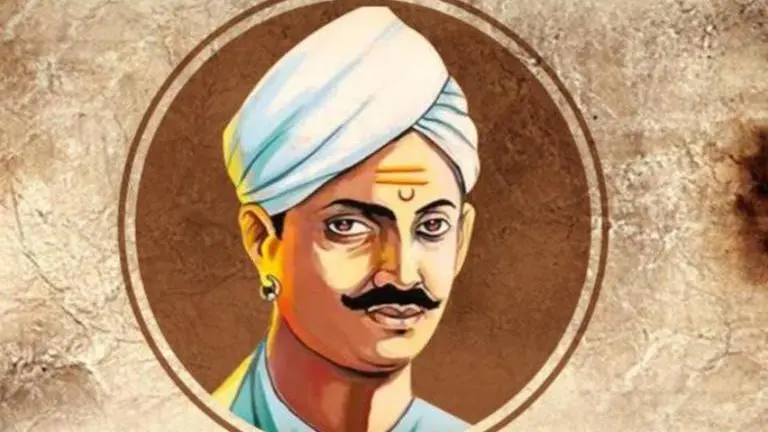
The Brahmin Sepoy of the 34th Bengal Native Infantry Regiment of the British East India Company, Mangal Pandey, who held his head high against the British, launched the first war of independence against colonial rule, and gave up his life 166 years ago today, April 8, to begin the era of Indian Freedom Struggle.
The history of the Sepoy Mutiny, or the First War of Independence, dates back to March 29, 1857, when the rebellious soldier Mangal Pandey spearheaded a revolt against the colonialists. It all began with a rumour that the greased cartridges in the recently launched Enfield gun were lubricated with cow and pig fat.
Mangal Pandey: Revolt of 1857
On July 19, 1827, Mangal Pandey was born in the British Indian province of Ceded and Conquered Provinces (now known as Uttar Pradesh) in the village of Nagwa in the Ballia district. He enrolled in the Bengal Army in 1849. Later, in March 1857, he enlisted in the 5th Company of the British East India Company’s 34th Bengal Native Infantry regiment.
On the afternoon of March 29, 1857, the 34th Bengal Native Infantry’s adjutant, Lieutenant Baugh, who was then stationed at Barrackpore, got the information about the sepoys being enraged.
Advertisement
An Enfield rifle was introduced to India, whose cartridges could only be fed into the weapon after being bitted off at the ends, and a rumour started surfacing that the tips of the cartridges were greased with lard from cows or pigs. The religious sentiment associated with cows and pigs infuriated the soldiers, leading to an uprising.
After learning about the circumstances, Mangal Pandey, a devoted Hindu Brahmin by faith, became enraged and decided to express his disdain for the British.
Advertisement
Learning about the conduct of the Indian sepoys, led by Mangal Pandey, Sergeant-Major James Hewson rushed onto the scene, followed by commanding officer General Hearsey.
Pandey attempted to shoot himself with his musket after failing to get all the soldiers to openly revolt. He was arrested because he couldn’t succeed in his attempt. Mangal Pandey was found guilty and sentenced to death.
Pandey’s attack and subsequent punishment marked the beginning of the Indian Rebellion of 1857 and sowed the seeds of Free India.