
Updated 29 October 2024 at 07:39 IST
'Beneficial for the World': Russian Envoy Applauds Positive India-China Relations
Russian Ambassador Denis Alipov has expressed optimism over improved relations between India and China.
- India News
- 3 min read

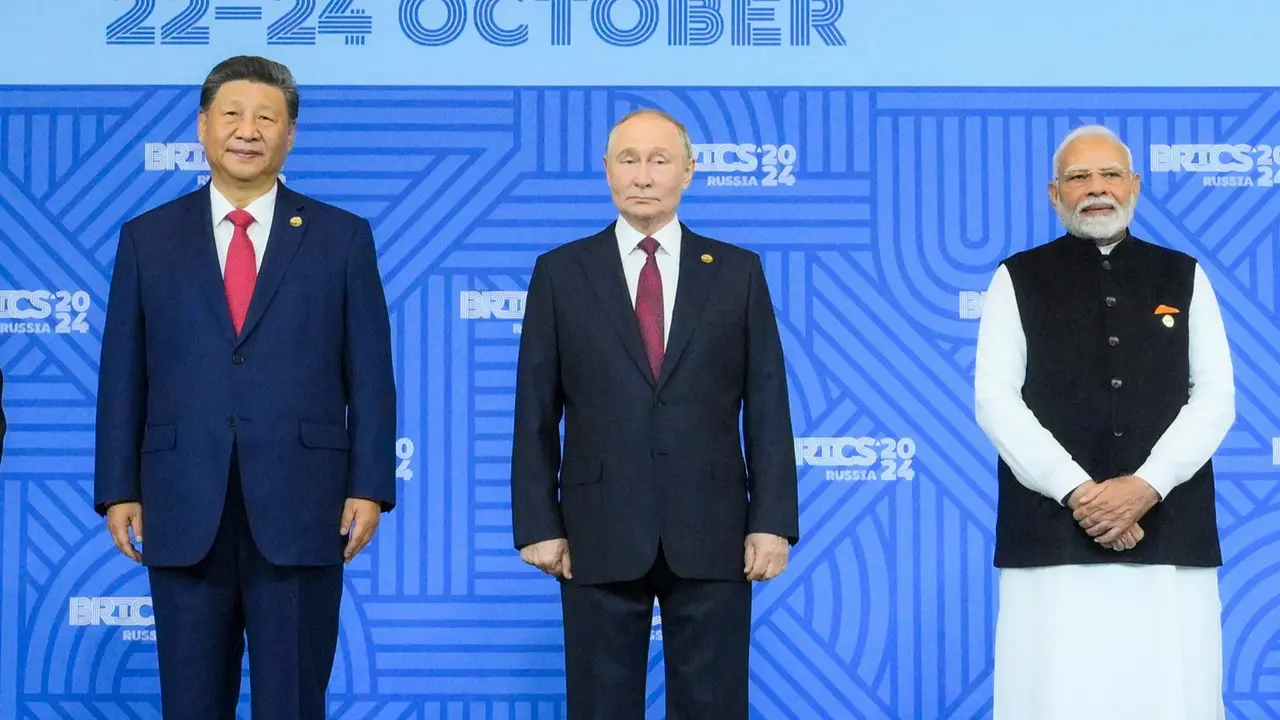
New Delhi: Russian Ambassador to India Denis Alipov expressed optimism over the improved relations between India and China, viewing their cooperation as essential to stability and prosperity in the Eurasian region. Alipov underscored that Russia did not facilitate the recent meeting in Kazan between Prime Minister Narendra Modi and President Xi Jinping, but he welcomed the discussions on resolving the military standoff in eastern Ladakh, calling it a “positive development in Sino-Indian ties.”
Alipov praised the BRICS summit hosted by Russia in Kazan, emphasizing that the group represents an inclusive platform for emerging economies, fostering a multipolar world. Alipov welcomed the first meeting between the leaders of India and China in five years, describing it as a positive development for both regional security and economic landscape. "We welcomed and are happy that the first meeting of India and China leaders after five years took place," Alipov said. "This is a positive development. The meeting in Kazan included discussions on border issues and bilateral cooperation," he noted.
Alipov added that while Russia did not organise the meeting, it values the strengthening of ties between the two countries. He said, “It is important and desirable that India and China maintain stable and good relations. This is favourable for Eurasian security and beneficial for the world at large.” Alipov clarified that BRICS is not intended as an anti-Western bloc but as a “non-Western” framework where over 40 countries have shown interest in joining.
Addressing criticism from Ukrainian President Volodymyr Zelensky, who had labeled the BRICS summit a failure, Alipov dismissed the remarks as “delusional,” stating, “I don’t know what he meant or what reasons he had for this statement, as he didn’t elaborate.” Alipov highlighted the summit's success, pointing to the formation of a new category of BRICS “partner states” to facilitate broader engagement, and noted the group’s commitment to developing initiatives in areas such as AI regulation, climate research, and MSME support.
Advertisement
The Kazan summit emphasized strengthening the BRICS New Development Bank, which has funded 100 projects, and advancing cross-border payment systems to assist members in managing current account deficits. Alipov also announced new initiatives in tourism, labour markets, and expanded currency arrangements as part of BRICS' goals to meet the evolving needs of its members.
Alipov contrasted BRICS’ economic potential with that of the G7, noting, “BRICS represents 40 percent of global oil production and 30 percent of land area,” which, according to him, supports developing countries facing challenges within traditional global institutions. Citing recent U.S. sanctions on Russia, Alipov cautioned that other BRICS nations could also be targeted, stating, “Today it is Russia; tomorrow it could be China, and possibly even India.” He reiterated BRICS’ goal of global reform rather than targeting specific nations.
Advertisement
The ambassador further discussed India-Russia trade cooperation, focusing on efforts to establish a rupee-ruble payment system. He recognized existing challenges but highlighted ongoing work to facilitate bilateral payments, emphasizing that India's relationships should not be limited to US-aligned countries.
“Today it is necessary for India to settle its relationship with Russia; tomorrow the US might ask India to curb its relationship with Bangladesh , for example. There might be an endless list of countries the US decides upon,” he stated, reinforcing the importance of India’s independent global partnerships.
Published By : Rajashree Seal
Published On: 29 October 2024 at 07:39 IST