
Updated 14 February 2024 at 13:56 IST
MTHL: Vehicles Skipping Toll Payments on Atal Setu Raises Concern, MMRDA Plans Pay Barriers
In the newly inaugurated India's longest sea bridge, the Mumbai Trans Harbour Link (MTHL), toll evasion has emerged as a serious concern.
- India News
- 2 min read

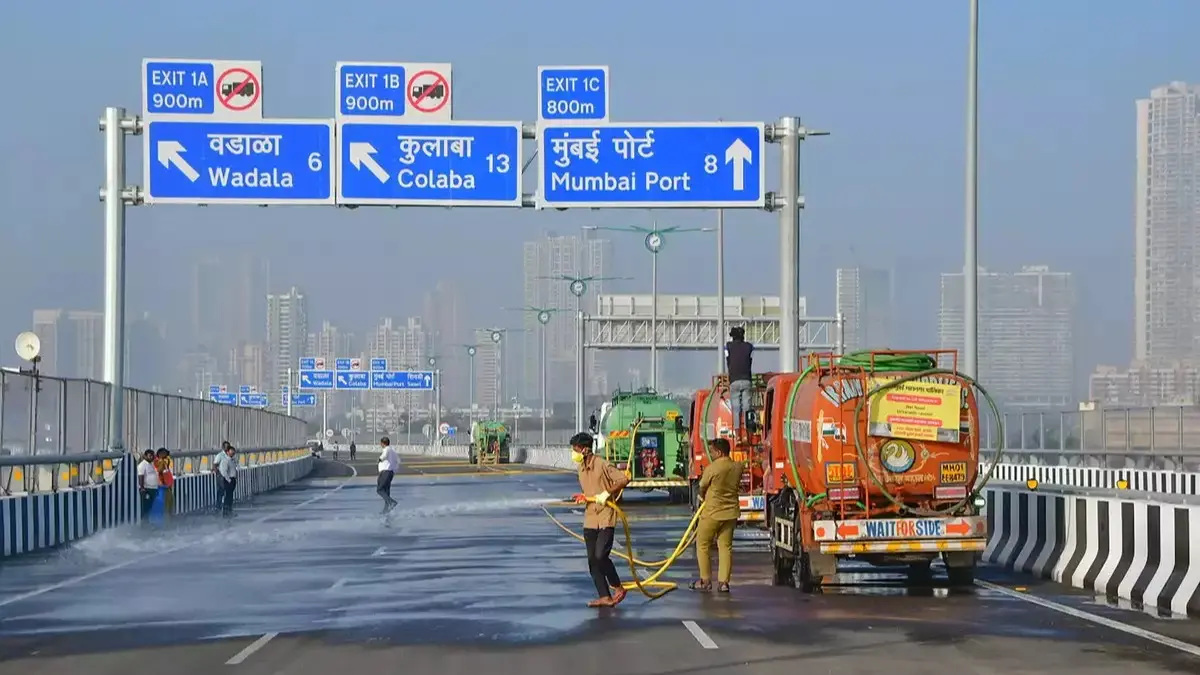
Mumbai: In the newly inaugurated India's longest sea bridge, Mumbai Trans Harbour Link (MTHL), toll evasion has emerged as a serious concern with approximately 3.5 percent of vehicles skipping toll payments since the bridge's inauguration on Jan 12.
MTHL or Atal Setu reports an average daily traffic volume of 30,000 vehicles and 3.5 percent of total vehicles skipping to pay the road fee remains a matter of concern for the authorities. The sea link is equipped to accommodate various vehicle types, including cars, buses, and multi-axle vehicles.
The bridge has toll plazas at Shivaji Nagar interchange and Gavhan near Chirle village on the Navi Mumbai side. It has an open road tolling (ORT) system in which collection of road fees is done without stopping the car through the FASTag card
The Singapore-based modern technology ensures that vehicles don't stop at toll booths to pay, helping avoid traffic congestion on the bridge which is designed to accommodate vehicles at a speed of 100 kmph.
Advertisement
Initially, MMRDA had planned to have one lane earmarked for toll cash collection. It had also made provisions to issue a challan if there would be no FASTag or inadequate balance in the FASTag account. However, this system was not followed since MMRDA wanted to ascertain traffic behavior.
MMRDA Plans Toll Barriers At MTHL
MMRDA, the state organisation that constructed the bridge, is now planning to activate MTHL's toll boom barrier to ensure that vehicles pay a toll before exiting the bridge, claimed sources. It may lead to bit of congestion but will ensure a 100 percent toll payment system.
Advertisement
The adoption of the ORT system by MMRDA was motivated by the potential to save an estimated 16 kilolitres of fuel annually. Additionally, toll lane throughput is expected to increase from 350 passenger car units (PCU) per hour to 1,500 PCU per hour, with open barrier tolling reducing throughput by 4 seconds.
The state cabinet finalized the toll on Jan 4. As per the policy, the toll from Sewri to Gavhan was Rs 500, but the state government reduced it to Rs 250 for a one-way trip. For the return trip, it is 1.5 times the one-way fare (which comes to Rs 375). The price of a monthly pass is 50 times the one-way fare (Rs 12,500 per month, or Rs 1.5 lakh per year).
Published By : Ronit Singh
Published On: 14 February 2024 at 13:56 IST