
5 Lessons from Ukraine conflict: The evolution of Aerial Warfare and India's preparedness
World's predominant focus on asymmetric warfare, led to surprises for both Ukraine and Russia as they encountered unique technological advances in the conflict.
- India News
- 6 min read

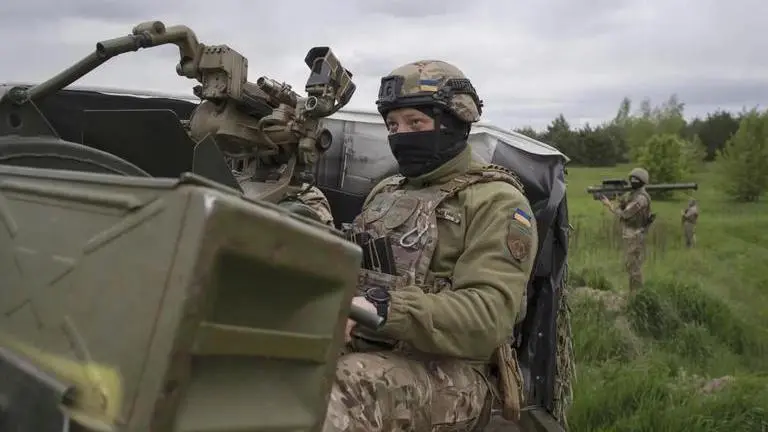
In the wake of the conflict in Ukraine, critical shortcomings in planning, perceptions, weapon systems, and tactics related to peer-to-peer aerial warfare have been exposed. These challenges can largely be attributed to the world's predominant focus on asymmetric warfare, leading to surprises for both Ukraine and Russia as they encountered unique technological advances in the conflict.
Shortly after the announcement of President Putin’s ‘Special Military Operation’ against Ukraine in February 2022, both Ukraine and Russia felt the brunt of shortcomings in defence against technologically advanced weapons. Notably, in asymmetric warfare, only the dominant military force advances on the battlefield, specifically in technology. However, in a peer-to-peer conflict, “both sides have the liberty to do so”, Colonel Sant Pal told Republic. Meanwhile, some lessons from the war between Russia and Ukraine validate the concepts that the Indian Air Force has already adopted.
1) Modern Air Defence Systems rule out Theater-Wide Air Superiority
In traditional warfare, air superiority refers to absolute control over the skies within a specific theater of conflict. It grants the dominating air force the freedom to operate while severely limiting or suppressing enemy air operations. However, the landscape of modern air defense has evolved, making the attainment of theaterwide air superiority impossible.
The versatility and effectiveness of modern Air Defence (AD) systems have reshaped the dynamics of air superiority. Advanced systems like the Patriot and the S-300, along with shorter-range systems like NASAMS and Pantsir, can now operate in 'dark' mode, presenting a formidable challenge to achieving complete air superiority.
Advertisement
2) Modern Air Defence dramatically reduces air power effectiveness
The effectiveness of modern Air Defence (AD) systems compels the attacking fighters and bombers to adopt a strategy of launching bombs and missiles from standoff ranges. This approach ensures their safety but comes with some drawbacks. Standoff attacks, involving costly ammunition like cruise missiles and glide bombs, prove more expensive than unguided ammunition used in close-range attacks (rockets, bombs).
Furthermore, the smaller warhead size and lower speed of long-range guided ammunition result in reduced destructive power, making it less efficient when targeting hardened enemy installations. In summary, the long-range use of air power has become less effective in the face of advanced AD systems.
Advertisement
3) No role for armed drones in peer-to-peer aerial warfare
Following the stabilisation of the battlefront in October 2022, Ukraine faced a harsh reality: medium-sized armed drones, like the Turkish Bayraktar TB-2, proved highly vulnerable when deployed in heavily contested airspace. Despite initial enthusiasm over their capabilities, these drones were easily shot down during active combat operations. Consequently, Ukraine shifted their use to safer roles, such as performing reconnaissance in lightly contested areas of the battlefront.

Image: General Atomics (An MQ-9B SkyGuardian drone)
India's strategic intent to heavily invest in US Predator drones raises questions in light of the Ukrainian experience. With two peer adversaries, China and Pakistan, and no hegemonic ambitions, India's border regions would become highly contested areas during hostilities. In such a scenario, deploying Predator drones along these borders would present significant challenges. The survival time of these drones in the face of advanced enemy defenses and countermeasures would likely be limited.
The Ukrainian conflict highlights the need for a prudent approach to drone deployment, particularly in peer-to-peer aerial warfare. Instead of relying solely on armed drones for offensive actions, nations must consider their vulnerability in contested airspace and potential alternatives. While drones have proven invaluable for reconnaissance and surveillance missions, their use in direct combat must be carefully evaluated in high-risk environments.
4) Need for long-range Air-To-Air Missiles
During the Ukrainian conflict, the supply of modern US and NATO Air Defence (AD) systems to Ukraine thwarted Russia's attempts to establish air superiority over significant portions of Ukrainian airspace. Instead, Russia managed to gain air superiority only over a relatively narrow 100-kilometer strip along the 1000-kilometer battlefront.
To achieve this limited air superiority, Russia strategically deployed its S-300 and S-400 long-range Integrated Air Defence Systems (IADS) in close proximity to the battlefront. Continuous 24x7 patrolling by Russian Su-35S and Su-30SM fighters further supported their efforts. These fighters were equipped with various types of air-to-air missiles, enabling them to engage and neutralize Ukrainian aircraft below.
A key tactic employed by Russian forces involved using a single Anti-Radiation Missile (ARM) to destroy any Ukrainian Air Defence radar that came into operation. By disrupting radar capabilities, Russia aimed to diminish Ukraine's situational awareness and hamper their air defence response. The deployment of long-range air-to-air missiles and ARMs played a critical role in establishing air superiority over the limited territory controlled by Russia.
In contrast, the Indian Air Force (IAF) faces challenges with regard to long-range air-to-air missiles. The IAF’s stock of long-range ARMs is limited, potentially impacting its ability to counter adversaries in a similar manner to Russia's approach in Ukraine, Air Vice Marshal BM Tyagi told Republic.
5) Need for multi-layered Air Defense
The conflict in Ukraine has highlighted the effectiveness of multilayered mobile air defense systems in countering a wide range of threats, including ballistic missiles, cruise missiles, aerodynamic targets, artillery rockets, and shells. Unlike single-layer systems, the deployment of multiple AD layers makes it significantly harder for attackers to penetrate the defense. For instance, attacking fighters and cruise missiles can attempt to avoid detection by flying at low altitudes, while medium-range systems can use terrain masking to reduce their detection range.

Image: PIB (IAF Air Defences amid a Combined Guided Weapon Firing Exercise)
A key strategy to bolster the efficacy of AD cover involves deploying missile systems equipped with different types of seekers, AVM BM Tyagi added. This approach makes it more challenging for incoming missiles to evade detection and interception, enhancing the overall defense capability.
The Indian Air Force has recognized the importance of a layered defense and has acquired various types of AD systems to fortify its capabilities. However, there remains an ongoing assessment of whether the quantity of systems acquired is adequate and whether their networking and integration meet operational requirements. India has made significant strides in missile technology and now stands as a self-sufficient nation in this field. The indigenously developed AD missile systems are expected to bridge any potential gaps and further bolster the country's air defense capabilities.