
The Battle of Namti and Walong: Know how it changed the fate of 1962 Indo-China War
Indian soldiers gave a befitting reply to the Chinese in the Battle of Namti. As a result, it is said that the fiercest battle of 1962 was fought in Namti.
- India News
- 3 min read

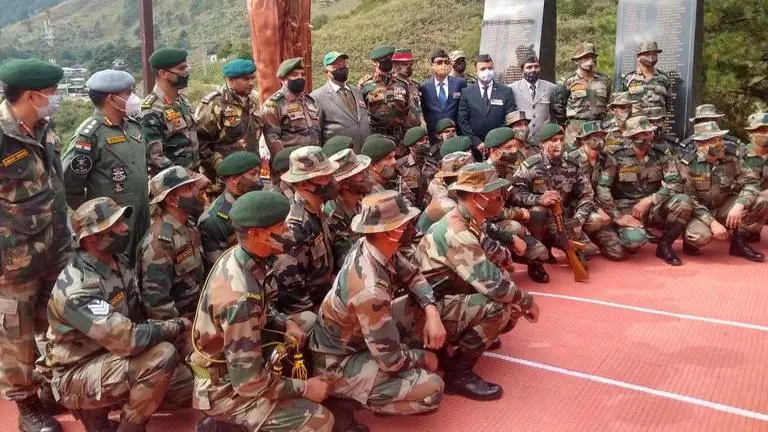
The night of April 10 will go down in the history of Arunachal Pradesh and India as a historic day. Union Home Minister Amit Shah is spending the night here in Kibithu, the easternmost point of India. This is the first time any Union Minister is spending the night so close to the Line of Actual Control (LAC). The aerial distance between Kibithu and Damai in China is hardly 1 km.
After flagging off the Vibrant Village Programme from Kibithu and sending a strong message across the LAC, the Union Home Minister will pay his tributes to the Bravehearts of 1962 at the Namti War Memorial and the Walong War Memorial.
When talking about the war memorials of Namti and Walong, it becomes important to understand the significance of the battles fought at both places. The plains of Namti were dubbed 'Tigers Mouth' by the Chinese soldiers as anyone who dared to go close to the plains never returned alive.


Battle of Namti and Walong
Indian soldiers gave a befitting reply to the Chinese in the Battle of Namti. As a result, it is said that the fiercest battle of 1962 was fought in Namti. Indian soldiers held the plains so long that reinforcement to Walong was possible and eventually another battle was fought at Walong by the soldiers.
Advertisement
The Battle of Walong was one of the longest battles fought in the 1962 war. It's also the only place where India counter-attacked, instead of playing the defensive role against rivals. The advancing PLA soldiers were halted for 27 days at Walong.
Subsequently, the Chinese soldiers ran out of ration as well as ammunition and manpower and had to retreat from the location. Though Indian soldiers were outnumbered by the enemy and had no resources or ammunition, the Bravehearts fought till the last man and the last ammo.
Advertisement
Lieutenant Bikram Singh Rathore, IC 11867, made the supreme sacrifice for the nation. Locals and veterans say that at least 600 to 1000 Chinese soldiers died in the war of Namti and Walong. Though the Chinese authorities claimed that around 300 were killed.
In 1962, it took Indian Army soldiers seven days from Tezu to Walong on foot, but today it's just a matter of a few hours. The Walong War Memorial looks over the beautiful Lohit River on whose bank the Advanced Landing Ground proudly sings the glory of the Indian forces. Meanwhile, infrastructure development has also adopted pace in the easternmost corner of India- the country's land of the rising Sun, Arunachal Pradesh.