
Who was Raja Ram Mohan Roy? All you need to know about 'Father of the Bengal Renaissance'
The 'Father of the Bengal Renaissance,' Raja Ram Mohan Roy, is known for his tireless efforts to eradicate child marriage and parctise of 'Sati' in India
- India News
- 3 min read

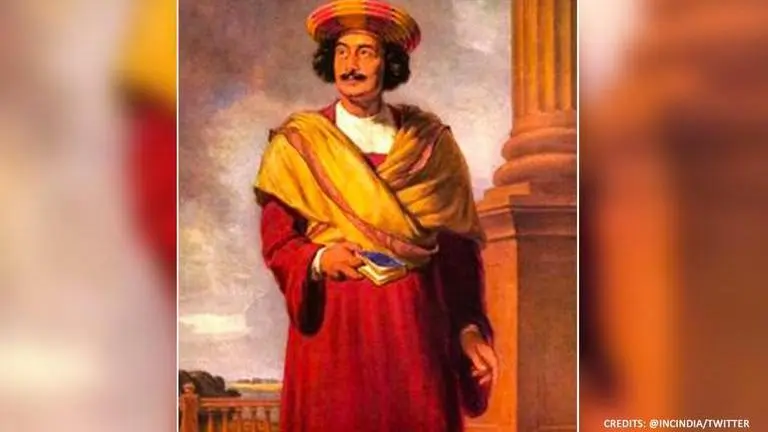
On May 22, the world commemorated the 249th birth anniversary of Raja Ram Mohan Roy, the "Father of Bengal Renaissance," the founder of the "Brahmo Samaj," and a stalwart warrior against the social evils that plagued Indian society. The country is honouring this great social reformer and educator, who also served as the messenger of modern education in India during the British colonial era. The Mughal emperor Akbar II conferred the title of 'Raja' on Ram Mohan. He was not only a great social reformer and educator, but he also had an impact on religion, politics, and public administration.
Who was Raja Ram Mohan Roy
Ram Mohan Roy was born on May 22, 1772, in the Radhanagar region of Hooghly, Bengal, to a Hindu Brahmin family. Ramkanto Roy, his father, was a Sanskrit, Persian, and English scholar who also spoke Arabic, Latin, and Greek. Tarinidevi, Roy's mother, was from a Shivaite family. Roy received his formal education in his village's "Pathshala," where he studied Bengali. It is generally assumed that he travelled extensively and learned languages such as Persian, Arabic, and English in addition to Sanskit, Bengali, and Hindi. He was influenced by western culture and the education system during his studies.
'Father of the Bengal Renaissance'
Roy established the Atmiya Sabha (Friendship Association) to translate and discuss the Upanishads. Theological debates among the association's members led to the founding of the "Brahmo Samaj" in 1828 with Debendranath Tagore to reform Hinduism. Roy was therefore opposed to idol worship, superstitions, blind faith, and black magic since he was a child.
Roy went to England as the Mughal Emperor's ambassador to campaign against overturning the ban on the Sati Pratha in India, a tradition in which women are required to douse themselves in fire after their husbands die. After fighting the Sati system, Roy went on to fight child marriage, the purdah system, the dowry system, and polygamy. Inter-caste marriages, women's education, and widow re-marriages were all things he supported.
Advertisement
In 1816, he established India's first English medium school. He also established the first Bengali language weekly newspaper, which was also the first in India. In 1822, Roy founded the newspaper Sambad Koumudi and published the Persian journal Mirat-ul-Akbar, which aided people in forming opinions about issues affecting their daily lives in British India.
On September 27, 1833, while on a visit to Britain, he died of meningitis in Stapleton, near Bristol. Stapleton Groves is where he was laid to rest. He was re-interred in the nearby Arnos Vale Cemetery in 1843, where his mausoleum still stands. In honour of Roy, the British government recently renamed a street in Bristol ‘Raja Rammohan Way.'
Advertisement
Picture Credit: @INCIndia/Twitter