
Explained: Why Was AFSPA Brought in Jammu And Kashmir, Should It Be Revoked?
34 years after the Armed Forces Special Powers Act (AFSPA) was implemented in Jammu and Kashmir, the law still remains a bone of contention in the valley.
- India News
- 4 min read

;'%3e%3cpath%20d='m8,15.99c4.41,0,7.99-3.58,7.99-7.99S12.41,0,8,0,0,3.59,0,8s3.58,7.99,7.99,7.99Z'%20style='stroke:%23fff;%20stroke-miterlimit:10;%20stroke-width:.02px;'/%3e%3cpath%20d='m3.08,3.37l3.82,5.11-3.84,4.15h.87l3.37-3.64,2.72,3.64h2.94l-4.04-5.39,3.58-3.87h-.86l-3.1,3.35-2.5-3.35h-2.94Zm1.27.64h1.35l5.97,7.99h-1.35l-5.97-7.99Z'%20style='fill:%23fff;'/%3e%3c/g%3e%3c/svg%3e)


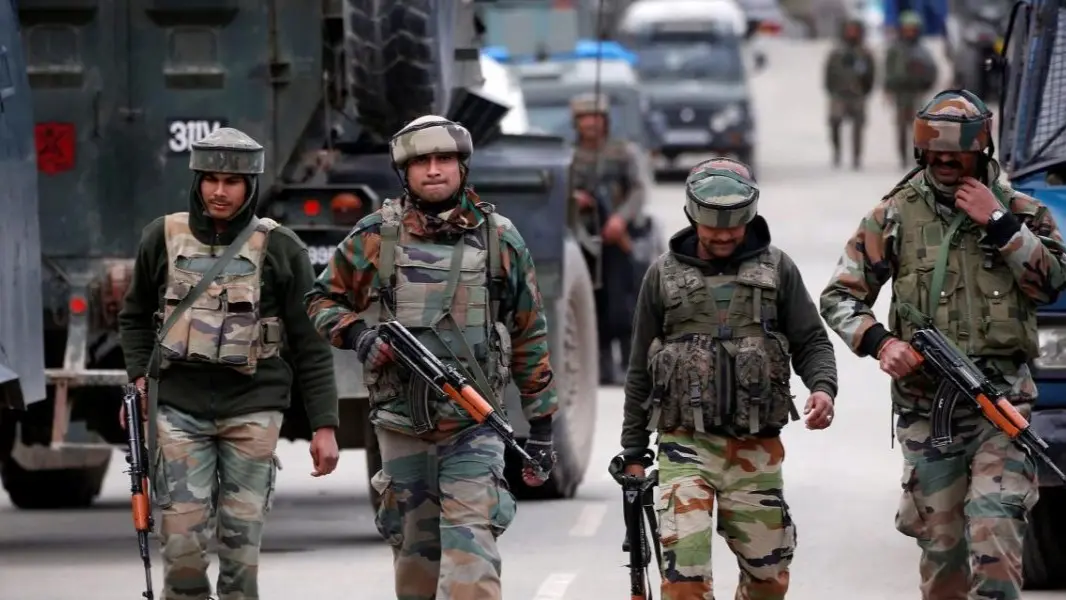
Jammu and Kashmir: Thirty Four years after the Armed Forces Special Powers Act (AFSPA) was implemented in Jammu and Kashmir, the law still remains a bone of contention in the valley.
AFSPA in Jammu & Kashmir was enacted in 1990. Being an emergency law that gives legal cover to the armed forces operating in disturbed areas from prosecution, it has been a matter of debate among the regional parties with Centre time and again clarifying its stand on the ‘controversial’ law.
When implemented, Centre was of opinion that several parts of the union territory is in such a disturbed and dangerous condition that defence forces must be given special controlling powers.
It was first implemented when the entire law-and-order situation collapsed in the Valley and normal state law enforcement machinery was found inadequate to tackle the rising graph of armed militancy.
Advertisement

The then state government declared the Kashmir Valley as a disturbed area under section 3 of AFSPA. Later, on August 10, 2001, the J&K government extended disturbed area provision to the Jammu province.
HM Amit Shah's Big Statement
Union Home Minister Amit Shah on Tuesday made a big statement saying that central government is mulling to revoke the Armed Forces (Special Powers) Act (AFSPA) in Jammu and Kashmir.
Advertisement
He added that BJP government has plans to pull back the troops in the Union Territory and hand over the law and order situation to the Jammu and Kashmir Police alone.
"We have plans to pull back troops and leave law and order to the Jammu and Kashmir Police alone. Earlier, the Jammu and Kashmir police was not trusted, but today they are leading the operations," he said.
“We will also think of revoking AFSPA,” he added while speaking to a local media outlet. He added that AFSPA has been removed in 70 per cent areas in the northeastern states even though it is in force in J-K.
Should AFSPA Be Revoked?
The basis of Centre's plan to revoke the controversial law in J&K lies on the security scenario in the Valley that has significantly improved since the revocation of the special status of Jammu and Kashmir granted under the Article 370 of the Constitution.
The Union Home Minister mentioned that in J&K, in the back wall of Article 370, several youngsters were dragged into the path of terrorism. “Pakistan took disadvantgees of the law which resulted in the killing of more than 40,000 youths.” Terrorism is now on the verge of collapse with rise of peace in the valley, Shah added.
The revocation of the controversial AFSPA, therefore, will lead to confirmed stature of Jammu and Kashmir in the global stage as a peaceful region. Amid positive shift to peace and harmony, the AFSPA removal can script new chapter in the history of valley which was once regarded as the terror hotspot.
What Is AFSPA? Key Details
It's an act enabling certain special powers to be conferred upon members of the armed forces in the disturbed areas in the State of Jammu and Kashmir. Continued unrest, like in the cases of militancy and insurgency, and especially when borders are threatened, are situations where AFSPA is resorted to.
However, since the abrogation of Article 370, militancy related incidents have reduced significantly in J&K, ruling out the need for the AFSPA.
Around 40,164 militancy related incidents took place in J&K between 1994 and 2004, 7,217 during the following decade, and only 2,197 in the last nine years of the Modi administration, accounting for a total 70% reduction.
The Jammu and Kashmir Police data also shows that militancy declined by 80 per cent in the Valley in 2023 in comparision to the previous years.