
Updated 30 July 2025 at 15:52 IST
A Handful of Hope: Dr. V. Mohan on How Pistachios Can Help Prevent Diabetes
Dr. V. Mohan, a leading Indian diabetologist, highlights groundbreaking findings from a study by the Madras Diabetes Research Foundation (MDRF), supported by American Pistachio Growers (APG).
- Initiatives News
- 6 min read

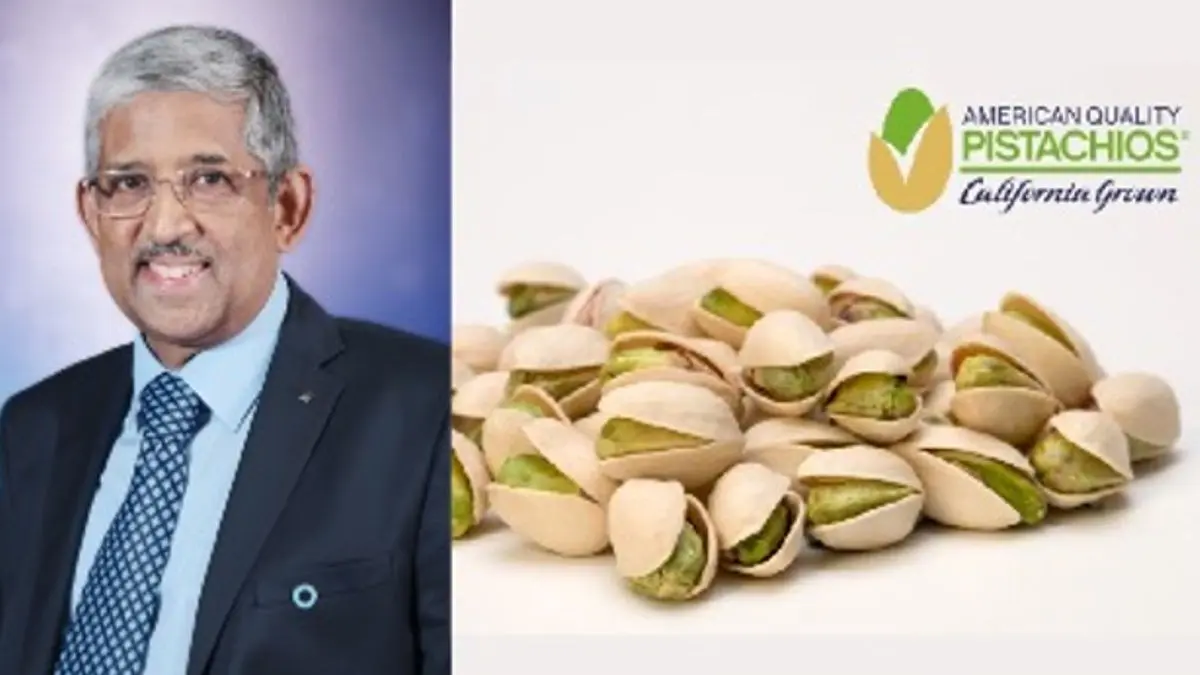
Dr. V. Mohan, one of India’s foremost diabetologists and researchers, sheds light on groundbreaking findings from a clinical study supported by the American Pistachio Growers (APG) and conducted by the Madras Diabetes Research Foundation (MDRF). The study, recently published in the Journal of Nutrition, highlights how a simple addition to the Indian diet, pistachios, can make a powerful impact on preventing diabetes. With India witnessing a sharp rise in lifestyle diseases, Dr. Mohan shares why pistachios offer more than just crunch and flavor—they may be a key nutritional ally in improving metabolic health and reducing diabetes risk.
Why Pistachios are Ideal for People with Prediabetes
Pistachios are ideal for filling the nutritional gaps in the Indian diet. For people with prediabetes, consuming around 30 grams of pistachios—a handful—can significantly reduce hunger. If they eat pistachios at around 5 or 6 p.m., their appetite decreases, so they consume less food at dinner. Similarly, if taken at 11 or 11:30 a.m., they feel fuller and end up eating less during lunch.
This happens because pistachios provide great satiety due to their high protein and fiber content. As a result, people eat fewer carbs—less rice or chapati—which is exactly what we recommend for prediabetics in India. Reducing carb intake helps with weight loss and improves metabolic health.
Advertisement
In our studies, we found that waist circumference and weight decreased in those consuming pistachios. Another major benefit is that pistachios help increase HDL, the good cholesterol, which is often low in people with diabetes or prediabetes. Higher HDL can help prevent heart attacks, which prediabetics are prone to.
So, in every way, pistachios are a very healthy snack, especially for people with prediabetes.
Advertisement
It’s not just North India—South India actually has an even higher prevalence of lifestyle diseases. But across all regions, pistachios can be easily included in the diet.
The simplest way is to eat them raw, but people should avoid adding salt. Often, when people eat nuts, they add salt or fry them, which defeats the purpose and can raise blood pressure. In fact, when taken raw, some nuts, including pistachios, can actually reduce blood pressure.
Pistachios can be sprinkled on foods like oats, salads, or even used as a side dish with chapati and curry. You can add them to milk or other meals in any way that fits your routine. The idea is to make it a part of daily eating, in a way that’s enjoyable and sustainable.
The APG(American Pistachio Growers) - Backed Clinical Study: Key Findings
This study, supported by the American Pistachio Growers (APG) but conducted with full scientific independence, was recently published in the Journal of Nutrition. Our team was initially cautious because nuts are calorie-dense. We wondered whether adding 60 grams of pistachios daily (30 grams twice a day) would lead to weight gain. Instead, the opposite happened.
Participants naturally reduced their intake of carbohydrates due to the satiety effect of pistachios. Overall calorie consumption went down, leading to weight loss and better blood sugar control. Importantly, HbA1c levels, cholesterol, and body weight—all improved significantly.
Making Pistachios Part of Daily Indian Diets
One of the biggest barriers to healthy eating in India is convenience and cost. Deep-fried snacks like samosas and processed junk foods are easy to find and affordable but damaging to long-term health.
Pistachios offer a better alternative. They can be eaten raw, added to salads, mixed into oats, or even sprinkled over curry and chapatis. The key is to avoid salted or fried versions, as salt can raise blood pressure and negate the health benefits.
If people shift even part of their snack budget from junk food to nuts, the health impact would be profound. A public education campaign and government subsidies could further accelerate this shift. In fact, pistachio consumption in India is already growing, partly thanks to increased awareness and endorsements from celebrities.
The Most Surprising Findings from the Pistachio Study
Once people are educated about the benefits, nuts like pistachios should become part of everyday meals.
Right now, people spend a lot on unhealthy junk foods—deep-fried snacks like samosas, foods rich in trans fats and saturated fats, which contribute to heart attacks and inflammation. If they redirect that spending towards nuts, fruits, and vegetables, it will be much more beneficial for their health.
If the government provides subsidies to make healthy foods like nuts more affordable, and if public education increases, consumption will rise further. In fact, pistachio consumption in India is already growing, partly because of increased awareness and support from celebrities.
How Does Pistachio Consumption Compare with Traditional Treatments?
In early-stage prediabetes, lifestyle changes can be as effective—sometimes even more so—than medication. For individuals with borderline blood sugar levels, diet modification, exercise, and nut consumption may delay or prevent the need for drugs like metformin.
Of course, not all prediabetes cases are the same. Someone with a post-meal sugar of 145 mg/dL is different from someone with 195 mg/dL. For those closer to diabetes thresholds, medication might still be necessary. But for many, nutritional interventions can slow the progression dramatically.
MDRF’s Research Pipeline
Our team is now exploring how pistachios might:
- Improve gut microbiome health
- Reduce inflammation
- Enhance insulin sensitivity
Global Collaborators in This Research
At MDRF, the team is led by Sudha Vasudevan, who heads our research unit, and my daughter Anjana is also involved.
Internationally, we collaborate with experts from the Harvard School of Public Health—Dr. Shilpa Guptiraju, Professor Frank Hu, and Professor Walter Willett, all of whom are renowned in nutrition research.
From Spain, we have Professor Jordi Salas, a leading expert on nuts. Together, we jointly published this research in the Journal of Nutrition.
A Final Word: The Misconceptions Around Nuts
Nuts—especially pistachios—are very much underrated. Many people still believe nuts cause weight gain or lead to heart attacks, but this is a misconception.
I remember one of my medical teachers telling me in my third year of college that if you want to commit suicide slowly, just eat nuts because they’ll raise your cholesterol and kill you. This belief stuck with me until research showed me the opposite.
In reality, nuts are not harmful—they are actually beneficial. The key is to eat them in their natural form, without adding salt, sugar, or ghee. When you’re looking for a healthy snack, choose nuts. They are good for your heart, your metabolism, and your overall health.
Published By : Namya Kapur
Published On: 30 July 2025 at 15:52 IST