
A Ray of Hope for Lakhs of Occupants of PSU: Bombay High Court Grants Protection to Jam Mill Occupants; Supreme Court Constitution Bench to Take the Final Call
Following this significant breakthrough, the Public Sector Tenants Action Committee has approached the Hon'ble Supreme Court of India, filing a Writ Petition that seeks the constitution of a larger Constitution Bench of no less than nine judges.
- Initiatives News
- 4 min read

;'%3e%3cpath%20d='m8,15.99c4.41,0,7.99-3.58,7.99-7.99S12.41,0,8,0,0,3.59,0,8s3.58,7.99,7.99,7.99Z'%20style='stroke:%23fff;%20stroke-miterlimit:10;%20stroke-width:.02px;'/%3e%3cpath%20d='m3.08,3.37l3.82,5.11-3.84,4.15h.87l3.37-3.64,2.72,3.64h2.94l-4.04-5.39,3.58-3.87h-.86l-3.1,3.35-2.5-3.35h-2.94Zm1.27.64h1.35l5.97,7.99h-1.35l-5.97-7.99Z'%20style='fill:%23fff;'/%3e%3c/g%3e%3c/svg%3e)


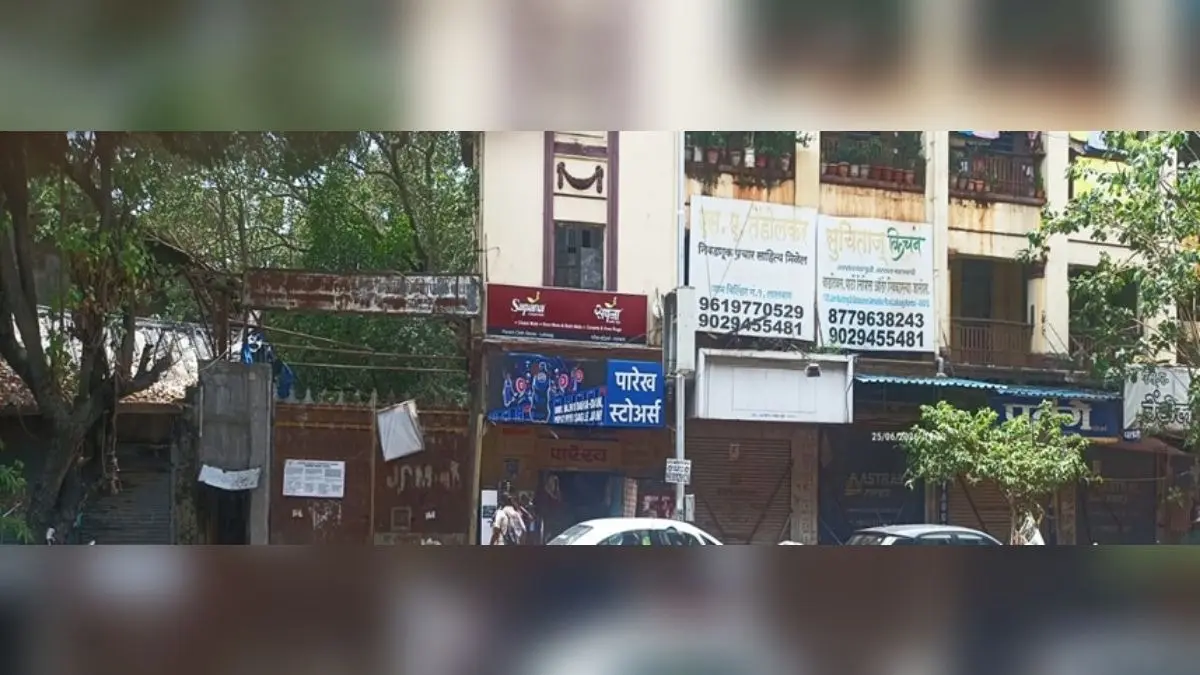
Mumbai: In a landmark legal development bringing immense relief to lakhs of tenants and chawl residents residing on Public Sector Undertaking (PSU) lands across Mumbai and the country which belong to Central government enterprises, the Hon'ble Bombay High Court has granted ad-interim protection against eviction proceedings. The proceedings were initiated by the National Textile Corporation (NTC) against 13 occupants of the historic Jam Mill.
Advocate Nimesh R. Mehta, representing the affected occupants, successfully secured this protective arrangement after presenting complex statutory and constitutional arguments before the High Court.
Following this significant breakthrough, the Public Sector Tenants Action Committee has approached the Hon'ble Supreme Court of India, filing a Writ Petition that seeks the constitution of a larger Constitution Bench of no less than nine judges. The petition aims to definitively resolve conflicting judgments delivered by various benches of the Supreme Court regarding the applicability of eviction laws on historical tenants.
The Looming Threat of Displacement Over 12 Lakh Citizens
Advocate Nimesh R. Mehta highlighted the staggering scale of the crisis, stating that in Mumbai alone, an estimated 12 lakh tenants, chawl residents, mill workers, their legal heirs, and small business operators currently reside on properties owned by Central PSUs and government companies—such as NTC, LIC, Port Trust, Banks, and Railway lands etc.
Advertisement
For years, these occupants have faced summary eviction proceedings and exorbitant damages under the Public Premises (Eviction of Unauthorised Occupants) Act, 1971, without being provided any alternative accommodation. While previous attempts struggled to break through this dense technical litigation, the protection obtained for the 13 Jam Mill occupants represents a critical turning point in this legal battle.
The Legal Crux: From Lawful Tenants to 'Unauthorised Occupants'
The petition outlines a crucial historical reality: many of these lakhs of occupants entered the premises lawfully as genuine tenants decades ago, long before the properties were nationalized, acquired, or transferred to government-owned corporations. At the time of their tenancy induction, these areas were not "public premises".
Advertisement
As the city grew, the Central Government took over these textile mills and public bodies, automatically absorbing the underlying tenancies. Decades later, central agencies began invoking the Public Premises Act, 1971, treating these heritage, lawful residents on par with random encroachers and issuing summary eviction notices—a move the petitioners argue violates the principles of natural justice and fair play.
State Welfare Policies vs. Central Eviction Mechanisms
A pivotal aspect of this legal battle is the friction between State welfare laws and Central administrative legislation. The Government of Maharashtra, through successive amendments to Development Control Regulation 58 (DCR 58) and Rule 35(7)(A) of the DCPR 2034, has mandated that during the redevelopment of textile mill lands, every eligible occupant is entitled to a 405-square-foot carpet area alternate accommodation free of cost, and cannot be evicted until such housing is provided.
The petition argues that Central PSUs are taking advantage of state-framed, incentive-based redevelopment policies (like incentive FSI) while simultaneously utilizing the Public Premises Act to evict the very tenants those policies were designed to protect. This raises vital constitutional questions:
• Violation of Article 21: Evicting long-standing residents through summary procedures without rehabilitation directly threatens the right to shelter, livelihood, and human dignity guaranteed under Article 21 of the Constitution of India.
• The Federal Balance: Land, housing, and town planning fall substantially within the legislative domain of the States under the Seventh Schedule. Can a Central administrative enactment override the statutory welfare protections granted under State laws?
"A Battle for Existence, Not Just Property"
Commenting on the breakthrough, Advocate Nimesh R. Mehta stated:
"This is far from an isolated property dispute. It is a matter of national public importance concerning the housing security, survival, and dignity of thousands of senior citizens, working-class families, and small traders across India. Public authorities cannot benefit from welfare-oriented redevelopment schemes and then resile from their rehabilitation commitments. The interim protection granted by the Bombay High Court to the Jam Mill residents proves that humanitarian rights cannot be easily brushed aside by technicalities. We are highly optimistic that the Supreme Court's Constitution Bench will provide a harmonious, definitive ruling that protects these vulnerable families."
With the matter moving towards an authoritative constitutional ruling, the final judgment will reshape the landscape of public land ownership, urban redevelopment, and tenancy laws across India.