
AI in Indian Classrooms: Game Changer or Gimmick?
AI is reshaping classrooms across India, sparking both excitement and debate—transforming learning or just another digital trend?
- Initiatives News
- 6 min read

;'%3e%3cpath%20d='m8,15.99c4.41,0,7.99-3.58,7.99-7.99S12.41,0,8,0,0,3.59,0,8s3.58,7.99,7.99,7.99Z'%20style='stroke:%23fff;%20stroke-miterlimit:10;%20stroke-width:.02px;'/%3e%3cpath%20d='m3.08,3.37l3.82,5.11-3.84,4.15h.87l3.37-3.64,2.72,3.64h2.94l-4.04-5.39,3.58-3.87h-.86l-3.1,3.35-2.5-3.35h-2.94Zm1.27.64h1.35l5.97,7.99h-1.35l-5.97-7.99Z'%20style='fill:%23fff;'/%3e%3c/g%3e%3c/svg%3e)


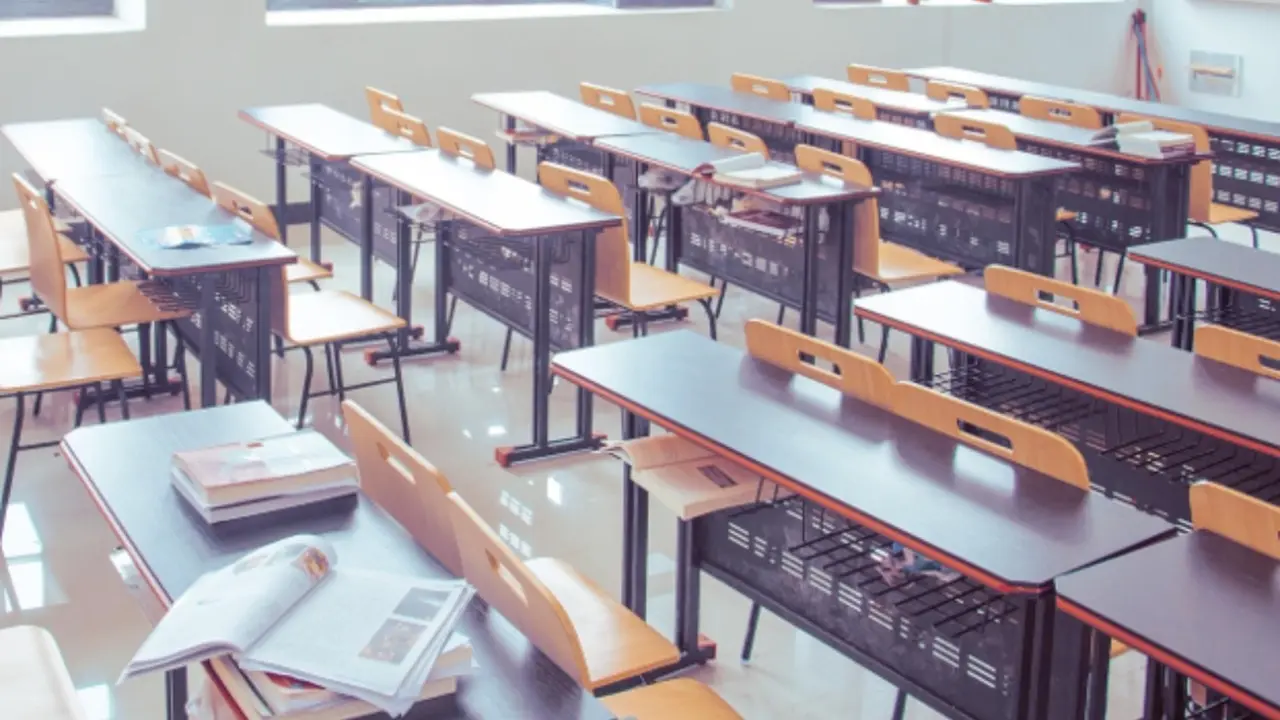
New Delhi: Classrooms across India are undergoing a quiet revolution. From government schools in Rajasthan to elite private institutions in Bangalore, artificial intelligence is no longer a futuristic concept — it’s already reshaping how students learn and how teachers teach. However, as AI becomes more prevalent in educational spaces, debates about its true value are also emerging.
The excitement around smart technology often mirrors trends seen in other digital spaces. Just as the ganesha casino game blends cultural familiarity with entertainment, AI in education is positioned as a tool that meets local learning needs while embracing modern technology. This prompts an important question: Is this technology truly transforming classrooms, or is it just another digital innovation with unfulfilled promises?
The Current AI Footprint in Indian Education
Artificial intelligence is already being integrated into classrooms across India, but not uniformly. While major urban schools and private institutions lead in adoption, public schools and rural areas remain on the edge of implementation.
The Central Board of Secondary Education (CBSE) has launched a curriculum focused on AI literacy for students in grades 8 and above. Tools like ChatGPT and ScribeSense are making their way into lesson planning, grading, and assignment feedback.
Advertisement
Companies such as Byju’s and Toppr have embedded AI into their learning platforms. They offer personalized study paths and real-time doubt resolution. Meanwhile, NITI Aayog’s collaboration with IBM on the ATL AI modules reflects government interest in shaping AI education policy from the ground up.
However, while pilot programs and edtech innovations are growing, they’re not yet universal. Many schools lack the infrastructure or trained personnel to use AI effectively, and much of the innovation remains centered in urban or higher-income areas.
Advertisement
Promises: What AI Claims to Fix in Indian Classrooms
AI tools are being marketed as solutions to multiple long-standing problems in Indian education. From making learning more inclusive to streamlining administrative work, the technology promises far-reaching improvements.
Personalised Learning at Scale
AI-powered adaptive learning systems analyze each student’s strengths and weaknesses. They adjust lesson difficulty to create customized pathways. Key features include:
● Tailored learning pathways
● Personalized dashboards
● Gamified content
● Instant feedback
This approach works well in classrooms with diverse learning levels. It offers a more engaging and personalized experience than traditional methods.
Automating Administrative Burdens
One of the major challenges teachers face is the time spent on grading, attendance tracking, and lesson documentation. AI systems like ScribeSense and Gradescope automate these tasks and allow educators to focus more on instruction and student engagement. For government schools with high student-teacher ratios, automation could improve efficiency and reduce burnout among staff.
Supporting Multilingual and Remote Education
India’s linguistic diversity presents a barrier to uniform content delivery. AI-powered translation and voice recognition tools offer a bridge across language divides. Platforms such as Google’s Bolo and Microsoft’s Reading Progress can assist students in regional languages. This helps make content more accessible to those in rural or non-English-speaking regions.
Challenges and Skepticism: Why Educators Are Wary
Despite the excitement, the integration of AI into classrooms comes with several caveats. Not all educators, parents, or students are convinced that the technology is entirely beneficial — or safe.
Data Privacy and Student Surveillance
Intelligent systems require access to vast amounts of data to function effectively. In classrooms, this often means collecting and analyzing student behavior, performance metrics, and in some cases, biometric data. Critics argue that most Indian schools lack data protection policies robust enough to guard student privacy. Without clear regulations, there is a risk of misuse, especially in commercial edtech platforms.
Algorithmic Bias and Inequality
AI tools are only as unbiased as the data they are trained on. Many of these systems originate from datasets that do not account for India’s complex social, economic, and linguistic realities. This creates a risk of reinforcing existing disparities. For instance, a language tool trained predominantly in English might not serve a Marathi or Tamil-speaking student effectively.

Teacher Resistance and Infrastructure Gaps
Many teachers feel unprepared or unsupported in adopting AI. Professional development opportunities related to smart technology remain limited, especially in public school systems. In addition, infrastructure poses a critical challenge. Unstable internet, outdated hardware, and inconsistent electricity supply make AI deployment in rural or underserved areas difficult, if not impossible.
Global Comparisons: How India Stacks Up
India is not alone in experimenting with artificial intelligence in education; China has adopted it extensively. The country uses facial recognition and emotion-detection software to monitor student engagement. The United States, by contrast, focuses more on using AI for college prep, tutoring, and learning analytics through platforms like Khan Academy and Coursera.
While India’s AI efforts are still growing, the country is actively exploring the technology, especially through private edtech initiatives. However, structural challenges, such as limited infrastructure and regulatory barriers, slow large-scale deployment. Despite leading in AI innovation in sectors like healthcare and fintech, education remains more cautious in its use.
Future Outlook: Navigating the AI Hype Curve
The road ahead depends on how India manages to balance innovation with inclusion, excitement with ethics. As the technology matures, several shifts could emerge:
● Increased teacher training in AI tools to enable smoother classroom adoption
● More multilingual interfaces to support regional learners
● Development of India-specific datasets to reduce bias in algorithms
● Government regulation and ethical guidelines to prevent misuse
● Hybrid classroom models that blend AI efficiency with human empathy.
These steps could help smart technology move from pilots to nationwide impact — if implemented responsibly. As adoption grows, it will go beyond a trend but must support, not replace, the core values of Indian education: equity, empathy, and access for all.
Conclusion: Not a Gimmick, But Not a Magic Wand Either
Artificial intelligence has the power to transform both student learning and teaching practices in India. But the technology alone cannot resolve deep-rooted issues such as underfunding, inequity, or poor infrastructure. Without thoughtful integration, it risks becoming another layer of digital noise.
What makes AI a game changer is not its speed or efficiency but how meaningfully it’s used. In the right hands, with proper safeguards and sufficient training, it can help India leapfrog into a new era of education. But if misapplied or overhyped, it risks becoming just another gimmick — another tool sold to schools without solving the problems that matter most.