
Updated 27 February 2025 at 18:56 IST
Anosh Ahmed’s Approach to Balancing Profitability with Social Responsibility in Business
A business cannot contribute to social good if it isn’t financially strong. Profitability provides the resources needed to invest in philanthropy.
- Initiatives News
- 4 min read

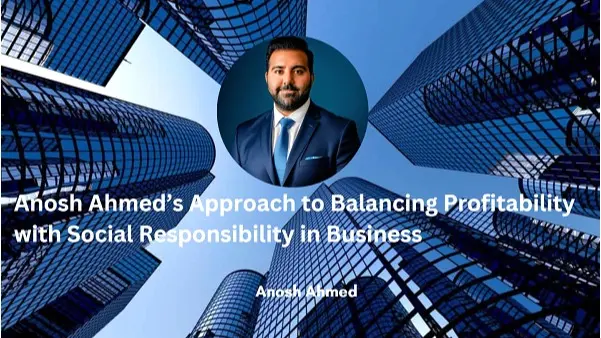
Profitability and social responsibility are often seen as opposing forces. Many companies struggle to achieve financial success while making a positive impact on society. However, Dr. Anosh Ahmed has proven that businesses don’t have to choose between making money and creating meaningful change. As the founder of the Private Family Office of Anosh Ahmed (PFOAA) and AAA Records, he has built successful ventures while ensuring that his businesses contribute to communities, support ethical practices, and drive long-term value. His approach to balancing profitability and social responsibility offers a roadmap for entrepreneurs aiming to achieve both.
Profitability as a Foundation for Sustainable Impact
A business cannot contribute to social good if it isn’t financially strong. Profitability provides the resources needed to invest in philanthropy, community programs, and ethical business practices. Anosh Ahmed ensures that his companies operate on strong financial principles, emphasizing strategic growth, cost efficiency, and sustainable revenue streams. Instead of viewing social responsibility as an added expense, he integrates it into the core of his business strategy, ensuring that financial success fuels meaningful impact.
Investing in Ethical and Community-Driven Business Models
Profit and social impact go hand in hand when businesses operate with a values-driven approach. Anosh Ahmed focuses on investments that not only generate revenue but also address pressing social challenges. His real estate ventures prioritize affordable housing, ensuring that communities benefit from his business success. His work in healthcare ensures that underserved populations gain access to quality medical care.
This model proves that businesses can thrive by solving real-world problems. By aligning profitability with positive change, companies can build loyal customer bases, attract ethical investors, and create lasting brand value. Entrepreneurs should focus on business models that naturally incorporate social responsibility into their financial success rather than treating it as an afterthought.
Creating Business Ecosystems That Benefit Society
Rather than isolated projects, social responsibility should be woven into the overall business ecosystem. Dr. Anosh Ahmed builds enterprises that create opportunities for others—whether through job creation, mentorship programs, or infrastructure development. His leadership philosophy extends beyond profits, ensuring that businesses act as engines for community development.
Companies that focus on long-term societal benefits are often rewarded with higher employee retention, stronger customer loyalty, and greater investor trust. A company’s success is directly tied to the health of the communities it serves. By fostering mutually beneficial ecosystems, businesses can create sustainable value for all stakeholders.
Advertisement
Prioritizing Transparency and Ethical Business Practices
Modern consumers and investors demand transparency. Companies that operate with ethical sourcing, fair wages, and sustainable practices gain trust and credibility. Anosh Ahmed’s business ventures emphasize accountability and ethical leadership, ensuring that his companies uphold the highest standards in every aspect of their operations.
This commitment to transparency doesn’t just build a positive brand image—it also protects businesses from legal risks, reputational damage, and consumer backlash. Entrepreneurs should ensure that their operations are aligned with ethical business principles, from supply chain management to environmental sustainability.
The Role of Leadership in Balancing Profit and Purpose
A company’s ability to balance profitability with social responsibility starts at the top. Leaders must set the tone by prioritizing purpose alongside financial success. Dr. Anosh Ahmed’s leadership style reflects a deep commitment to empowering employees, engaging with communities, and making decisions that align with long-term value creation.
Entrepreneurs who embrace values-driven leadership can inspire teams to work toward both financial and social impact goals. A culture of innovation, accountability, and responsible decision-making leads to stronger businesses that thrive in competitive markets while benefiting society.
Advertisement
The Future of Business: A New Standard for Success
Anosh Ahmed’s approach to balancing profitability with social responsibility proves that businesses can do well by doing good. Entrepreneurs should not see these two objectives as competing forces but as complementary elements of a sustainable, purpose-driven business strategy. By integrating social impact into the foundation of a business, companies can drive meaningful change while achieving financial success.
For the next generation of entrepreneurs, the challenge is clear: build businesses that generate profit while leaving a positive mark on the world. Dr. Anosh Ahmed’s journey serves as a blueprint for achieving this balance, proving that responsible leadership and business success can go hand in hand.
Key Takeaways: Building a Business That Balances Profitability and Social Good
⦁ Profitability Fuels Impact – Strong financial performance allows businesses to invest in social initiatives.
⦁ Social Responsibility Should Be Core to the Business Model – Aligning impact with revenue generation ensures long-term sustainability.
⦁ Building Business Ecosystems Creates Greater Value – Companies should focus on long-term contributions to their communities.
⦁ Transparency and Ethics Build Trust – Operating with integrity strengthens customer loyalty and investor confidence.
⦁ Leadership Shapes Business Responsibility – Strong leaders prioritize both profit and purpose, setting the foundation for success.
Published By : Isha Bhandari
Published On: 27 February 2025 at 18:56 IST