
Arshad Warsi Quit After 35 Years. Why Can't Most Smokers?
It's not about willpower. It never was.
- Initiatives News
- 7 min read

;'%3e%3cpath%20d='m8,15.99c4.41,0,7.99-3.58,7.99-7.99S12.41,0,8,0,0,3.59,0,8s3.58,7.99,7.99,7.99Z'%20style='stroke:%23fff;%20stroke-miterlimit:10;%20stroke-width:.02px;'/%3e%3cpath%20d='m3.08,3.37l3.82,5.11-3.84,4.15h.87l3.37-3.64,2.72,3.64h2.94l-4.04-5.39,3.58-3.87h-.86l-3.1,3.35-2.5-3.35h-2.94Zm1.27.64h1.35l5.97,7.99h-1.35l-5.97-7.99Z'%20style='fill:%23fff;'/%3e%3c/g%3e%3c/svg%3e)


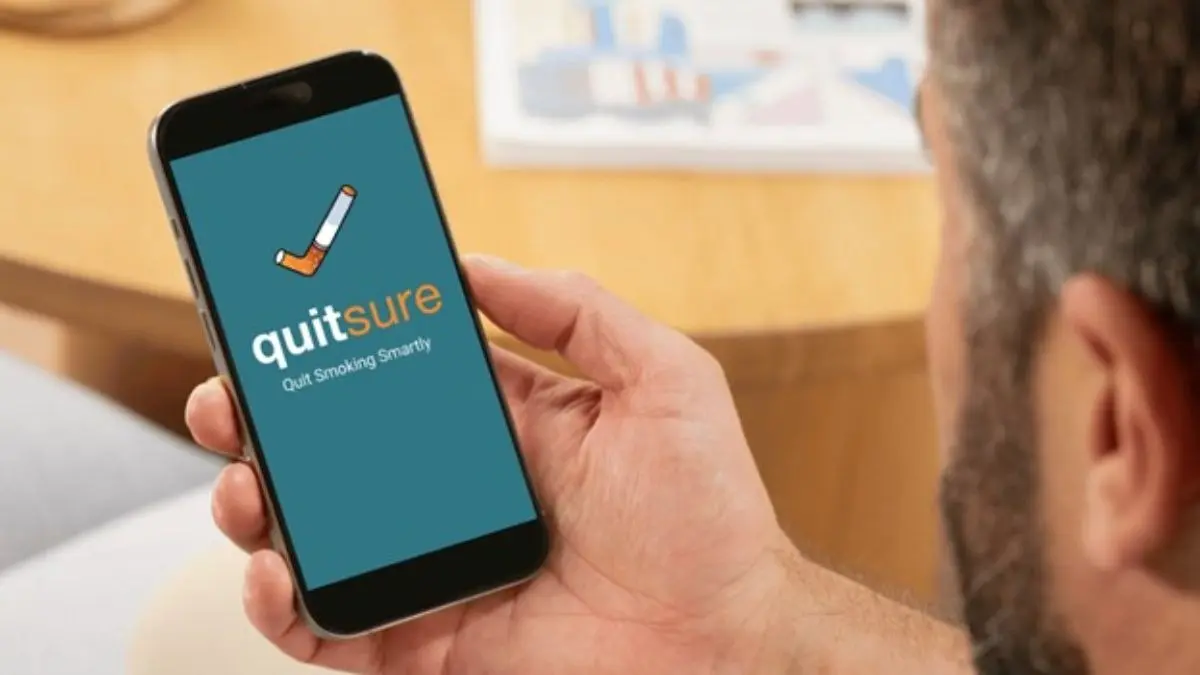
Arshad Warsi, in an interview with a Bollywood and Entertainment Channel, mentioned that he stopped smoking after 35 years and it only took him one week to do it. He used an app called Quitsure to help him quit. When people on the internet heard about this, they had reactions. Some people were really inspired by Arshad Warsi. Most people did not believe it. And a lot of smokers thought the thing they always think when they hear about someone quitting: Arshad Warsi can do it. But, I do not think it will work for me.
Arshad Warsi said he thought of the same thing at first. He said "I was 100% sure it was not going to work. Anybody in their right mind would say, 'Boss, how can you give up smoking with an app?'"
His friend Subhash told him about the app. Arshad Warsi tried it because he was desperate to quit. He had been smoking a lot of Marlboro cigarettes for three and a half decades. Then something big happened. Arshad Warsi was at a party after quitting. Everyone around him was smoking but he did not feel like smoking at all. It had only been seven days since he started using the app.
"It didn't bother me at all," he said. "It is magical."
Advertisement
The app QuitSure is a 6-day quit smoking program that over 3 million people have downloaded. This is not really one actor using QuitSure but it is about the question of why people have a hard time quitting smoking.
The 96% problem
Advertisement
The problem is that most people fail to quit smoking. The numbers show that between 94-96% of people who try to quit smoking will start again. If people just use their willpower to quit smoking it only works 4% of the time. Using nicotine patches and gum is a little better - 6-8%.
These numbers are not because people do not want to quit smoking rather it is because the approach we use to try to quit smoking is often incorrect.
Dr Samir Parikh, Chairperson of the Fortis National Mental Health Program, has pointed to the core of the issue. "Tobacco addiction is often not recognised as a medical illness that requires treatment by mental health professionals," he told a popular newspaper house earlier this year. "You'll find more discussion about behavioural addiction and digital detox than about tobacco detox."
The truth is that society treats smoking as a bad habit that requires discipline. The science however, tells another story. It says smoking is a psychological condition that requires treatment.
The wrong war
Ask a smoker why they can't quit smoking and they will usually say one word: nicotine.
It is addictive.
It is a chemical.
My body needs nicotine.
This is partly true and mostly misleading.
Nicotine leaves the body in 72 hours.
The physical withdrawal symptoms. Like being irritable, feeling restless and having trouble concentrating. Are real. Not that bad. Most smokers have felt worse when they had the flu.
If nicotine were the problem, every smoker who survived a long flight, a week in the hospital or a holiday at a non-smoking resort would quit smoking when they got home.
The nicotine hooks would have loosened.
That is not what happens.
The moment they're back in their kitchen, with a cup of tea, the urge to smoke returns like they never stopped smoking.
Because the urge to smoke is not coming from the body.
It is coming from the brain. The brain is craving nicotine. Smokers miss smoking. They want to smoke.
Tea means cigarette
Warsi described this as "It is purely a reminder," he said, "that ab maine chai pi hai, ab mujhe cigarette pini hai; ab maine khana khaya, ab mujhe cigarette pini hai; ab main baitha hoon shaam ko, ab mujhe cigarette pini hai." (Now I've had tea, now I need a cigarette; now I've eaten food, now I need a cigarette; now I'm sitting in the evening, now I need a cigarette.)
What Warsi was talking about is that smoking gets connected to our habits, our feelings and how we deal with stress. This is called classical conditioning and it happens when an action or behaviour is repeated over and over again, and the brain starts normalising that habit. The smoker does not think about wanting a cigarette after having tea. The desire for a cigarette just appears on its own. It feels like the body needs it.
Dr Lancelot Pinto, a pulmonologist and smoking cessation specialist at P.D. Hinduja Hospital in Mumbai, has drawn an analogy that makes the problem vivid. "Trying to quit smoking by oneself is the equivalent of trying to control diabetes with diet alone," he has written. "While it may be successful for some individuals, the majority will not succeed."
His point is that smoking, like diabetes, needs to be treated. We need more than willpower to stop smoking. The treatment has to be right for the problem. Nicotine patches help with the body's need for nicotine. If the main problem is in the mind then just using patches is like taking painkillers for a broken bone without fixing the bone.
What the program does
QuitSure is different from nicotine gum or patches because it does not just deal with the chemical part of the addiction. QuitSure uses Cognitive Behavioural Therapy (CBT) and Rational Emotive Behavioural Therapy (REBT) and guided self-hypnosis to address the psychological part of the addiction. The programme is 6 days long. It takes about an hour a day to complete through an app.
The main idea of QuitSure is rather intriguing. You can keep smoking while you are doing the program. Then you will quit by the end of it. You do not have to stop smoking at all. The program helps you find the reasons why you smoke and helps you get rid of those reasons. For example, it helps you stop thinking that you need a cigarette when you have a cup of tea.
By the time you finish the program, you will not want to smoke. It is not a game of willpower anymore.
Peer-reviewed research published in the Journal of Medical Internet Research (2024) found that 80.1% of programme completers successfully quit smoking - a number that is striking when placed against the 6% success rate of nicotine patches and the 4% baseline for willpower alone.
Warsi's own verdict was simpler. "It makes you understand what really nicotine is, what really smoking is."
He paused, then added: "I would recommend this app to everybody."
The question worth sitting with
India has a lot of people who use tobacco, 267 million according to the World Health Organization. It kills about 1.3 million Indians every year. Most people who smoke want to stop smoking. But when they try to quit, they usually fail.
People have always been talking about quitting smoking. They say you need to be strong, disciplined and consider major health risks to quit. But the truth is, that was never the reason why people were not able to quit.
Warsi's story is not remarkable because a celebrity quit smoking. Celebrity health stories are common and usually forgettable. But this story is different because he explained what it feels like when you do not want to smoke anymore and it is not just him. And it is all proven using science and real-life anecdotes.
QuitSure is available on iOS and Android.
Arshad Warsi shared his experience voluntarily in a public interview with a Bollywood and Entertainment Channel. He is not a paid spokesperson for QuitSure. Individual results may vary. Readers considering any smoking cessation approach should consult their doctor.