
Author Aarti Pathak Brings Themes of Love, Ramayana and Healing to the Fore at Kolkata Lit Meet
When asked what advice she would give to those going through a difficult phase, she said, “I don’t like to give advice to anyone, but if someone asks, I would say, ‘If you are so lucky that you have loved ones in your life who want to take care of you, please allow them in. Do yourself this favour. Give yourself this gift.’”
- Initiatives News
- 4 min read

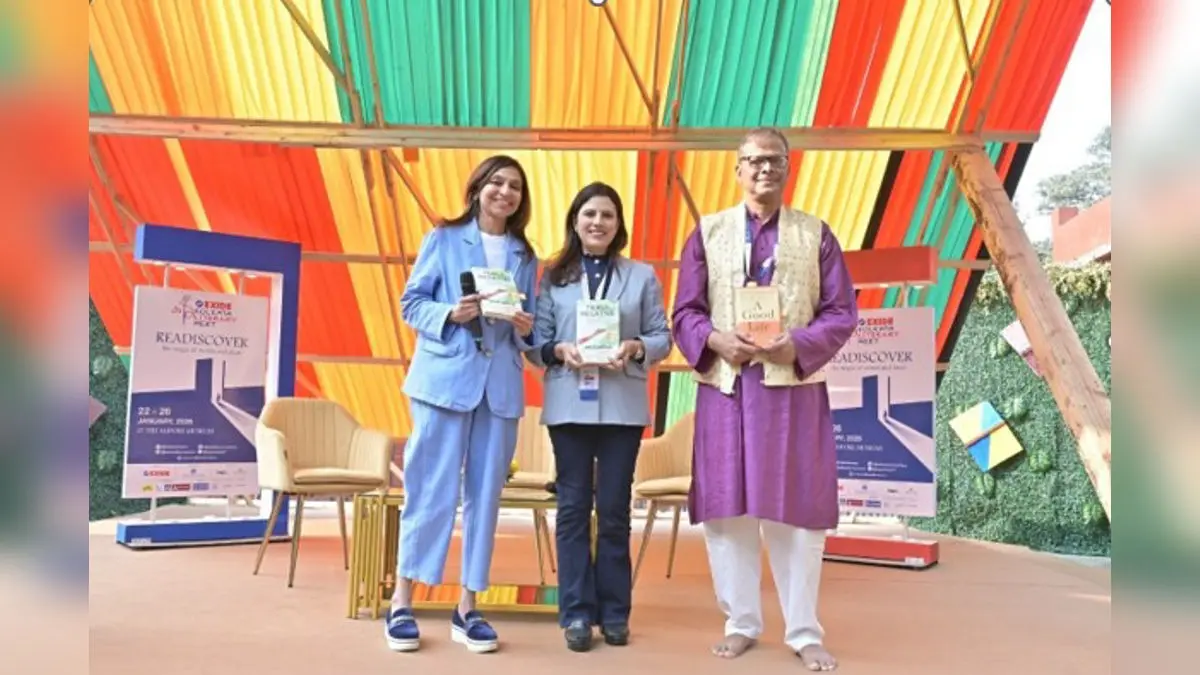
Kolkata, January 2026: Author, speaker and cancer survivor Aarti Pathak addressed audiences at the 14th edition of the Kolkata Literary Meet (KaLaM), held at the Alipore Museum from January 23–27, 2026, bringing to the fore a deeply reflective conversation on love, lessons from the Ramayana, and the multiple transformative dimensions of healing.
Pathak was part of the panel titled Hurt Locker, alongside Sahitya Akademi Award-winning author Jerry Pinto. They were joined in conversation by the Kolkata-based organ donation activist Shruti Mohta. The discussion around empathy and palliative care also echoed themes of love, ancient Indian wisdom, reflection and surrender.
Pathak, who discovered her diagnosis just hours after losing her mother, chronicled her journey in her unflinching cancer memoir Triple Negative: A Tale of Love, Faith, and Surrender.
Speaking about the role of love, Pathak emphasised the importance of allowing oneself to receive it. Recalling her own journey, she noted, “We are humans; we are meant to live together like communities, and I had the privilege of having love and people who love me. I broke the walls around me. When my husband wanted to be there for me, I allowed him. When my friends wanted to reach out, I picked up the call. I took the well-meaning, brilliant advice they gave me.”
Advertisement
When asked what advice she would give to those going through a difficult phase, she said, “I don’t like to give advice to anyone, but if someone asks, I would say, ‘If you are so lucky that you have loved ones in your life who want to take care of you, please allow them in. Do yourself this favour. Give yourself this gift.’”
Pathak’s work often blends lived experience with civilisational insight. Reflecting on the importance of mental strength and spiritual grounding, she shared candidly, “Unless the mind was strengthened, I would have failed. I used to think I was the weakest person I knew.” A yoga teacher introduced her to pranayama, a practice that transformed her experience of that phase in life. “I felt it was a beautiful path to find God himself,” she said. She would wake before sunrise to practise pranayama alongside her husband. “When the sun rays would fall on my closed eyelids as I did my om jaap, I felt at one with the universe. I could see that the atma in me is the same as the atma in all living beings, which is eventually an ansh of God. That helped me overcome all kinds of fear and negative thoughts.”
Advertisement
Without positioning spiritual practice as a substitute for medical intervention, Pathak articulated it as a source of emotional regulation and inner steadiness—a way to anchor the mind amidst uncertainty.
The Ramayana, too, emerged as a central touchstone in her reflections. Rather than approaching the epic as distant mythology, Pathak spoke of it as a lived philosophical text. “The mool tatva of the epics came to me and my atma,” she said. Recounting how the narrative of Sri Ram and Devi Sita shaped her thinking during her illness, she reflected, “If Sri Ram and Devi Sita, a young couple madly in love, newlywed and walking the path of dharma — if they had to go through so much even though they are incarnations of devatas, if they have to take their karmas on Earth, who am I? Why would I be exempt from my share?” That realisation, she noted, gave her courage. The Ramayana, in her telling, became a source of strength because it did not promise exemption from hardship, but dignity within it.
The audience engagement reflected a growing interest in conversations that bridge literature, lived philosophy and contemporary life. Pathak’s ability to weave together her observations, spirituality, and lessons from Ramayana offered listeners a layered perspective on resilience. Literary festivals often serve as spaces where literature and lived philosophy intersect, and Pathak’s reflections highlighted how stories can illuminate pathways through suffering.