
Biscoff in India: When a Worldwide Popularity is a Stranger at Home
Biscoff in India has struggled with niche availability for nearly a decade, often shared by travelers from Europe or available in high-end import shops. Its unique taste offered a premium experience distinct from typical snacks.
- Initiatives News
- 6 min read

;'%3e%3cpath%20d='m8,15.99c4.41,0,7.99-3.58,7.99-7.99S12.41,0,8,0,0,3.59,0,8s3.58,7.99,7.99,7.99Z'%20style='stroke:%23fff;%20stroke-miterlimit:10;%20stroke-width:.02px;'/%3e%3cpath%20d='m3.08,3.37l3.82,5.11-3.84,4.15h.87l3.37-3.64,2.72,3.64h2.94l-4.04-5.39,3.58-3.87h-.86l-3.1,3.35-2.5-3.35h-2.94Zm1.27.64h1.35l5.97,7.99h-1.35l-5.97-7.99Z'%20style='fill:%23fff;'/%3e%3c/g%3e%3c/svg%3e)


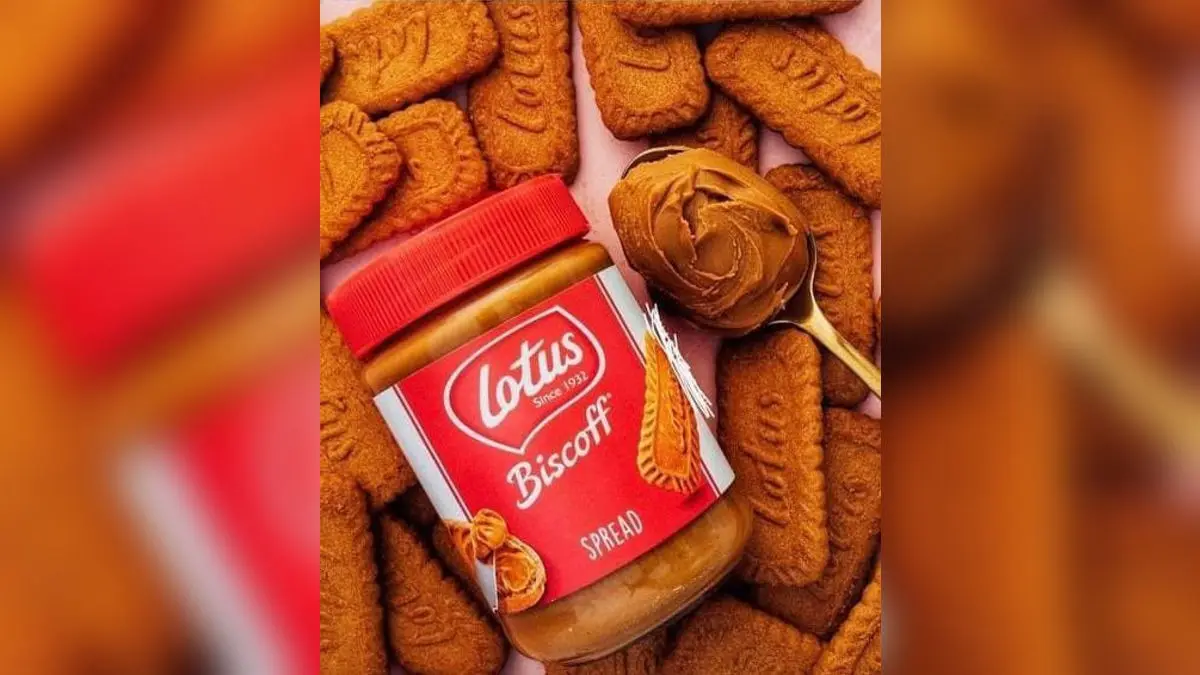
Biscoff in India was in a niche that hardly any packaged food brand can survive in, almost ten years. I did not find it on a local supermarket shelf or casually put it on a shopping cart. It came with your family members that had just gotten back to Europe, with your friends that had just gotten back to Dubai or with the occasional high-end import shop that stocked it at a price to think twice. It was a conscious act of taking a pack. Sharing it was selective. The rich caramelised taste, the unique crunch of the biscuit and the near dessert quality of the product gave it a name much different than snacks in general. Biscoff was not just eaten. It was experienced.
This is one of the reasons why its actual entry into the Indian market caused such hype. Years later, people had been hoping that the brand would be widely distributed without being diluted. The promise seemed simple. More access, same experience. However, what has come after the Indian rollout has silently become one of the most fascinating consumer discourses in the area of food and lifestyle in the country.
The very moment that Biscoff products started showing up in Indian retailers' shelves and online stores, a certain trend was being observed on social media. Customers who had tried the imported versions began telling that the Indian one was different. Not strikingly different but different enough to be experienced. A lot of people said that the taste was lighter. Others said the caramelised tones were not so long-lasting. Others had found the richness turned down. These remarks might have been insignificant enough taken separately. All of them created a vivid story. The Biscoff folk, they were now purchasing in India, were not quite similar to the ones they remembered.
The interesting aspect of this dialogue is that it has not been influenced by unclear nostalgia or emotional attachment alone. Many consumers have been able to come across both versions and make a direct comparison. Their responses have been quite the same. Throughout the reels, posts, and commenting, the conclusion repeats itself. The Biscoff in India has a different taste.
Advertisement
This feeling is further supported by various renowned food and lifestyle makers,s which adds more strength to the debate. Mumbai-based artist Nikhil, Sarvesh Shrivastava, Chinmay, Sanjay Arora, and the page dedicated to baking Mini Crumbs have all produced their own response after tasting the Indian and imported versions. They have not been accusatory or aggressive in their tone. Rather, it has been contemplative and inquisitive. They have questioned whether there have been modifications of the profile of the product due to localisation, cost structures, or sourcing of ingredients?

These voices are important in a period of digitality when credibility is gained through years of experience. When several creators who have established credibility with their audiences on their own come to similar conclusions, the discussion shifts to a group of isolated views to an experience of common consumption.
Advertisement
The concept of pricing has contributed to this perception change. Biscoff has been marketed as a high quality biscuit all over the world. In India on the other hand, the price has been pegged lower at the entry level to ensure that a large population can afford it. This is ideal in terms of business. India is a vast competitive market where size counts. However under the consumer psychology level, the transformation has been a subtle shift in the perception of the brand.
To a number of long time fans, Biscoff was unique in the sense that it was no everyday. It was that which you picked up when you wanted to indulge yourself. As soon as a product becomes affordable by the masses, the expectations shift. When it has been now priced as a normal biscuit, should it feel as a luxury then? Or is accessibility necessarily a trade off?
Here the discussion becomes less taste-related and more about trust. The consumers of India today can be termed as price sensitive but this is no longer fully true. They are more and more value sensitive. They know efficiency through low cost. They are aware of the economies of scale. Yet they will be fast to pick up on what seems diluted. The issue concerning Biscoff is not that it is localised. A lot of international brands can easily adjust to the Indian preferences and survive. It is a question on whether the adaptation has altered the reason why people fell in love with the product.
Here, packaging has a subtle and mighty role to play. Biscoff Indian version is very similar to the international visual identity. The colours, the brand and the general appearance is meant to give a message of continuity. This leaves an implicit promise. You ought to remember what you see on the shelf. A discrepancy between promise and delivery is incorporated into the consumer story when the sensory experience is not entirely consistent with that expectation.
What is going on currently is not a conventional controversy. No boycotts are called. There is no outrage. Instead, there is something much more substantial. It is a test. An experiment of transparency and brand integrity and the seriousness with which global brands take the Indian consumer.
The current Indian consumers are not just active consumers today. They make cross border comparisons of products. They view video cassettes, comment on, and talk about. Hundreds of micro conversations can begin with a single Instagram video, which remain searchable and in sight months later. When a story starts developing, it is not readily lost.
This is a challenge and an opportunity to Biscoff. The difficulty is that something that is dear to the heart might have altered. The chance is in the manner in which the brand will approach that perception. Nowadays when people appreciate honesty in their food on the same level as flavour, transparency can go far.
Since in the final analysis, this is not a question of a biscuit. It is concerned with what happens when an international star returns home, and whether it is the same one that people fell in love with.