
Building India’s Organic Future: Patanjali’s Initiative To Connect Organic Farmers With Organic Market
Patanjali initiated a comprehensive program connecting organic farmers directly with the organic retail market. This model ensures that small and marginal farmers receive fair prices while consumers get authentic organic food.
- Initiatives News
- 3 min read

;'%3e%3cpath%20d='m8,15.99c4.41,0,7.99-3.58,7.99-7.99S12.41,0,8,0,0,3.59,0,8s3.58,7.99,7.99,7.99Z'%20style='stroke:%23fff;%20stroke-miterlimit:10;%20stroke-width:.02px;'/%3e%3cpath%20d='m3.08,3.37l3.82,5.11-3.84,4.15h.87l3.37-3.64,2.72,3.64h2.94l-4.04-5.39,3.58-3.87h-.86l-3.1,3.35-2.5-3.35h-2.94Zm1.27.64h1.35l5.97,7.99h-1.35l-5.97-7.99Z'%20style='fill:%23fff;'/%3e%3c/g%3e%3c/svg%3e)


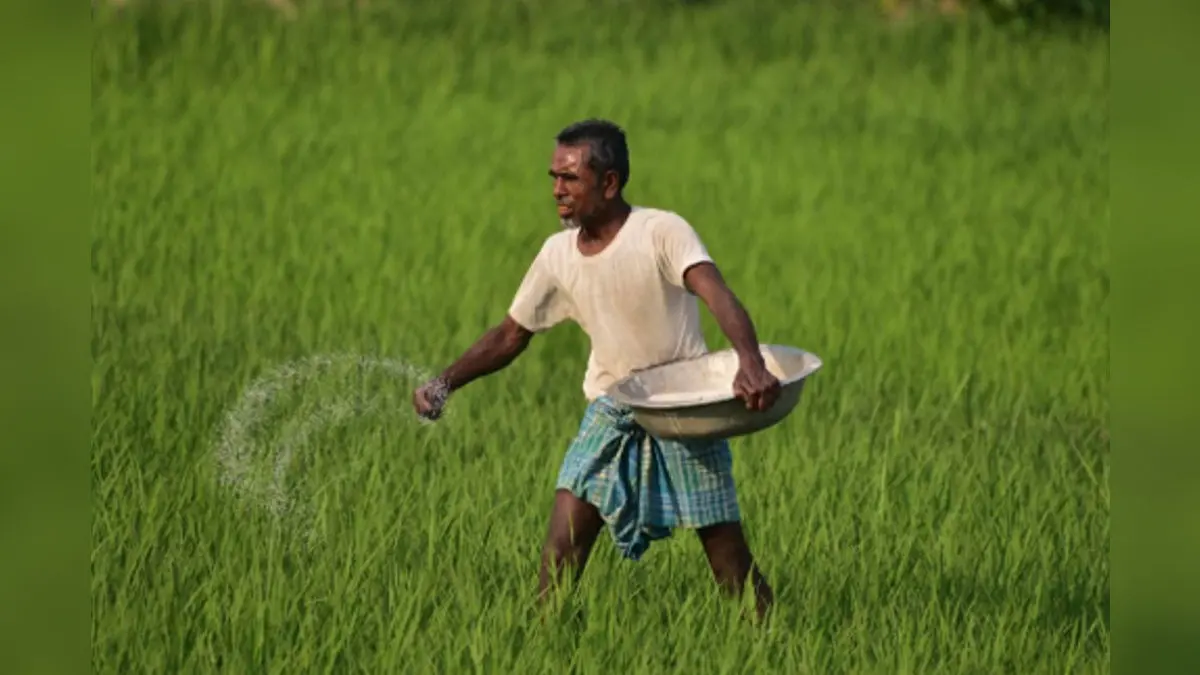
India stands at a pivotal moment in agricultural transformation. As the demand for safe, chemical-free, and nutrient-rich food grows rapidly, millions of farmers are looking for ways to transition from conventional to organic farming. Yet, one major obstacle remains: while farmers produce organic crops with dedication, they often lack access to a stable and profitable organic market. This is the gap Patanjali is working tirelessly to bridge through its visionary farmer-market integration initiatives.
Why a Farmer–Market Bridge Is Crucial
Despite India having one of the world’s largest numbers of organic farmers, the market for organic produce is fragmented, unorganised, and dominated by intermediaries. Farmers face challenges such as:
- Low awareness of certification and quality standards
- Limited access to direct procurement channels
- Unstable pricing
- Exploitation by middlemen
- Inconsistent demand visibility
This leads to discouragement and financial losses. Patanjali recognised that empowering farmers requires more than training—it requires guaranteed market access.
Advertisement
Creating a Seamless Value Chain
To solve this, Patanjali initiated a comprehensive program connecting organic farmers directly with the organic retail market. This model ensures that small and marginal farmers receive fair prices while consumers get authentic organic food.
Advertisement
Key pillars of the initiative include:
1. Identifying and Training Organic Farmers
Patanjali teams travel across multiple states, conducting:
- Workshops on organic practices
- Soil health awareness sessions
- Demonstrations on composting, natural pesticides, and seed care
- Training in record maintenance for certification
Farmers are encouraged to gradually convert their land into fully organic zones.
2. Helping Farmers Achieve Certification (PGS & NPOP)
Certification is often a farmer’s biggest hurdle. Patanjali simplifies it by:
- Conducting on-ground inspections
- Helping form Local Farmer Groups (LFGs)
- Offering assistance in documentation
- Handholding farmers through conversion timelines
This ensures credibility and builds trust for both buyers and consumers.
3. Direct Procurement and Fair Pricing
One of the strongest features of Patanjali’s system is its direct procurement model, which includes:
- Pre-fixed pricing
- Elimination of middlemen
- Transparent weight and quality checks
- Timely payments
This delivers financial security and boosts farmer confidence to adopt organic practices long-term.
4. Connecting Farmers to Retail Supply Chains
Once certified, organic produce is supplied to:
- Patanjali stores
- Modern retail networks
- Ayurvedic product manufacturing units
- Export markets (in select categories)
This closes the loop from farm to shelf, ensuring stable demand for Indian organic produce.
5. Impact on Farmers and India’s Food Ecosystem
The initiative has led to:
- Increased incomes for thousands of farmers
- Higher adoption of chemical-free agriculture
- Revival of indigenous seeds
- Better soil fertility across villages
- Growing awareness about sustainable food systems
By creating a dependable supply chain, Patanjali is helping transform organic farming into a mainstream, profitable, and scalable model.
A Vision for the Future
Patanjali aims to create India’s most reliable organic ecosystem—where farmers do not struggle for buyers and consumers do not struggle for authenticity. The goal is simple yet transformative:
connect every organic farmer to every organic household through a transparent, trusted, and fair system.
With its continued initiatives, Patanjali is not only uplifting farmers but also redefining how India grows, buys, and consumes organic food—laying the foundation for a healthier and greener future.