
Crafting Worlds: Production Designer Arushi Mathur Talks Shape of a Girl
In Shape of a Girl, Mathur collaborated closely with the director and cinematographer to amplify themes of obsession and danger through layered, atmospheric design.
- Initiatives News
- 4 min read

;'%3e%3cpath%20d='m8,15.99c4.41,0,7.99-3.58,7.99-7.99S12.41,0,8,0,0,3.59,0,8s3.58,7.99,7.99,7.99Z'%20style='stroke:%23fff;%20stroke-miterlimit:10;%20stroke-width:.02px;'/%3e%3cpath%20d='m3.08,3.37l3.82,5.11-3.84,4.15h.87l3.37-3.64,2.72,3.64h2.94l-4.04-5.39,3.58-3.87h-.86l-3.1,3.35-2.5-3.35h-2.94Zm1.27.64h1.35l5.97,7.99h-1.35l-5.97-7.99Z'%20style='fill:%23fff;'/%3e%3c/g%3e%3c/svg%3e)


Indian-origin production designer Arushi Mathur has steadily built a name for herself on the global stage, bringing an architect’s precision and an artist’s imagination to cinema. Her recent work on the psychological thriller Shape of a Girl(2025), which will be screened at the prestigious Catalina Film Festival, in September 2025, has once again cemented her reputation as one of the most exciting creative voices in international storytelling.
In the film, Mathur collaborated closely with the director and cinematographer to amplify themes of obsession and danger through layered, atmospheric design. Integrating the woodworking textures of the primary location with hand-crafted details—such as original drawings, paintings, and a striking red motif—she transformed the interiors into spaces that mirrored the protagonist’s unraveling psyche. The director praised her contributions, noting how her eye for cohesion elevated the narrative from page to screen.
This recognition adds to an already impressive career. Mathur’s production design for Unalived earned selections at Cinequest, HorrorHound Weekend Film Festival, Chicago Horror Film Festival, Cleveland International Film Festival, and the PANO Shorts Showcase at NYU Tisch School of the Arts. She played a pivotal role in the success of the DramaBox miniseries Daddy Mommy Don’t Divorce, which garnered 2.6 million views and an IMDb rating of 8.4. Her work has also been central to Secrets of Sin and Broken on Galatea TV (now Candy Jar), reaching viewers worldwide.
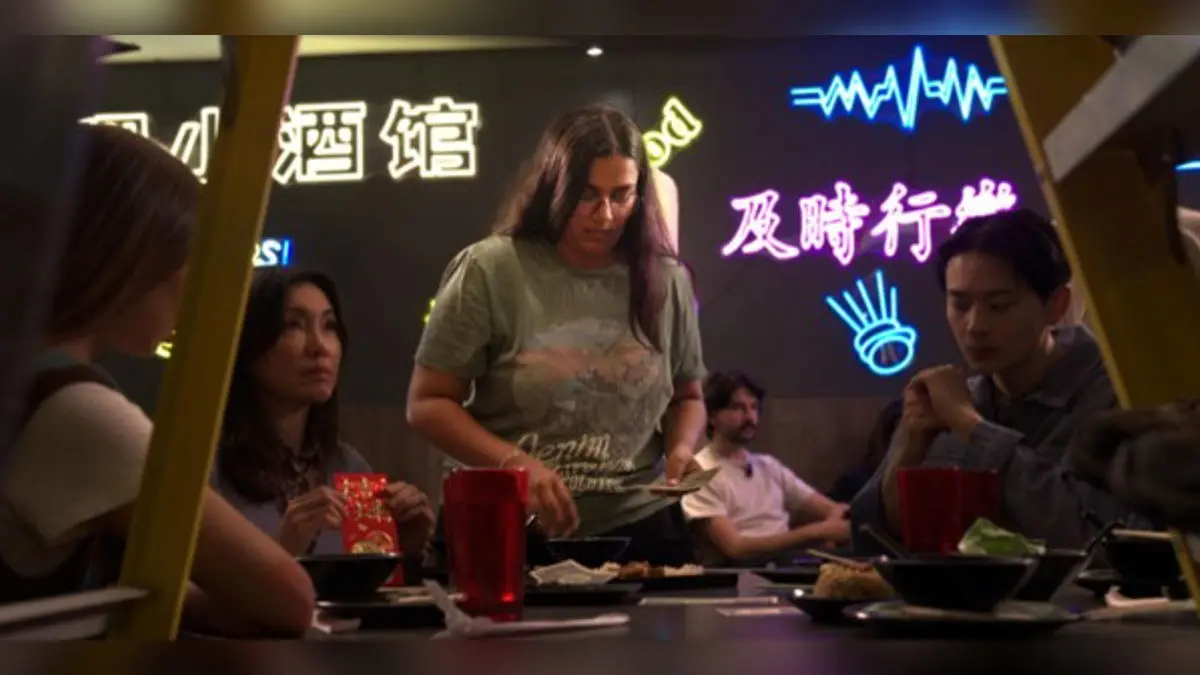
Mathur was the creative force behind the short Red Pocket, a finalist for the Deutsche Bank Frieze Los Angeles Film Award, and contributed as Set Decorator on Mis-Alignment, which screened at Palm Springs International ShortFest, LA Shorts, AFI FEST. Beyond film, her versatility extends into commercial and music video space: she worked as Set Decorator on the Matua Wine campaign, authentically showcasing New Zealand’s identity while attracting hundreds of thousands of views, and her design on the music video Lie to Me highlighted her ability to merge cinematic storytelling with contemporary rhythm and style.
Advertisement

Interview
Congratulations on Shape of a Girl screening at the Catalina Film Festival. The film’s design feels claustrophobic and unsettling, echoing the main character’s descent into obsession. How did you approach this atmosphere?
Thank you. My goal was always to design from the inside out—thinking about how the character sees and experiences his environment. The house itself had such strong woodworking textures, so I leaned into that, adding drawings, paintings, and subtle reds to intensify the space without overwhelming it. I wanted viewers to feel the unease of being trapped in his world, where the walls themselves seem to close in.
Advertisement
You’ve also had success with films like Unalived, which traveled to several top international festivals. How do you maintain balance between bold visual storytelling and coherence?
For me, design has to serve the story first. Festivals appreciate originality, but what audiences really connect with is honesty. That means not over-decorating a space, but making sure every object and every color feels intentional. If a single detail deepens our understanding of a character or emotion, then it belongs.
Your series Daddy Mommy Don’t Divorce reached millions on DramaBox, and Secrets of Sin and Broken drew huge audiences on Galatea TV (now Candy Jar). How do you see production design evolving for digital-first platforms?
Streaming and short-form platforms are changing how we watch stories—faster pacing, more global audiences, smaller screens. Design has to adapt by being visually bold but also authentic. People can scroll away in seconds, so every frame needs to be immersive right from the start, while still staying true to the story.
You also worked as Set Decorator on Mis-Alignment, which screened at Palm Springs ShortFest, AFI FEST, and LA Shorts before releasing on MUBI. What was it like to see your contribution resonate on such an international scale?
It was incredibly rewarding. Mis-Alignment was a film where every object carried weight—it was about creating subtle cues that added to the tension. To then see it connect with audiences across so many countries proved to me how universal design really is. Even when viewers may not consciously notice a choice, they feel it.
Across your projects, you often find ways to subtly integrate Indian motifs. What does that mean for you in a global context?
It means a lot. India has an endless vocabulary of textures, patterns, and symbols. Even if I’m working on a project far removed from Indian culture, I like to weave in small touches—sometimes through color, sometimes through form. It’s my way of carrying my heritage with me, while adding depth that resonates universally.
Closing
With Shape of a Girl, Arushi Mathur once again proves her ability to transform scripts into textured, emotionally powerful worlds. From set decoration in international campaigns to production design in acclaimed films, her body of work reflects both versatility and vision. For Mathur, the craft is not just about building sets—it’s about creating experiences that linger long after the screen goes dark.