
Gold is playing an important role in Diversified Investment Portfolios-Mr.Kailash Kulkarni, CEO- HSBC Mutual Fund
Unlike many financial assets, gold derives its value from its scarcity, durability and long-standing acceptance as a monetary asset.
- Initiatives News
- 4 min read

;'%3e%3cpath%20d='m8,15.99c4.41,0,7.99-3.58,7.99-7.99S12.41,0,8,0,0,3.59,0,8s3.58,7.99,7.99,7.99Z'%20style='stroke:%23fff;%20stroke-miterlimit:10;%20stroke-width:.02px;'/%3e%3cpath%20d='m3.08,3.37l3.82,5.11-3.84,4.15h.87l3.37-3.64,2.72,3.64h2.94l-4.04-5.39,3.58-3.87h-.86l-3.1,3.35-2.5-3.35h-2.94Zm1.27.64h1.35l5.97,7.99h-1.35l-5.97-7.99Z'%20style='fill:%23fff;'/%3e%3c/g%3e%3c/svg%3e)



Gold has long held a distinctive place in investment portfolios. Across generations and economic cycles, it has been regarded as a store of value and an asset that investors often consider when building diversified portfolios. Even as financial markets continue to evolve and investment choices expand, gold remains relevant as part of a balanced asset allocation strategy.
One of the reasons gold continues to attract investor attention is its unique characteristics. Unlike many financial assets, gold derives its value from its scarcity, durability and long-standing acceptance as a monetary asset. These attributes have helped it maintain relevance across different economic environments.
For investors, the objective is not necessarily to rely on a single asset class but to create portfolios that can navigate changing market conditions. In that context, gold has historically served as a useful component of diversified portfolios.
Gold as a Portfolio Diversifier
Advertisement
Diversification remains a key principle of long-term investing. By allocating across different asset classes, investors can potentially manage volatility and improve overall portfolio balance.
Gold has historically demonstrated an ability to perform across different market environments. Over the past two decades, it has delivered positive returns across several calendar years, reflecting its resilience across varying economic conditions.
Advertisement
While returns may vary from year to year, the long-term return pattern highlights how gold has remained relevant through multiple global developments and financial cycles. This historical perspective reinforces why many investors consider gold as part of a diversified asset allocation framework.
Gold during periods of Market Uncertainty
Another aspect of gold’s appeal lies in the role it can play during periods of market uncertainty. Historically, when markets experience volatility or investors seek stability, gold has often attracted renewed interest.
Several global developments over the past decade have demonstrated this pattern. Periods marked by economic disruptions, financial market volatility or global events have frequently coincided with increased demand for gold.
For example, during the coronavirus-led global lockdown in 2020, gold delivered calendar-year returns of around 28%, highlighting how investor demand strengthened during a period of heightened uncertainty.
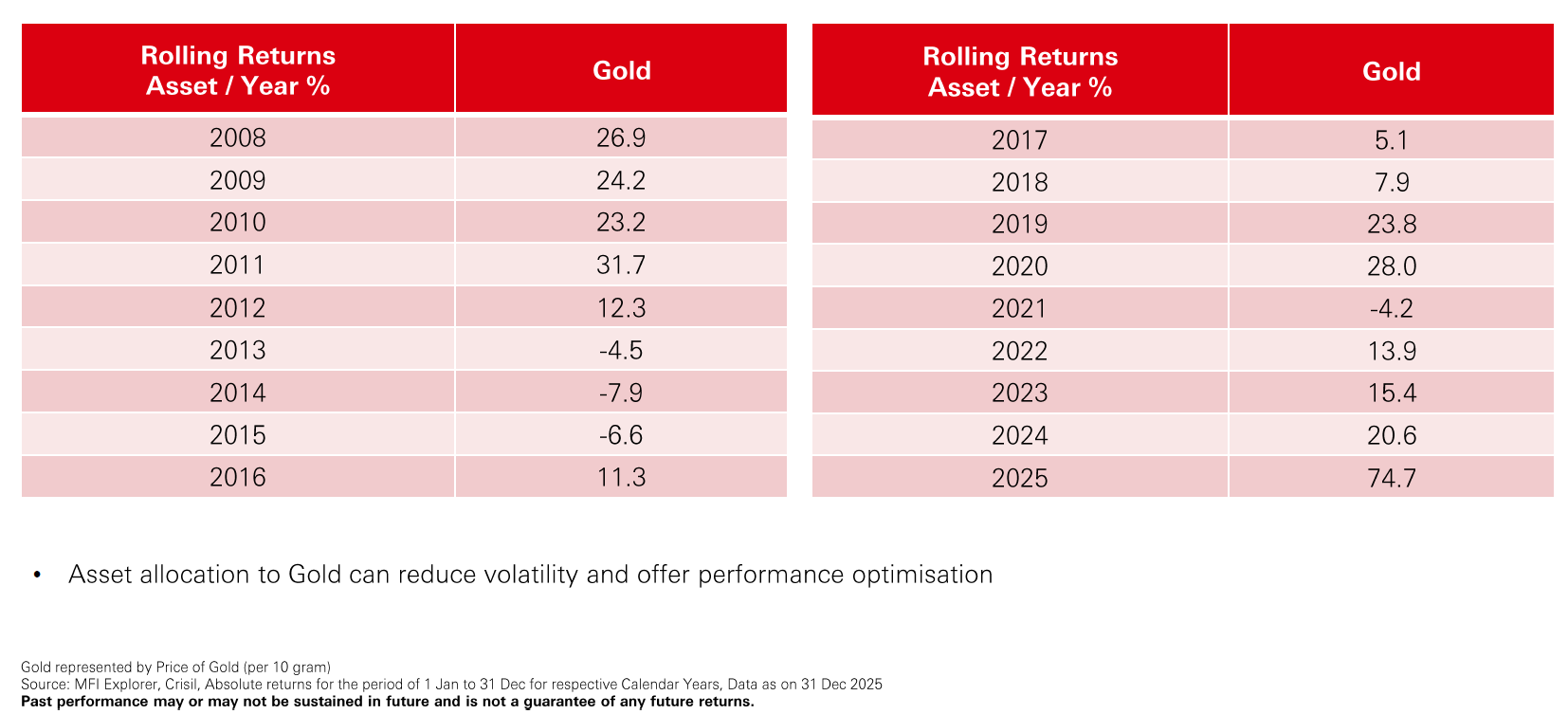
Gold’s performance across different global events highlights its potential role as a stabilising element within investment portfolios.
Expanding global demand for Gold ETFs
The way investors access gold has evolved significantly over time. While physical gold has traditionally been the preferred form of holding the metal, financial investment products have made it easier for investors to gain exposure to gold in a transparent and regulated manner.
Gold Exchange Traded Funds (ETFs) have emerged as one of the most widely used vehicles for this purpose. These instruments allow investors to participate in gold price movements through stock exchanges without the logistical challenges associated with physical storage.
Over the past several years, global gold ETF demand has increased steadily. Investors across regions have continued to allocate these products, pushing overall holdings to record levels and reflecting growing interest in financial gold investments.
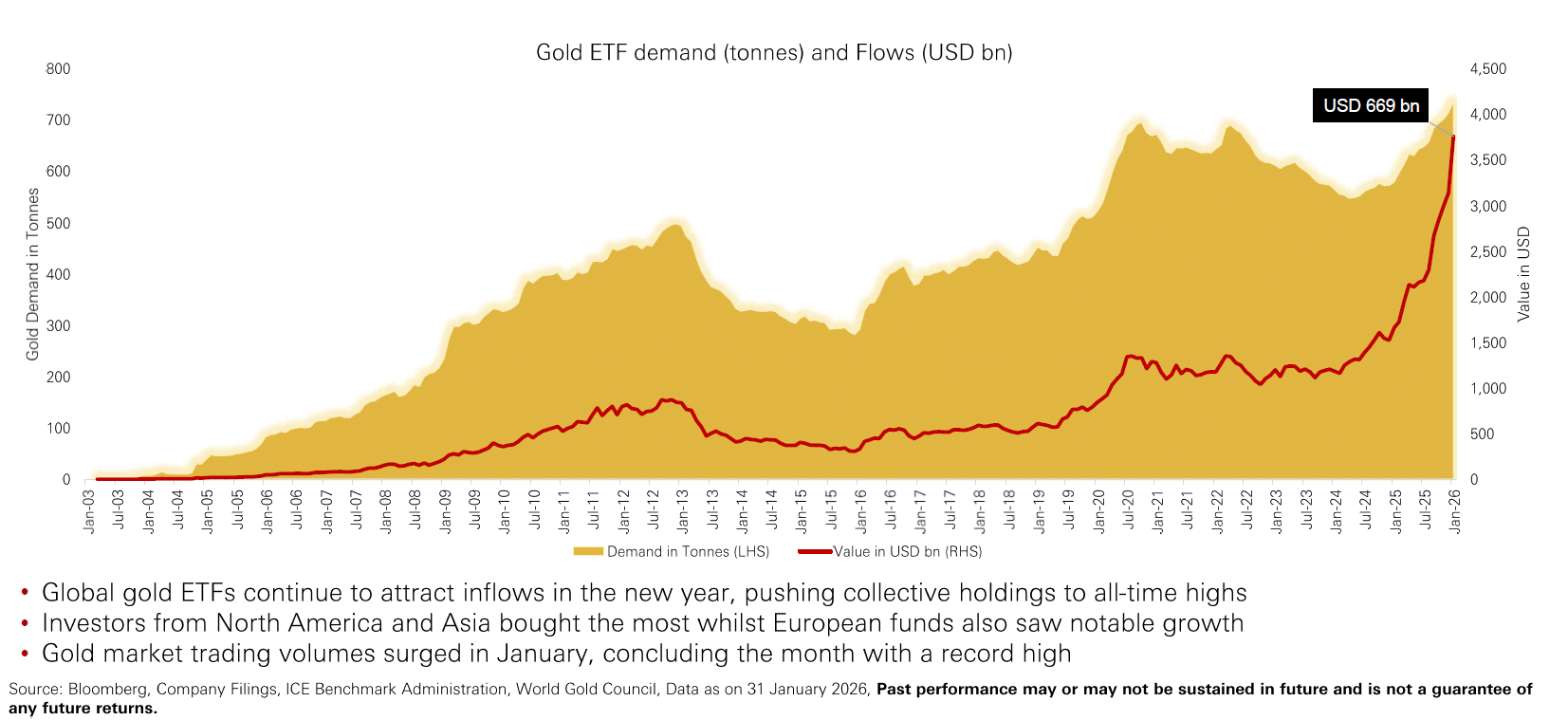
The chart highlights the steady rise in global ETF demand, reflecting increasing investor participation in gold investment products.
Growing participation in India
India has traditionally been one of the largest consumers of gold globally. While jewellery and physical gold continue to dominate household demand, financial investment avenues linked to gold are gradually gaining traction.
Gold ETFs in India have witnessed increasing investor participation in recent years, reflecting a shift toward more structured and transparent ways of gaining gold exposure.
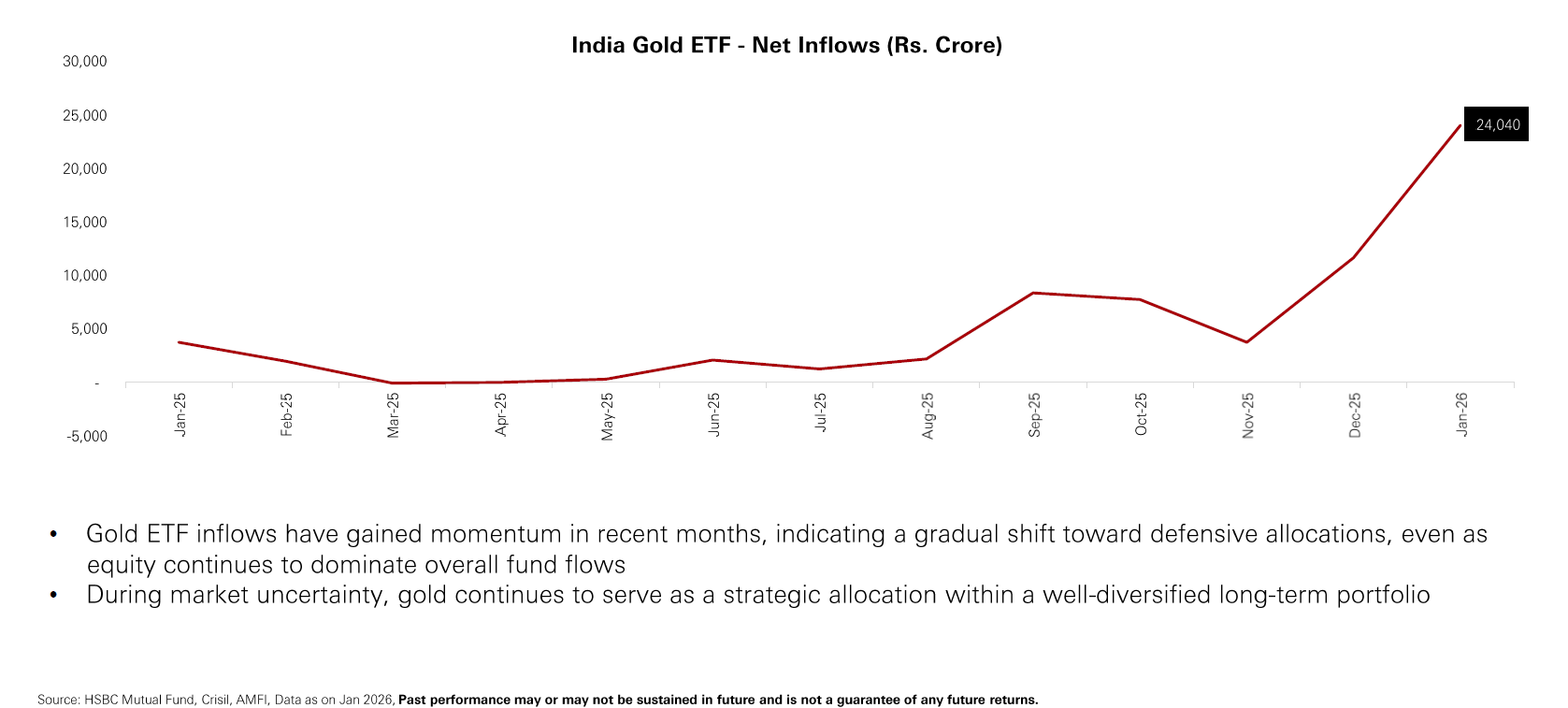
Improved digital access to investment platforms and growing awareness about portfolio diversification are further supporting this trend.
Gold in modern Asset Allocation
As investment portfolios evolve, asset allocation continues to remain central to long-term financial planning. Rather than relying on a single asset class, investors increasingly seek to build portfolios that can adapt to changing market conditions.
Within this framework, gold continues to play a meaningful role. Its historical resilience, growing accessibility through financial investment products such as ETFs and Gold Fund of Funds, and increasing investor participation reinforce its relevance in modern portfolios.
For investors seeking diversified portfolios, gold can serve as a complementary allocation that supports stability and balance over time.
Views provided above are personal and based on information in public domain and subject to change. Investors are requested to consult their financial advisor for any investment decisions. Past performance is not a reliable indicator of future performance.
(This article is authored by Mr.Kailash Kulkarni, CEO- HSBC Mutual Fund)