
Hair Fall After COVID or Illness: Recovery Guide
Experiencing hair fall after COVID-19 or a serious illness? Learn why post-illness hair shedding happens, how long it lasts, the role of nutrient deficiencies, and what experts recommend for healthy hair recovery.
- Initiatives News
- 4 min read

;'%3e%3cpath%20d='m8,15.99c4.41,0,7.99-3.58,7.99-7.99S12.41,0,8,0,0,3.59,0,8s3.58,7.99,7.99,7.99Z'%20style='stroke:%23fff;%20stroke-miterlimit:10;%20stroke-width:.02px;'/%3e%3cpath%20d='m3.08,3.37l3.82,5.11-3.84,4.15h.87l3.37-3.64,2.72,3.64h2.94l-4.04-5.39,3.58-3.87h-.86l-3.1,3.35-2.5-3.35h-2.94Zm1.27.64h1.35l5.97,7.99h-1.35l-5.97-7.99Z'%20style='fill:%23fff;'/%3e%3c/g%3e%3c/svg%3e)


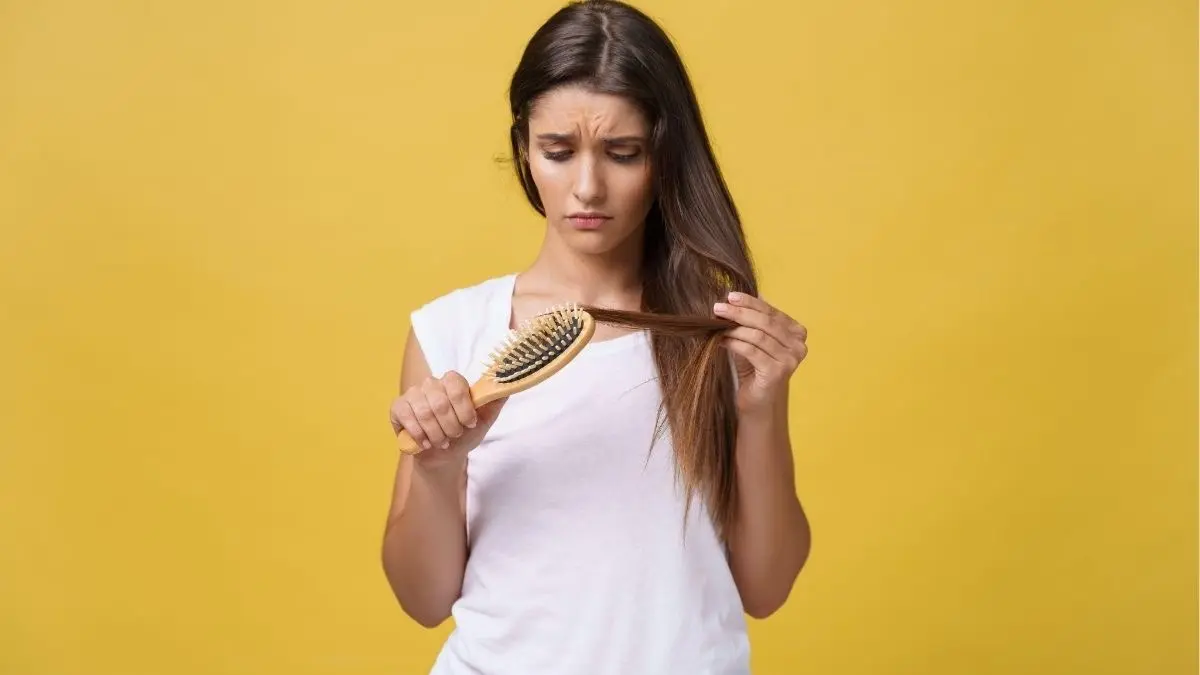
It starts quietly. A few extra strands on the pillow. More hair than usual in the drain after a shower. For many people recovering from COVID-19 or a prolonged illness, this kind of hair fall begins around two to three months after they've already started feeling better, which makes it all the more confusing. You survived the illness. Why is your body still struggling?
The answer has more to do with biology than you might expect.
Why Illness Triggers Hair Loss
The type of hair fall that follows a major illness is usually called telogen effluvium. Under normal conditions, your hair grows in cycles. Some strands are actively growing, while others are resting before they naturally shed. When your body goes through extreme physical stress (like a high fever, a serious infection, or even surgery), it essentially hits a pause button on non-essential functions. Hair growth is one of the first things it deprioritizes.
Advertisement
As a result, a large portion of your hair follicles shift into the resting phase all at once. About two to three months later, those resting hairs start to fall out together, which is why the timeline feels so delayed and disconnected from the illness itself.
COVID-19 and Hair Fall: What Makes It Different
Advertisement
COVID-19 appears to trigger hair fall more intensely than many other illnesses, and researchers have a few explanations for this.
First, the fever associated with COVID can be prolonged and high-grade, which stresses the hair cycle significantly. Second, the illness itself creates a systemic inflammatory response that affects multiple organ systems, including the skin and hair follicles. Third, many people who had COVID also dealt with nutritional depletion, either from reduced appetite, digestive issues, or the body burning through its reserves while fighting the infection.
The combination of these three factors often makes post-COVID hair fall more noticeable than what people experience after, say, a flu or a short fever.
The Role of Nutrient Depletion
This is a piece many people miss. Even if you were eating reasonably well during and after your illness, your body may have depleted key nutrients in the process of recovery. Zinc, iron, ferritin, vitamin D, and B12 are particularly important for hair health, and all of them can drop significantly during or after a serious illness.
Low ferritin (stored iron) is especially underdiagnosed. Many people are told their hemoglobin looks normal, but their ferritin levels tell a different story. Hair follicles are highly sensitive to ferritin levels, and even a mild deficiency can prolong or worsen the shedding phase.
Getting a basic blood panel, including a full iron profile, vitamin D, B12, and thyroid levels, is one of the most practical steps you can take before trying to treat post-illness hair fall.
How Long Does Post-Illness Hair Fall Last?
For most people, telogen effluvium is temporary. Once the triggering stress is resolved and the body stabilizes, the hair cycle gradually resets on its own. In typical cases, shedding slows down within three to six months, and noticeable regrowth begins within six to twelve months.
However, recovery can be slower or incomplete if:
● Nutritional deficiencies go unaddressed
● The person has an underlying thyroid condition or hormonal imbalance
● Stress levels remain high after the illness (psychological stress can also sustain telogen effluvium)
● There was a pre-existing tendency toward hair thinning that the illness accelerated
This is why a cookie-cutter approach rarely works. Two people can have post-COVID hair fall for entirely different underlying reasons.
What Actually Helps During Recovery
The most effective recovery strategies address the root cause rather than just the symptom of shedding. Some practical steps include:
● Getting blood work done to identify any deficiencies and correcting them with targeted supplementation
● Eating enough protein consistently — hair is made of keratin, and protein intake matters
● Managing stress through sleep, gentle movement, or whatever works for your routine
● Being patient and avoiding aggressive treatments or harsh chemical products during this phase
● Consulting a dermatologist or trichologist if shedding is severe or prolonged
Some approaches, like Traya, take this further by combining a root-cause diagnostic process with a treatment plan that factors in both internal health and external hair care, recognizing that post-illness hair fall often has multiple contributing factors.
Final Thoughts
Post-COVID and post-illness hair fall is real, common, and in most cases, reversible. The biology behind it is well understood. What it requires is not panic, but patience and the right information. Focus on rebuilding your health from the inside, check your nutrition, support your body through recovery, and give your hair follicles the time they need to reset. The shedding you're seeing is a sign of what your body went through, not necessarily a sign of permanent damage.