
How Does the Rupee-Dollar Rate Impact Your Gold ETF Returns in India?
A Gold ETF in India tracks the domestic rupee price of gold, so currency conversion sits at the centre of return calculation.
- Initiatives News
- 6 min read

;'%3e%3cpath%20d='m8,15.99c4.41,0,7.99-3.58,7.99-7.99S12.41,0,8,0,0,3.59,0,8s3.58,7.99,7.99,7.99Z'%20style='stroke:%23fff;%20stroke-miterlimit:10;%20stroke-width:.02px;'/%3e%3cpath%20d='m3.08,3.37l3.82,5.11-3.84,4.15h.87l3.37-3.64,2.72,3.64h2.94l-4.04-5.39,3.58-3.87h-.86l-3.1,3.35-2.5-3.35h-2.94Zm1.27.64h1.35l5.97,7.99h-1.35l-5.97-7.99Z'%20style='fill:%23fff;'/%3e%3c/g%3e%3c/svg%3e)


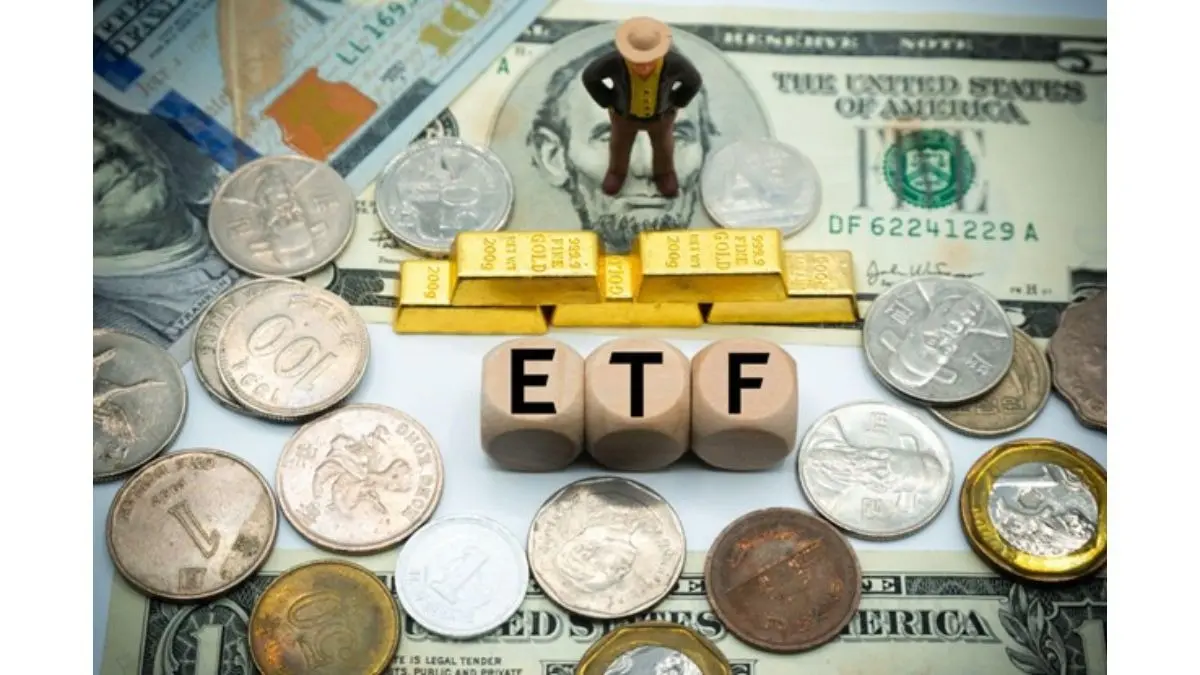
Gold remains a familiar asset in Indian households, yet many investors now access it through a Gold Exchange-Traded Fund (Gold ETF) instead of coins or bars. While this makes pricing easier to track, returns are still shaped by international bullion prices, the rupee-dollar exchange rate, and domestic valuation charges.
The classification data from the Association of Mutual Funds in India (AMFI) shows 25 Gold ETF schemes and 1,20,89,782 folios. In addition, the category has ₹1,83,325.43 crores in assets under management (AUM).
As a result, the Gold ETF category continues to hold growing relevance in investor portfolios. Understanding this relationship helps investors interpret price movements more clearly. As a result, rupee moves can influence gains, downside pressure, and short-term return behaviour.
Why the rupee-dollar rate matters for every Gold ETF investor in India
Advertisement
A Gold ETF in India tracks the domestic rupee price of gold, so currency conversion sits at the centre of return calculation. Scheme documents from the Securities and Exchange Board of India (SEBI) outline several factors that can influence Gold ETF prices. These include demand and supply, inflation, interest rates, and currency movements across Indian and global markets.
That means a change in the US Dollar/Indian Rupee (USD/INR) exchange rate can affect local gold valuations even when the international gold price barely moves. If the Indian rupee weakens against the US dollar, imported gold becomes costlier in rupee terms.
Advertisement
However, if the rupee strengthens, the same currency conversion effect can reduce domestic price momentum. For Indian investors, this is one of the main reasons local returns often differ from international bullion headlines.
How a Gold ETF gets priced in India
The pricing chain is relatively direct. SEBI valuation rules show that domestic gold valuation is derived from the London Bullion Market Association (LBMA) AM fixing in US dollars. It is then converted into Indian rupees using the prevailing dollar-rupee rate and adjusted for customs duty and other local levies, where applicable.
In practical terms, domestic pricing follows this broad structure:
Domestic gold price = Global gold price in US dollars × USD/INR exchange rate + Local duties and charges |
The Reserve Bank of India's (RBI's) gold-related framework reflects the same conversion method. Under this framework, gold is first valued against the gold/USD rate. It is then converted into Indian rupees using the rupee-dollar reference rate published through India's benchmark system. This is why a Gold ETF can rise locally even when the global gold move looks modest.
4 ways the Rupee-Dollar move changes Gold ETF returns
The impact of currency moves on a Gold ETF becomes clearer when investors break the return path into practical outcomes. Each of the following effects can influence realised returns in India.
- Rupee depreciation can lift domestic gains
When the rupee loses value against the dollar, the cost of imported gold in rupees rises. Even if global bullion prices remain flat, domestic valuation can move higher after currency conversion. In that setting, a Gold ETF may post stronger rupee returns than an investor expected from the international gold chart alone.
- Rupee appreciation can cap upside
A stronger rupee can offset part of a global gold rally. International gold may advance in dollar terms, yet domestic gains may appear smaller after conversion to rupees. This is why local investors sometimes see a return pattern that feels weaker than the global market narrative.
- Currency shifts can increase short-term volatility
Investors often view gold as a defensive allocation, though Indian pricing includes both bullion risk and currency conversion risk. When global gold and USD/INR move sharply at the same time, a Gold ETF can show larger short-term swings than a simple gold-only thesis would suggest.
- Exchange rate trends can change how Gold ETF returns are read
Many investors assume that a Gold ETF in India should mirror global movements in gold prices. In practice, domestic returns can differ because Indian gold pricing also depends on rupee conversion.
This also affects entry and exit decisions, since a weaker rupee can keep local gold prices elevated, while a stronger rupee may reduce some of that pressure. As a result, currency trends can shape both realised returns and investors' interpretation of valuation levels before allocation decisions are made.
Risks that can widen the gap in Gold ETF returns
Currency is a major variable, though it is not the only one influencing outcomes. A Gold ETF can still show performance differences due to tracking error, fund expenses, and secondary market liquidity.
In addition, temporary deviations between the traded price and the Net Asset Value (NAV) on the exchange can also affect returns. Investors should also account for domestic duties and local pricing adjustments while assessing return expectations.
To compare listed schemes, the National Stock Exchange (NSE) ETF list can be a useful starting point because it helps investors review available products, trading activity, and product visibility on the exchange. Final decisions, though, should also consider expenses, liquidity, and consistency of price discovery over time.
How to read the Rupee cycle before buying a Gold ETF?
A Gold ETF decision becomes stronger when currency movement is viewed as part of the broader allocation process. RBI states that benchmark reference rates play a formal role in the valuation chain, so USD/INR deserves close attention before entry decisions.
- Track the rupee trend over time
Look at the rupee's direction over a meaningful period instead of reacting to one-day moves.
- Compare the domestic and global gold movement
A wide gap between domestic gold prices and international bullion prices often indicates that currency conversion is influencing the local price movement.
- Use the NSE ETF list for product screening
The NSE ETF list can help identify tradable ETFs before reviewing liquidity, spreads, and scheme-level costs in greater detail.
- Watch category participation trends
AMFI's February 2026 classification data showed net inflows of ₹5,254.95 crores into Gold ETFs, which signals continued investor interest in the category
- Stay focused on allocation discipline
Higher participation can improve market depth, though disciplined allocation remains more important than short-term enthusiasm.
Use currency context to make every Gold ETF decision sharper
A Gold ETF in India is shaped by three forces working together: international bullion prices, the rupee-dollar exchange rate, and domestic pricing adjustments. As a result, local returns can move differently from the global gold headline investors see each day.
Once this structure becomes clear, return analysis becomes more grounded, and allocation decisions become easier to frame. For long-term investors, the real advantage lies in reading gold with a currency-awareness perspective rather than reacting to every sharp move.
Online trading platforms like Ventura can support that process by helping investors track listed instruments, monitor market data, and make portfolio decisions in one place. A stronger approach is to combine macro context, product comparison, and allocation discipline so every Gold ETF exposure serves a clear portfolio purpose over time.