
How Handpickd Is Shaping India’s Return to Trust in Fresh Food
"When we look at the competitive landscape, we aren’t trying to keep pace with quick commerce. We are carving out a distinct category we call Fresh Commerce. We don’t see quick commerce as competition, but as a complementary service."
- Initiatives News
- 10 min read

;'%3e%3cpath%20d='m8,15.99c4.41,0,7.99-3.58,7.99-7.99S12.41,0,8,0,0,3.59,0,8s3.58,7.99,7.99,7.99Z'%20style='stroke:%23fff;%20stroke-miterlimit:10;%20stroke-width:.02px;'/%3e%3cpath%20d='m3.08,3.37l3.82,5.11-3.84,4.15h.87l3.37-3.64,2.72,3.64h2.94l-4.04-5.39,3.58-3.87h-.86l-3.1,3.35-2.5-3.35h-2.94Zm1.27.64h1.35l5.97,7.99h-1.35l-5.97-7.99Z'%20style='fill:%23fff;'/%3e%3c/g%3e%3c/svg%3e)


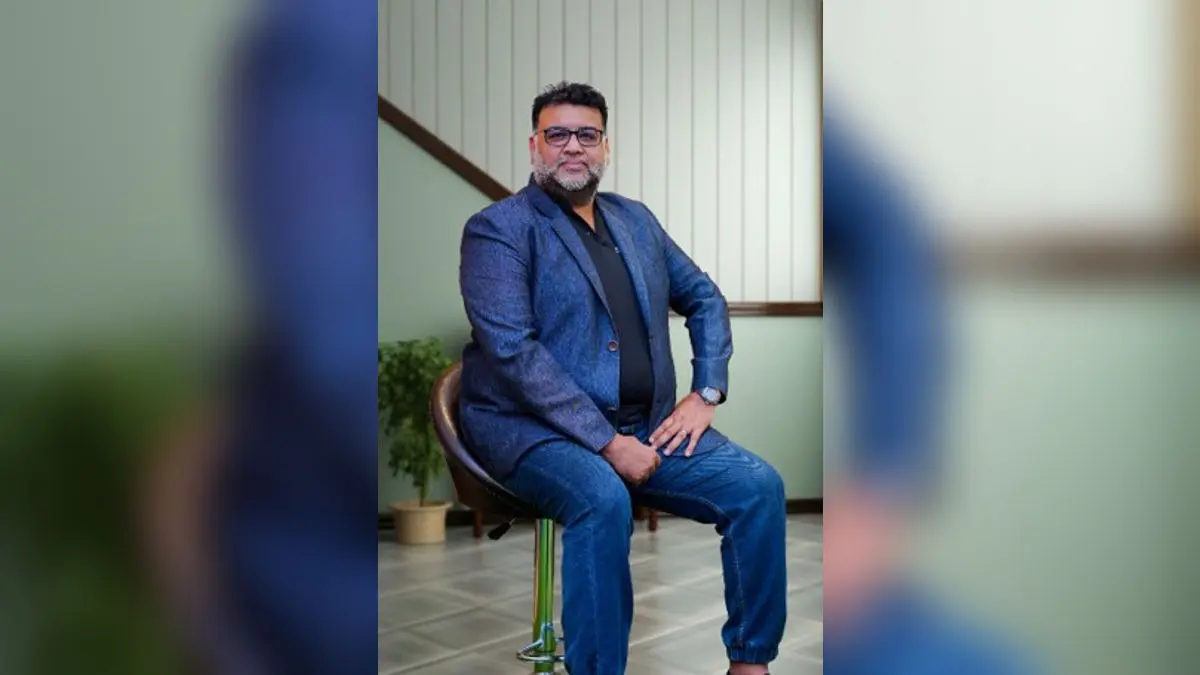
India’s fresh food economy is being rebuilt at breakneck speed, but somewhere between 10-minute promises and warehouse efficiencies, something essential has been lost: trust. For generations, Indians relied on the sabziwala not just to sell vegetables, but to advise, judge ripeness, and quietly personalise every purchase. Handpickd starts from that forgotten truth. Instead of chasing speed, it asks a more radical question: can technology replicate the intuition of the mandi? The answer has shaped a new model of Fresh Commerce, one that blends human judgment with digital precision to bring confidence back to buying fresh online.
In this interview with Anant Goel, Cofounder of Handpickd, we understand more about their winning model
1. Your App has made a good mark within a short time of launch. Do you think you'll be able to sustain this momentum and compete with Quick Commerce with your offerings?
We’ve been very encouraged by the customer love Handpickd has received across cities. When we look at the competitive landscape, we aren’t trying to keep pace with quick commerce. We are carving out a distinct category we call Fresh Commerce. We don’t see quick commerce as competition, but as a complementary service. When customers want good-quality, clean, and healthy fresh produce for their families, they choose Handpickd. When they forget something or need an urgent top-up, they turn to quick commerce. In that sense, Handpickd is their fresh destination, while quick commerce functions like a nearby mom-and-pop store for immediate needs.
Advertisement
This distinction is clearly visible in our data across wallet spends, purchase frequency, sales mix, and the assortment customers buy every morning. The intent is different, and so is the value delivered.
At Handpickd, we are building what we call Fresh Commerce. We are not just delivering products, but enabling what we describe as “the accha-wala fresh.” Through customised unit selection and a clear freshness guarantee, we help families build a healthier morning routine. We aren’t chasing short-term trends. We’re building habits, trust, and a lifestyle, which is what gives us confidence in sustaining momentum over the long term.
Advertisement
2. In the local mandi, the vendor is the expert, and in e-commerce, the algorithm is the expert. How does Handpickd replicate that human-like quality through the app?
In the local mandi, the vendor is an intuition expert. They understand that your needs aren't static; they shift from day to day. At Handpickd, we’ve made it our mission to recreate that same human insight within our platform.
Traditional e-commerce is built on rigid, standardised SKUs that force the customer to adapt to the system. We’ve turned that model on its head. At Handpickd, we replicate that human expertise by building a 'digital conscience' into our platform. We do this in 3 easy ways -
Curation Over Catalogue: A mandi vendor doesn't show you everything; they show you what’s best. Our app reflects this by prioritising seasonal peaks and quality-vetted selections, rather than just overwhelming you with endless, mediocre options.
The 'Digital Handshake': In the mandi, the vendor knows your preferences. Our unit selection and customisation features act as that silent conversation—allowing you to pick exactly what fits your household’s needs, ensuring that what arrives at your door feels 'handpickd' by someone who knows you.
A Guarantee of Freshness: The vendor’s expertise is backed by their reputation. We back ours with a rigorous freshness guarantee. If it isn't 'the achha-wala fresh' then it doesn’t make it to your doorstep.
By allowing our users to express their specific preferences through our app, we’ve built a supply chain that actually listens and responds to those individual signals. Technology here isn’t a replacement for the vendor’s judgment; it is a way to preserve & scale it. We are taking those small, everyday choices and translating them into a trust-led experience that offers the efficiency of a digital platform without losing the soul of the mandi. We aren’t just delivering an order; we’re delivering the confidence that your ‘tray’ was curated by someone who understands exactly what you need.
3. You use the term matchmaking rather than selling. Why is that distinction important for the modern consumer?
The distinction is fundamental. Selling assumes the product is fixed and the consumer must work around it. Matchmaking turns that model around.
Fresh produce has always worked on matchmaking offline. In local markets, people don’t just buy fruits and vegetables; they explain how they plan to use them, how long they need them to last, and who they are buying for. We are the first to recognise this natural behaviour and bring it online.
In the world of fresh produce, no two households want the same thing. The desired ripeness, size, taste, and even shelf life can change from day to day. Standard supply chains, built for factory-made products with uniform quality, quantity, and pack sizes, simply aren’t designed to fulfil these needs.
Matchmaking is about recognising intent before inventory. Instead of pushing whatever happens to be on the shelf, we align supply to what the customer actually needs. When we stop selling and start matchmaking, we remove the need for compromise.
By listening to these individual signals through our platform, we aren’t just moving goods. We’re building a more intuitive and respectful relationship with our users. Over time, that alignment is what turns a simple transaction into deep, lasting trust. We aren’t just fulfilling an order. We’re perfecting a fit.
4. In an era of 10-minute delivery, you chose a next-morning model. Do you think the consumer is patient enough to pay for perfection?
The 10-minute delivery model is built for forgotten essentials like emergency milk or a last-minute snack. Fresh produce is a very different decision. Here, consumers are far more selective. They aren’t only looking for speed. They are looking for a better outcome.
If you look at customer preferences, the hierarchy is clear. Better comes first, then cheaper, and speed comes last. That’s why people are willing to wait five days for an Alphonso box directly from a farmer in Ratnagiri. The wait is acceptable because the quality is worth it.
We chose the next-morning model because it aligns with the natural rhythm of a household. Fresh consumption begins at the start of the day, with breakfast preparation, lunch planning, and daily cooking. By delivering in the morning, we aren’t just dropping off an order. We are fitting into a routine.
When customers know their produce will arrive exactly as they prefer it, matched to their ripeness and size requirements, patience stops being a barrier. It becomes a conscious choice for a better experience. We aren’t asking our customers to be patient. We’re offering them a morning experience that respects their time, their health, and how real households actually function. In that context, perfection is always worth the wait.
5. You said consumers are moving from faster to better. What was the specific data point that proved this to you?
It wasn’t a single data point, and it’s important to clarify the context first. Customers aren’t moving from faster to better because most fresh fruits and vegetables aren’t even sold online yet. F and V remain one of the most underpenetrated categories, and what little sells online is largely limited to staples like onion, potato, and tomato.
What’s really happening is a much bigger shift. For the first time, consumers are moving from offline inconvenience to online comfort in fresh produce. F&V today is where grocery was nearly a decade ago. When we built Milkbasket in 2015, we moved everyday grocery out of traditional e-commerce. With Handpickd, we are doing the same for fresh. We are moving e-fresh out of e-grocery. People are, for the first time, genuinely delighted with the fresh produce they are buying online.
Within that shift, the strongest proof came from repeat behaviour. We saw households with access to every 10-minute delivery option continue to choose Handpickd. Our most loyal users weren’t looking for a quick fix. They were placing regular, higher-value orders. Their feedback was consistent. They stayed because of quality consistency, preference matching, and what they call the ‘achha-wala trust’.
6. What is the weirdest or most specific matchmaking request Handpickd has successfully fulfilled so far?
We wouldn’t call them weird, but we do get some very specific and thoughtful requests that reflect how families actually think about fresh produce.
Two that immediately come to mind are, “Extra ripe pear for my infant,” and “Out of the three guavas, please send one extra ripe, papa ji ke liye.” These requests may sound small, but they capture the nuance of how food choices differ within the same household.
For us, fulfilling these requests isn’t an exception. It’s the core of matchmaking. We aren’t just delivering fruits and vegetables. We’re responding to intent, understanding who the food is for and how it will be consumed. That’s when fresh stops being a generic purchase and starts feeling personal, trusted, and considered.
7. How does the zero-inventory model change the way a consumer perceives their food?
The zero-inventory model does more than just optimise our supply chain; it fundamentally changes the emotional connection a consumer has with their food.
In a traditional model, food is 'inventory', it sits on a shelf waiting for a buyer, losing its vitality with every passing hour. In our model, the fresh produce is 'intent.' When a customer knows their fruits and vegetables aren't sitting in a dark warehouse, but are being sourced specifically for their order, it creates a powerful sense of care. They feel that the produce was ‘Handpickd’ for them. Over time, we see a profound shift in consumer expectations: they stop asking, 'What is available?' and start trusting, 'What arrives is exactly what is right for me.' We aren't just delivering food, we are delivering the peace of mind that comes with knowing your food was still in the ground or on the tree while you were placing your order. It turns a simple meal into a deliberate act of wellness.
8. As we move toward 2026, do you see pesticide-free produce moving from a luxury niche to a standard expectation?
The shift is already underway. History shows that what begins as a premium niche often becomes the baseline once awareness and access align. Today’s families aren’t just hopeful about food safety. They are informed, and their expectations are non-negotiable.
But awareness alone isn’t enough. Affordability plays a decisive role. Organic produce priced at 2x will always remain niche. What customers clearly signal is that they don’t want to compromise on safety, but they also don’t want it positioned as a luxury. Pesticide-free at an extra ₹5 is where it becomes acceptable, accessible, and scalable.
That’s where the industry needs to evolve. The real challenge is moving beyond marketing claims toward dependable, transparent processes. This is why we focus on systems like ozone washing that actively reduce surface residues while preserving the integrity of the produce. It’s a shift from trusting a label to trusting a process.
When safety is supported by consistent, scalable protocols rather than vague promises, it stops being an upgrade and becomes the norm. We aren’t just offering a cleaner product. We’re helping define what achha-wala fresh should actually mean for everyday households.
As India’s fresh food ecosystem evolves, Handpickd’s approach signals a deeper shift in how households relate to what they eat. By prioritising intent over inventory, judgment over haste, and consistency over convenience, the company is moving fresh produce out of transactional commerce and back into everyday ritual. In doing so, Handpickd isn’t just delivering fruits and vegetables; it is rebuilding trust, shaping habits, and quietly redefining what “achha-wala fresh” means for modern Indian families.