
India’s Aesthetics Decade Starts Now: A Founder’s Five-Year Outlook
India is entering its aesthetics decade with a market doubling or tripling in five years, a billion-strong demographic of demand, a structural cost advantage the world is flying in to access, and an organised-player gap wide open for whoever moves with discipline. The opportunity is not just to build clinics. It is to build trust, to take quality into smaller cities.
- Initiatives News
- 8 min read

;'%3e%3cpath%20d='m8,15.99c4.41,0,7.99-3.58,7.99-7.99S12.41,0,8,0,0,3.59,0,8s3.58,7.99,7.99,7.99Z'%20style='stroke:%23fff;%20stroke-miterlimit:10;%20stroke-width:.02px;'/%3e%3cpath%20d='m3.08,3.37l3.82,5.11-3.84,4.15h.87l3.37-3.64,2.72,3.64h2.94l-4.04-5.39,3.58-3.87h-.86l-3.1,3.35-2.5-3.35h-2.94Zm1.27.64h1.35l5.97,7.99h-1.35l-5.97-7.99Z'%20style='fill:%23fff;'/%3e%3c/g%3e%3c/svg%3e)


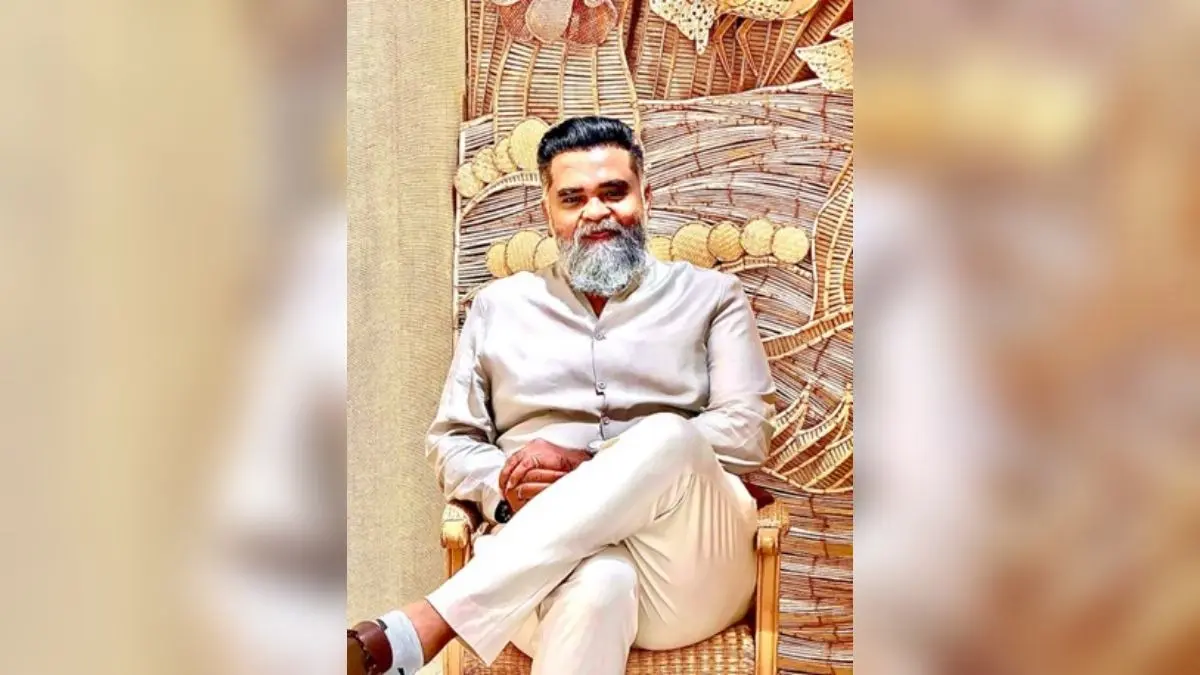
By Dr. Rajaram Sundaramurthy, Founder — Mister Hair & Miss Skin Clinic
I don’t read this industry off a spreadsheet. I read it from the consultation chair — across 16+ clinics in Karnataka, Tamil Nadu and Telangana, in the faces of the men and women who walk in every week and quietly say the same thing: I want to look like myself again. That sentence is now a market. And over the next five years, it is going to become one of the most important consumer-health markets India has.
Here is where I think it goes, why, and where the real money and meaning are.
The size of the prize
India’s medical aesthetics market is estimated at roughly USD 0.65–2 billion as of 2024– 25, depending on how narrowly you define it — IMARC Group pegs it near USD 650 million while Grand View Research and DataM Intelligence place it closer to USD 1.9–2 billion. The disagreement is not a weakness; it tells you the category is still being drawn. What the forecasters agree on is the direction: most credible projections cluster at a CAGR between 8% and 16%, implying the market roughly doubles to triples by the early-to-mid 2030s.
Advertisement
Widen the lens to beauty and personal care and India is already a USD 26–28 billion market growing in the high single to low double digits — a demand pool that feeds straight into clinical aesthetics as consumers graduate from creams to procedures.
And India is not a sideshow. Grand View Research calls India the fastest-growing aesthetic-medicine market in Asia-Pacific, and ISAPS data shows Indian plastic surgeons already perform over one million aesthetic procedures a year, ranking the country in the global top three for procedures like rhinoplasty and liposuction. We are no longer an emerging market for aesthetics. We are a scaling one.
Advertisement
What is actually driving it
Five forces are compounding at once:
1. Demographics of demand. Hair loss alone is close to universal — industry estimates
suggest nearly 50% of Indian men experience androgenetic alopecia, and surveys cited by IMARC report up to 40% of Indian women notice hair loss by age 40. Aesthetics is no longer vanity; for most of my patients it is confidence, employability and dignity.
2. Money plus mindset. Per-capita income has risen meaningfully over the last decade, and roughly 60% of urban Indians aged 18–35 are now aware of aesthetic procedures (MRFR). Disposable income unlocked the wallet; social media unlocked the permission.
3. The minimally invasive shift. Injectables, lasers, skin tightening, PRP — fast, low downtime, repeatable. These are the fastest-growing segments and, crucially, they create recurring revenue rather than one-time transactions.
4. Clinics over hospitals. The growth is concentrated in specialised clinics and beauty centres, not hospital departments — more accessible, more personal, more brandable. That is the structural gap a chain like ours exists to fill.
5. The male-grooming on-ramp. India’s personal grooming market is forecast to nearly triple from USD 0.67 billion (2024) to ~USD 1.98 billion by 2030 (≈19.7% CAGR). Every man who buys a beard serum is one step closer to a clinic consultation.
Hair restoration: the category I know best
Hair transplant is where India’s clinical aesthetics story is sharpest. The Indian market sat at roughly USD 200–300 million in 2024, and forecasts for its growth are among the most aggressive in all of aesthetics — CAGR estimates run from ~12.5% (Custom Market Insights) to ~22% (IMARC). Asia-Pacific now leads the global hair-transplant market, valued near USD 1.88 billion in 2025 with roughly a third of worldwide share.
The reason is simple economics layered on real outcomes: a full procedure in India runs about USD 1,000–1,800, against USD 3,600–14,500 in the US. That price-to-quality ratio is why patients fly in, not out.
The tailwind most people underestimate: medical tourism
India treated an estimated 7.3 million international patients in 2024 — up 25% from 6 million in 2023 (Apollo Hospitals data). The broader medical-value-travel sector is projected to grow from around ₹87,000 crore (2024) to as much as ₹4.25 lakh crore by 2034. Aesthetics — hair, skin, contouring — sits right in the sweet spot: high-margin, elective, and exactly the kind of “quality at a fraction of the cost” proposition that pulls patients from the Middle East, Africa and Southeast Asia. This is the bridge I’m building between our India network and our Thailand launches.
Where the real opportunity is over the next five years
If I were advising anyone entering or scaling in this market, this is where I’d point:
Organised chains in a disorganised market. The single biggest opportunity is consolidation. Indian aesthetics is overwhelmingly fragmented — solo clinics, inconsistent quality, no accountability. Surgeon-led, standardised, multi-location brands can take share the way organised retail took it from kirana stores.
Tier-2 and Tier-3 cities via franchising. Premium aesthetic care is still concentrated in metros. The demand in smaller cities is real and underserved, and the data on salon and clinic chains expanding into Tier-2/3 confirms it. A repeatable, franchisable unit economic model is the unlock — and the way to put ownership into more women’s hands. It is the model we are scaling deliberately toward a 100-clinic national footprint, because the gap between fragmented solo practice and trusted, organised care is exactly that wide.
Women’s aesthetics and hair restoration. Historically male-skewed, this is the fastest-shifting demographic. Female hair restoration, postpartum and PCOS-linked thinning, and skin health are underserved and under-marketed. This is both a commercial gap and, for me, a mission.
The hair-to-skin-to-salon bundle. Patients don’t think in categories; they think in outcomes. Multi-brand groups that can move a customer across hair, skin and grooming own the lifetime value, not just the transaction.
Tech as a differentiator. AI-driven diagnostics, robotic FUE, Korean-style skin analysis, and personalised treatment planning will separate credible clinics from cosmetic ones over the next five years.
Inbound medical tourism packages. Aftercare-inclusive, transparent-pricing, surgeon led packages aimed at Gulf, African and SEA patients are a near-term, high-margin export.
The risk nobody is pricing in
Rapid growth in a lightly regulated category invites a reckoning. India’s hair-transplant and aesthetics space has a genuine safety problem — procedures run by under-qualified operators, with real and well-documented poor outcomes. Over the next five years, trust will become the scarce asset. The brands that win will be the ones that put qualified doctors on record, standardise protocols across every location, and treat patient safety as the product — not the marketing. That is a conviction, not a slogan, for how we operate.
The bottom line
India is entering its aesthetics decade with a market doubling or tripling in five years, a billion-strong demographic of demand, a structural cost advantage the world is flying in to access, and an organised-player gap wide open for whoever moves with discipline. The opportunity is not just to build clinics. It is to build trust, to take quality into smaller cities, and — for those of us who care about it — to put ownership and confidence into the hands of more women. That is the India I’m building for.
Sources & references
1. IMARC Group — India Medical Aesthetics Market (USD 650.7M in 2025; 8.06% CAGR 2026–2034) and India Hair Transplant Market (USD 252M in 2024 → USD 1,744M by 2033; 22.13% CAGR).
2. Grand View Research / Horizon Databook — India Aesthetic Medicine Market (USD 2,013M in 2024 → USD 7,418M by 2033; 15.6% CAGR; India fastest-growing in APAC).
3. DataM Intelligence — India Medical Aesthetics Market (USD 1.86B in 2024 → USD 4.39B by 2033; 10.1% CAGR); ISAPS procedure rankings.
4. Market Research Future (MRFR) — India Medical Aesthetics & India Hair Transplant outlooks; urban awareness survey data.
5. Custom Market Insights — India Hair Transplant Market (USD 199M in 2024 → USD 584M by 2033; 12.5% CAGR).
6. Fortune Business Insights / Mordor Intelligence — global & APAC hair transplant market (APAC ~USD 1.88B, ~31.65% share, 2025).
7. Apollo Hospitals / medical-tourism reporting — 7.3M international patients in 2024 (+25% YoY); sector ₹87,000 cr (2024) → ₹4.25 lakh cr by 2034.
8. ResearchAndMarkets — India Personal Grooming Market (USD 0.67B in 2024 → USD 1.98B by 2030; 19.72% CAGR).
9. Expert Market Research / IMARC — India Beauty & Personal Care market (~USD 26–28B, 2024–25) and India Men’s Grooming market.
10. ISAPS Global Survey (2023) — India among global top three for rhinoplasty/liposuction; >1M aesthetic procedures/year by plastic surgeons.
Figures are drawn from third-party market-research estimates that vary by methodology; ranges are stated where sources differ. Verify the latest figures before publication.
About the author
Dr. Rajaram Sundaramurthy is the founder of Mister Hair — a surgeon-led hair-transplant network with 16+ clinics across Karnataka, Tamil Nadu and Telangana — and Miss Skin Clinic, a dermatology and aesthetics practice in Bengaluru. He is building toward a 100- clinic footprint across India, and is opening select franchise and investment partnerships to operators and investors who share a commitment to surgeon-led, standardised, trustworthy aesthetic care.
Learn more or enquire about partnerships at misterhair.in and misskin.in.
For franchisee and partnership enquiries reach us on
+91 8884234316
Corporatecommunications@misterhair.in