
Inside the Making Of A Global Cybersecurity SaaS Company: The Indusface Story
That discipline shaped how we built products and operations. We focused on outcomes customers could measure, particularly reducing the exposure window between detection and action.
- Initiatives News
- 8 min read

;'%3e%3cpath%20d='m8,15.99c4.41,0,7.99-3.58,7.99-7.99S12.41,0,8,0,0,3.59,0,8s3.58,7.99,7.99,7.99Z'%20style='stroke:%23fff;%20stroke-miterlimit:10;%20stroke-width:.02px;'/%3e%3cpath%20d='m3.08,3.37l3.82,5.11-3.84,4.15h.87l3.37-3.64,2.72,3.64h2.94l-4.04-5.39,3.58-3.87h-.86l-3.1,3.35-2.5-3.35h-2.94Zm1.27.64h1.35l5.97,7.99h-1.35l-5.97-7.99Z'%20style='fill:%23fff;'/%3e%3c/g%3e%3c/svg%3e)


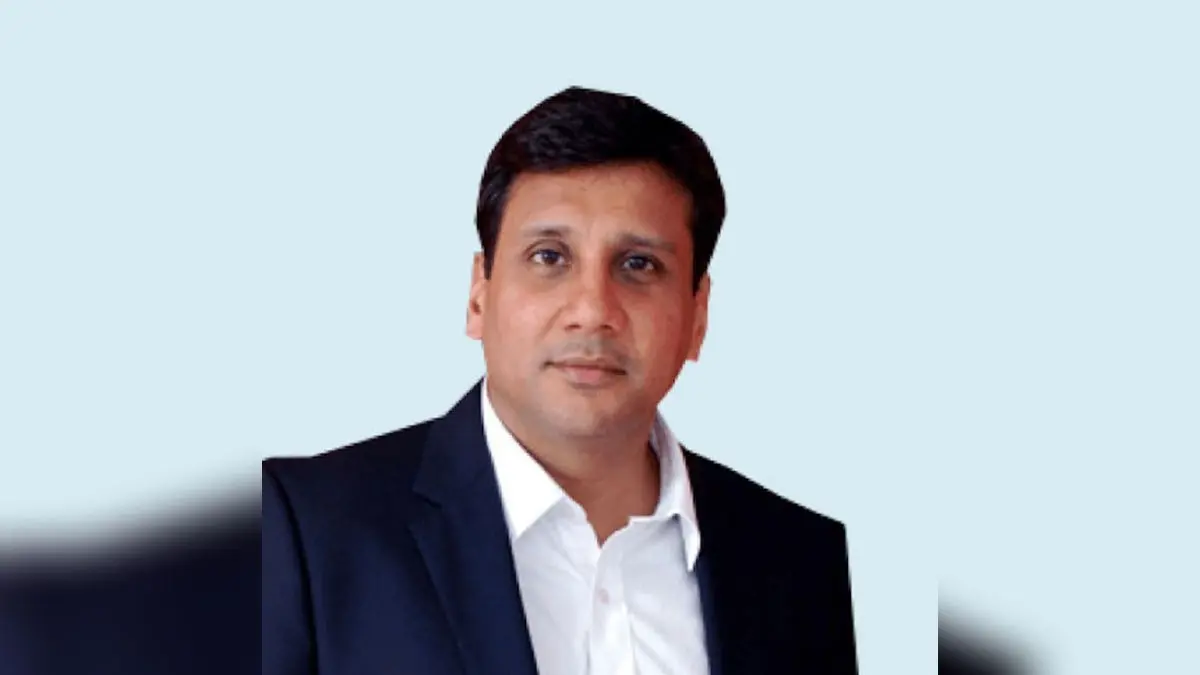
Founded at a time when cybersecurity rarely featured in boardroom discussions, Indusface has grown into a globally trusted application security SaaS company protecting more than 6,500 enterprises across 95 countries. Built in India for the world, the company anticipated early that web applications, APIs, and digital platforms would become the primary carriers of business risk. Led by founder and CEO Ashish Tandon, a cybersecurity veteran with nearly three decades of experience, Indusface was shaped around a simple but demanding principle: security must deliver outcomes under real-world pressure. In this conversation, Ashish reflects on building a resilient global SaaS company from India, the rise of application security as a business imperative, and the future of cybersecurity in an increasingly digital economy.
You started building Indusface when cybersecurity barely featured in boardroom conversations in India. What conviction kept you building when the market had not yet arrived?
When we began, cybersecurity sat firmly in the background. It was treated as an operational hygiene issue rather than a business risk. Yet even then, one reality was already clear to us: applications had become the front door of the enterprise. Every payment, every login, every customer interaction was flowing through web applications and APIs that stayed exposed to the internet around the clock.
What kept us building was the conviction that this exposure would eventually force itself into the boardroom. Service continuity and customer trust would become impossible to separate from application security. Our data reinforced this belief early on. Across the industry, organisations routinely take over 100 days to remediate known application vulnerabilities. That window is extraordinarily long for systems handling money, identity, and sensitive data. Even today, our data shows that 33% of critical and high-risk vulnerabilities remain open beyond 180 days. We built Indusface early because the real business problem was never the existence of vulnerabilities alone, but the prolonged period during which they remain exploitable.
Advertisement
Many SaaS companies chase growth first and discipline later. Indusface chose a different path. How did building with profitability and resilience shape the company’s DNA from day one?
Security companies earn their reputation in moments of stress. Marketing momentum fades quickly when systems come under attack. Building with profitability and resilience forced us to stay accountable to customers rather than narratives. Every decision had to work in real production environments, under real pressure.
Advertisement
That discipline shaped how we built products and operations. We focused on outcomes customers could measure, particularly reducing the exposure window between detection and action. Over time, we built capabilities that mitigate a large share of vulnerabilities almost immediately. In practice, this has allowed customers to virtually patch most critical, high and medium CVSS vulnerabilities immediately instead of carrying them indefinitely in development backlogs. That combination of product capability and operational discipline continues to define how we scale.
Application and API attacks now dominate the threat landscape. What did Indusface see early that traditional security players missed?
Traditional security models were designed for a perimeter-driven world. Applications were fewer, change cycles were slower, and endpoints drew the most attention. What we recognised early was that modern applications and APIs were changing constantly and sitting directly on the internet. Attackers followed that shift because this layer sits closest to business transactions and customer identity.
This shift is now visible in mainstream data. Verizon’s 2025 Data Breach Investigations Report (DBIR) highlights a fundamental change in how breaches start. Vulnerability exploitation grew by thirty-four percent this past year, and it has finally eclipsed phishing as a primary threat. It now stands as the second leading cause of data breaches, trailing credential theft by only two percentage points.
Our own India 2025 data shows API attacks rising by 126% year-on-year, with attacks on API vulnerabilities increasing more than thirteenfold. The deeper insight for us lay in response speed. Detection happens, but remediation often takes months. That delay creates enormous opportunity for attackers. We focused on shrinking time-to-mitigation while maintaining safety for legitimate traffic, because blocking real customers in digital businesses carries immediate revenue consequences.
India often builds technology for the world, yet trust becomes the hardest currency in cybersecurity. How did Indusface earn the confidence of global enterprises from an India base?
Trust in cybersecurity comes from consistency under pressure. Enterprises look for proof that a platform protects production systems at scale, responds responsibly during incidents, and sustains performance across time.
Our credibility grew through execution. Today, we protect over 6,500 organisations across 95 countries, operating across diverse regulatory and traffic environments. We process trillions of application requests every month and stop billions of attacks, which strengthens the real-world accuracy of our protections. In 2025 alone, our platform blocked over 9 billion malicious requests, with each protected application facing more than 4.1 million attacks annually.
We are regularly featured in leading analyst reports, including Gartner, Forrester, GigaOm, MarketsandMarkets, and G2. This independent validation underscores our market position. Finally, we maintain all necessary global compliances, such as SOC2, ISO 27001, PCI DSS and GDPR. In fact, our platform is ready to support compliance to the DPDP act too. In short, our proven track record of protecting applications at cloud and internet scale, combined with analyst backing and regulatory compliance, enables us to serve the global market effectively.
BFSI and digital platforms face constant attack pressure. What separates organisations that stay online from those that repeatedly fail under stress?
Organisations that stay online share two traits: operational clarity and response speed. They maintain a precise inventory of public-facing applications and APIs, monitor continuously, and act immediately as attack patterns shift.
Repeated failures usually stem from delay and fragmentation. Vulnerabilities get identified but remain open. Controls sometimes generate high false positives, disrupting legitimate users. In BFSI and digital commerce, a blocked payment or checkout flow can translate into revenue loss within minutes. This risk intensifies during geopolitical events. Our data shows a 46% rise in vulnerability attacks and a 172% increase in DDoS activity during such periods. Resilience ultimately comes from speed, coordination, and controls that protect without breaking business traffic.
Indusface combines platform automation with managed security expertise. What led you to believe outcomes matter more than tools in enterprise security?
Most enterprises already own security tools. The challenge lies in converting alerts into protection. Signals arrive faster than teams can validate them, and remediation decisions slow down because the cost of a wrong action feels high, especially in inline application controls.
We designed our approach around outcomes. Our platform mitigates more than 80% of identified risks instantly in real time. For the remainder, we operate with defined service commitments that reduce risk within days rather than months, including a 72-hour SLA where human intervention is required. We also retain human verification before high-impact actions go live, because protecting revenue-critical customer journeys remains as important as blocking attacks.
As a founder, you have navigated multiple technology cycles. How has that long-term lens influenced the way Indusface builds products and teams?
A long-term lens forces focus on fundamentals. Threats evolve, technologies shift, and terminology changes, but customer expectations around availability, protection, and dependable support remain constant. That understanding pushed us to build a complete operating model rather than isolated features.
The same philosophy shapes team building. Protecting thousands of live production environments carries responsibility. Small errors can have wide consequences. That reality reinforces process discipline, careful engineering, and incident readiness. These fundamentals create trust at scale.
Cybersecurity today influences revenue, uptime, and customer trust. How do you explain application security to boards that still view cyber risk as a technical issue?
Boards engage when cybersecurity is framed as business continuity and trust. Application security sits at the layer where customers transact, authenticate, and share data. A failure there creates downtime, financial impact, compliance exposure, and reputational damage in a single event.
It also brings boards a clear industry reality: most attacks now target the application layer. When that fact is paired with the length of preventable exposure windows, leadership teams quickly see the risk in business terms rather than technical abstractions.
India’s digital economy is scaling faster than its cyber readiness. What role do companies like Indusface play in closing this gap responsibly?
Many organisations now face enterprise-grade threats without enterprise-scale security teams. Continuous monitoring, validation, and response require capabilities that smaller teams struggle to maintain as attack volumes rise.
Our role is to make application security operationally achievable. That means delivering managed protection that works in live traffic, shrinking time-to-mitigation, and using platform-scale intelligence to improve accuracy and response for customers who lack large internal security operations.
When you look ahead, what does success mean for Indusface as a global SaaS company born in India and built for the world?
Success means sustaining trust while scaling. In cybersecurity, trust takes years to build and moments to lose. For us, success lies in continuing to protect mission-critical applications reliably under pressure, across regions, industries, and regulatory environments.
We measure that success through consistency, customer confidence, and real-world outcomes. Expanding responsibly while continuously improving protection is the standard we hold ourselves to.