
Petals, Thandai and Devotion: A Braj-Style Holi Comes to Delhi
ISKCON Dwarka is bringing the spirit of Braj to Delhi with a two-day Holi celebration on March 3 and 4. The festivities begin with Gaur Purnima, featuring katha, sankirtan, and abhishek ceremonies.
- Initiatives News
- 3 min read

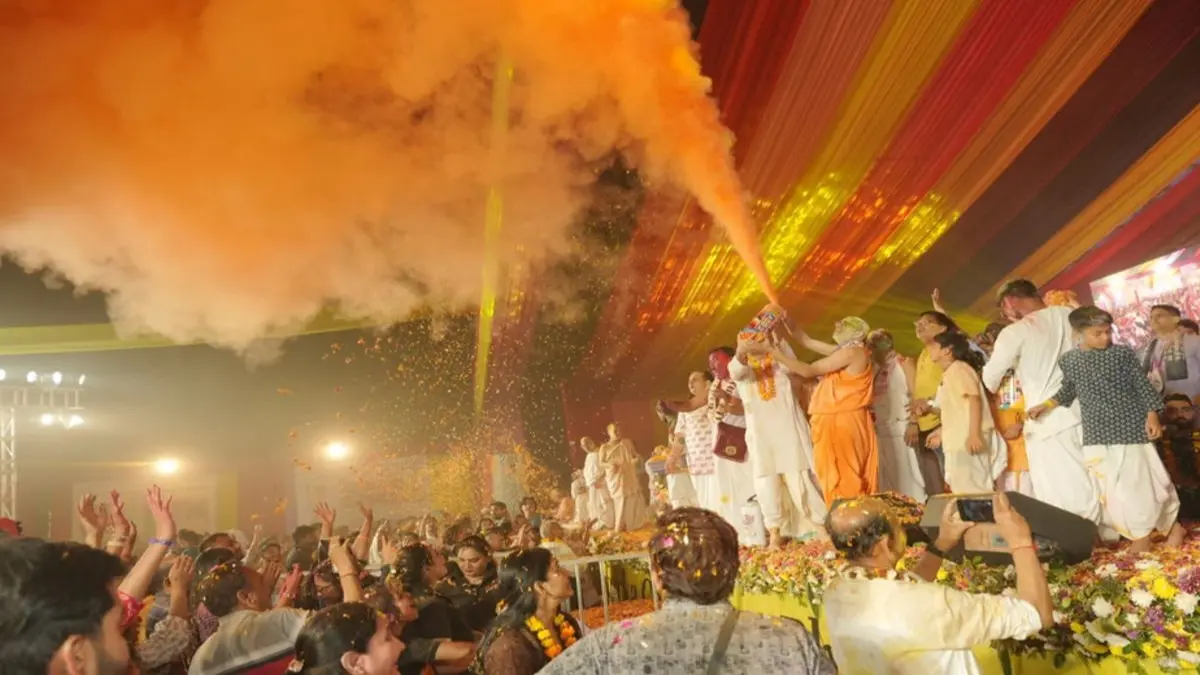
If Holi in Braj is known for its colours, fragrance and fervour, this year Delhiites won’t need to travel to Vrindavan to experience it. On March 3 and 4, ISKCON Dwarka is set to recreate the spirit of Braj with a two-day celebration that blends flower-filled revelry, traditional festive flavours and deep-rooted devotion.
The festivities begin with Gaur Purnima, marking the appearance day of Chaitanya Mahaprabhu, revered in the Gaudiya Vaishnav tradition as the Golden Avatar of Lord Krishna. The day unfolds with katha, sankirtan, abhishek ceremonies and elaborate bhog offerings, setting a contemplative tone before the exuberance of Holi takes centre stage.
By March 4, the temple complex transforms into a vibrant celebration arena inspired by the traditions of Braj. A specially constructed pandal accommodating nearly 10,000 devotees will host Phoolon Ki Holi, Lathmar Holi and Matka Phod festivities. But unlike the colour-splashed chaos often associated with urban Holi parties, this celebration is rooted in fragrance and flowers.
During Phoolon Ki Holi, petals — not synthetic powders — fill the air. Showers of fresh, naturally sourced flowers create a soft, sensory spectacle: the scent of roses and marigolds mingling with devotional chants, the rustle of petals underfoot, and the sound of collective laughter echoing through the temple courtyard. The emphasis is on celebration that honours both the body and the environment, replacing chemical colours with natural elements.
Advertisement
Food, as always in festive India, plays a starring role. One of the highlights this year is the preparation and distribution of 21 varieties of traditional Braj-style thandai. Prepared in large earthen pots using age-old recipes, the chilled beverage will be first offered to the deity before being served as prasadam. Flavours range from kesar, badam and pista to rose, cardamom, makhana, mishri and honey — a palette designed to evoke the cooling, aromatic indulgence associated with Holi in Vrindavan.
Alongside, seven varieties of gujiya — the quintessential Holi sweet — will be part of the festive bhog. Crisp, delicately folded and generously filled, the gujiyas promise a nostalgic nod to home-style celebrations while being prepared on a scale fit for thousands.
Advertisement
The scale of the event is significant. Nearly 2,000 volunteers will assist with arrangements, working in coordination with civic authorities to manage crowds and ensure a smooth experience. Yet, despite the numbers, organisers say the focus remains intimate: preserving ritual authenticity while making it accessible to urban families.
Bali Murari Das Brahmachary of ISKCON Dwarka explains, “Holi and Gaur Purnima are sacred expressions of bhakti and seva for us. From the preparation of 21 varieties of thandai and traditional gujiyas to celebrating Phoolon Ki Holi with natural flowers, every element is first offered to the Lord with devotion. At the same time, we are mindful that festivals in a modern city must be organised responsibly — with care for health, for the environment, and for the comfort of devotees. Our endeavour is to preserve the divine traditions of Braj while ensuring the celebration remains spiritually meaningful and socially conscious.”
The evening programme will feature devotional kirtan by Grammy-nominated artist Gaur Mani Mataji, travelling from the United States, adding a global note to an otherwise deeply traditional celebration.
For many in Delhi-NCR, Holi has increasingly meant gated community gatherings or commercial colour parties. ISKCON Dwarka’s celebration offers a different proposition — one where petals replace powders, traditional recipes take precedence over novelty drinks, and festivity is woven seamlessly with faith.
In the swirl of flowers, the fragrance of thandai, and the sweetness of gujiya, Holi here becomes less about spectacle and more about shared experience — rooted in Braj, yet unfolding in the heart of the capital.